Losing a loved one is overwhelming. Most families know they need a funeral home, but many don't realize the legal process in Texas starts even earlier, with the formal pronouncement of death that allows the death certificate and the rest of the probate process to begin. If you're asking what to do right now, that instinct is correct.
This guide is built for the first critical hours, days, and weeks after a death. It explains what to do immediately after a loved one dies in Texas, but also why each step matters under Texas probate law. That includes practical issues like protecting the home, locating the will, and figuring out who has authority to act.
Texas probate is the court process used to validate a will, pay debts, and distribute property that doesn't pass automatically to a beneficiary. Titles 2 and 3 of the Texas Estates Code govern much of that process, including wills, intestacy, administration, and creditor claims. In plain English, the court wants to know three things early: who died, what they owned, and who has legal authority to act for the estate.
Grief makes organization harder. A prioritized list helps.
1. Obtain Multiple Certified Copies of the Death Certificate
Before probate can move forward, the death has to be legally documented. Immediately after someone dies in Texas, the first legal milestone is the formal pronouncement of death. What happens next depends on where the death occurred. If the death is unexpected at home, call 911. If it happens in a hospital or care facility, staff or the attending clinician usually handles the declaration. If the person was under hospice care, the hospice nurse can pronounce death and manage the initial paperwork, as explained in this after-death guidance for families.
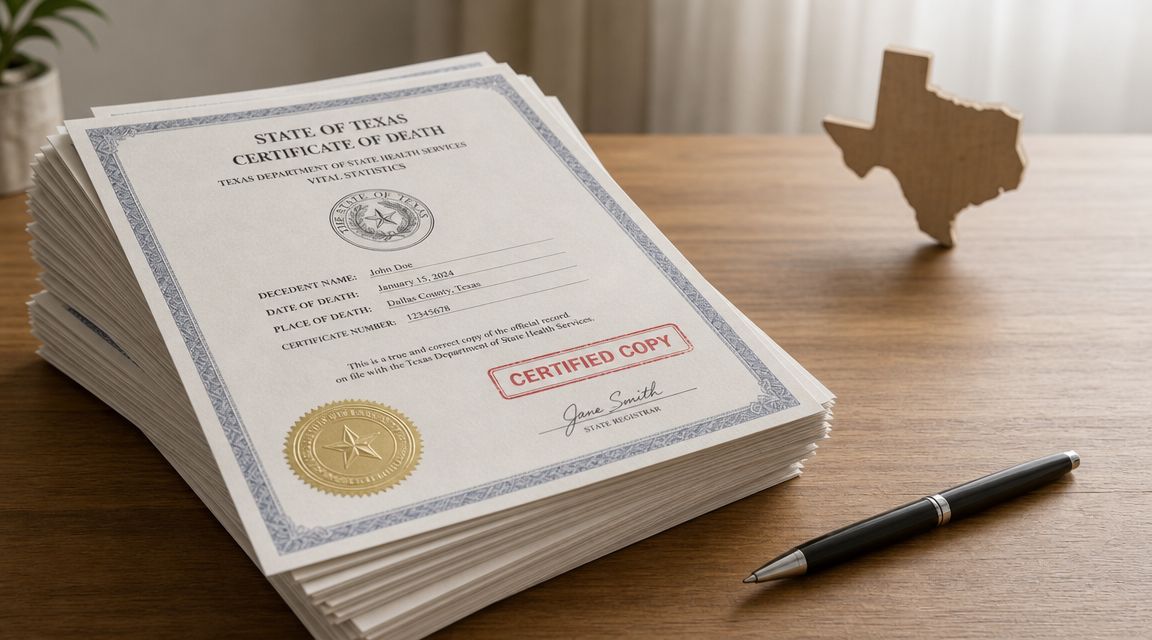
Once that pronouncement is complete, ask for certified death certificates right away. You will use them repeatedly.
Why certified copies matter so much
Banks, insurers, brokerage firms, mortgage servicers, title offices, and probate courts often want an original certified copy, not a regular photocopy. Estate settlement guidance commonly recommends ordering multiple copies immediately, often 3 to 5 or more, and some family checklists recommend 10 or more because different institutions may each require their own copy, as discussed in this Texas estate-settlement article on death certificates.
That is one of the most common early mistakes. A family orders too few, then loses time waiting on additional copies while accounts sit frozen and deadlines approach.
Practical rule: Order more certified copies than you think you'll need, then keep a written log of which institution received each one.
A realistic example. A surviving spouse may need one copy for a bank, another for a life insurer, another for a retirement plan administrator, another for a title matter, and another for the probate filing itself. By contrast, the family that orders only a small handful often ends up circling back to the county for more.
What works and what doesn't
- Ask the funeral home early: Funeral homes often help request death certificates as part of the death registration process.
- Store them securely: Keep certified copies in one folder or lockbox, not scattered among relatives.
- Track every copy: Write down where each certified copy went and whether it was returned.
Under the Texas Estates Code, the court cannot appoint an executor or administrator without the basic documentation needed to open the estate. This step isn't glamorous, but it makes possible almost everything that follows.
2. Secure the Decedent's Estate and Physical Assets
Right after a death, property becomes vulnerable. Houses sit empty. Vehicles remain accessible. Jewelry, cash, firearms, documents, and family heirlooms can disappear quickly when relatives, neighbors, cleaners, or contractors start coming and going.
Texas families should secure the home, pets, valuables, mail, and deliveries as soon as possible. Practical post-death checklists also recommend locating major assets and identifying who needs immediate notice, including employers, insurers, and financial institutions once death certificates are available, as outlined in this estate checklist for the days after a death.

Protect first, distribute later
Families sometimes think they're being helpful by “letting everyone take what Mom wanted them to have.” That creates problems fast. Until the proper estate representative is confirmed, no one should start dividing property informally.
For example, suppose a father dies owning a home in Dallas, a truck, a gun safe, and a bedroom full of tools. One child has a house key and starts removing items “for safekeeping.” Another child accuses him of stealing. The conflict could have been avoided by changing the locks, photographing the contents, and waiting until authority was established.
Secure the property as if an insurance adjuster and a probate judge will both review your decisions later.
Immediate protective steps
- Change access if needed: Re-key locks, collect spare keys, and secure garage remotes.
- Document the condition: Take photos or video of each room, each vehicle, and obvious valuables.
- Protect animals and perishables: Arrange care for pets, deal with food, medication, and anything that could create damage.
- Hold off on gifts: Even if the will seems clear, don't hand out personal property before inventory and legal review.
Texas Estates Code Title 3 deals with estate administration. In practice, preserving assets is part of the representative's core job. If property disappears before an inventory is prepared, that can create liability issues, family disputes, and avoidable litigation.
This is also where nonprobate property can confuse families. A jointly owned account or a payable-on-death account may pass outside probate. A sofa, a ring, or a vehicle titled only in the decedent's name usually does not. When in doubt, preserve first and classify later.
3. Locate the Will and Other Estate Planning Documents
Finding the will early can change the entire path of the case. In Texas, the executor named in the will should be notified right away. If there's no will, a different process starts later to determine who has authority and who inherits. The practical difference is huge.
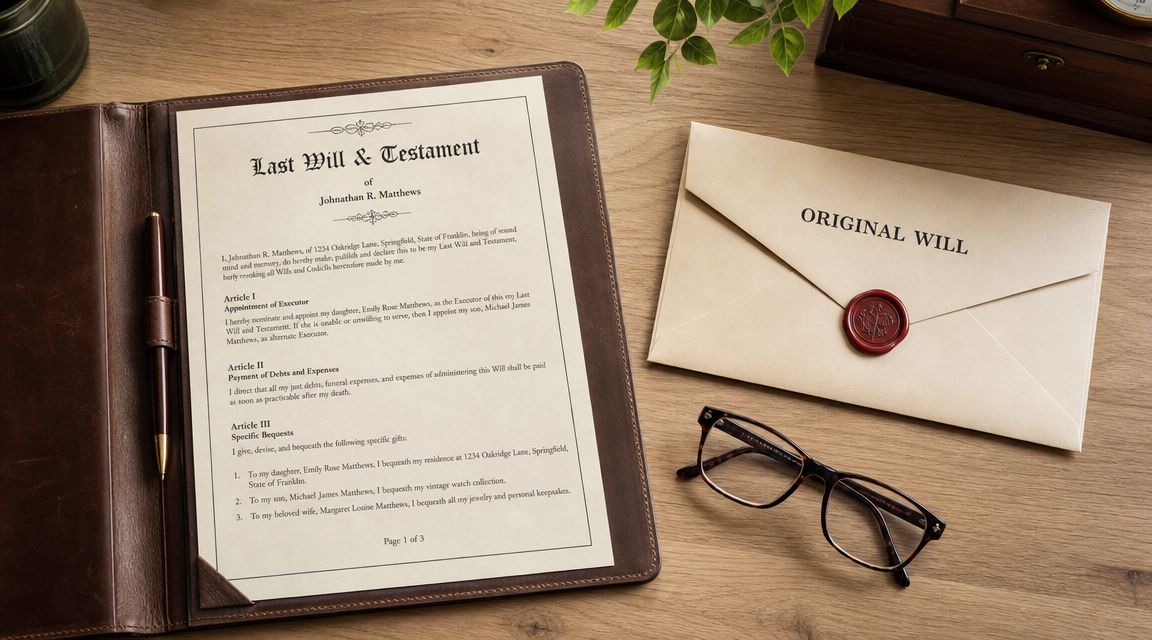
The original will matters most, not a memory of what it said. Look for trusts, deeds, life insurance policies, beneficiary designations, prepaid burial contracts, and any written funeral instructions at the same time.
Where families often find it
A realistic Texas scenario. An adult daughter is certain her mother never signed a will. While sorting mail and bills, she finds a folder from a law office tucked inside a desk drawer. That folder leads to the original will, which names an independent executor. What could have turned into an heirship case becomes a more direct probate.
If you haven't found the document yet, start with the obvious places and then widen the search. Bank safe deposit boxes, home safes, filing cabinets, attorney offices, and accountant files are all common leads. This guide on how to find a deceased person's will is a good next step if the family isn't sure where to look.
What to preserve with the will
- Keep the original intact: Don't remove staples, write notes on it, or mark it up.
- Gather related documents: Trust papers, deeds, account statements, and insurance policies help identify what may pass through probate and what may not.
- Flag beneficiary designations: Life insurance and retirement accounts often pass based on the named beneficiary, not the will.
Texas Estates Code Title 2 governs wills and intestate succession. In plain English, if a valid will exists, the court uses it as the roadmap. If no valid will exists, Texas law decides who inherits.
This is also the point where families need to think about timing. Texas has a four-year rule that often matters for admitting a will to probate. That doesn't mean every case is lost after four years, but waiting can remove options and create title problems. Early legal review is almost always cheaper than trying to fix a delayed filing later.
4. Notify Key Government Agencies and Financial Institutions
Once you have certified death certificates, start notifications. This step protects the estate, limits fraud, and helps stop benefits or payments that shouldn't continue.
Families often assume this can wait until after the funeral. Some notices can wait a bit. Some shouldn't. Financial accounts, government benefits, and credit-related accounts are the top priorities because unauthorized transactions after death create headaches that are much harder to unwind later.
Who to contact first
The funeral home often reports the death to the Social Security Administration, but don't assume it happened. Confirm it. Then notify banks, brokerage firms, life insurance carriers, mortgage servicers, pension administrators, and credit card companies as appropriate.
Ask institutions to place a restriction or freeze on the account until the personal representative can prove authority. In many cases, “close the account” is the wrong first instruction. The estate may need that account history, the funds may belong in an estate account later, and automatic closure can complicate tracing.
Keep one master log with the date, institution, phone number, case number, and the name of the person you spoke with.
A simple example. A son learns that his mother's checking account is still set to auto-pay utilities, streaming services, and online orders. He notifies the bank and utility providers, preserves the account history, and prevents more charges from draining funds that should remain available for estate expenses.
Notifications that reduce problems later
- Government benefits: Confirm reporting to Social Security and any agency paying recurring benefits.
- Financial institutions: Notify banks and brokers so they can flag the account and explain next steps.
- Insurance carriers: Start claims on life insurance and ask what documentation they require.
- Creditors and card issuers: Report the death so cards aren't used improperly and statements can be redirected.
Texas Estates Code Title 3 eventually controls formal creditor notice and claim handling during administration. But practical notification starts before that. Early calls don't replace the legal probate process. They stop the preventable messes that grow in the first weeks.
If identity theft is a concern, consider also gathering mail, monitoring statements, and preserving online account information without logging in and making changes you aren't authorized to make. The safest approach is preservation first, action second.
5. Consult a Probate Attorney to Determine the Legal Path Forward
Who has legal authority to act right now, and what process will a Texas court accept? Those questions usually matter more than families expect in the first days after a death.
Texas probate is not one form or one court filing. The legal path depends on the will, the family tree, the type of property involved, whether there are debts, and how quickly someone needs authority to deal with a house, bank account, or business interest. A wrong early assumption can create delays, title problems, and personal conflict that cost far more than an early consultation.
The hard part is that many estates look simple until you examine the details. A family may say, "There is a will, so the executor can handle it," and then learn the named executor has died, cannot be found, or does not want to serve. In another case, there is no will, but the estate may still qualify for a more direct procedure. Litigation risks often surface at this stage, especially with blended families, disputed homestead rights, or uncertainty about separate versus community property.
The Texas probate options serve different purposes
An attorney's first job is usually to match the facts to the correct Texas procedure. Common possibilities include independent administration, dependent administration, muniment of title, a small estate affidavit, and an affidavit of heirship. Those options are not interchangeable. Each one changes who can act, what must be filed, how creditors are handled, and whether title companies or financial institutions will accept the paperwork.
A practical summary helps:
- Independent administration: Often the preferred route when a valid will names an executor or the heirs agree. It gives the personal representative broader authority with less court supervision.
- Dependent administration: Used when closer court oversight is needed, often because of disputes, creditor concerns, or family conflict.
- Muniment of title: Can work when there is a valid will and no unpaid debts other than secured debt. It is often used to clear title to real property without a full administration.
- Small estate affidavit: Available only in narrow intestate cases. It can help transfer a homestead and certain limited assets when the estate meets the statutory requirements.
- Affidavit of heirship: Common in real-estate situations, but it is not a substitute for probate in every case and does not solve every title problem.
Timing matters too. Texas has a four-year rule for offering a will for probate in many cases. Miss that window, and the family may lose the easiest path to probate and be pushed into a more complicated fight over title and authority. I often tell families that waiting to "see if probate is really necessary" can close off options they would have preferred.
One consultation can also prevent the wrong shortcut. For example, a family may assume a small estate affidavit will work because the estate seems modest. Then they learn there is a will, non-homestead real estate, or another fact that disqualifies that route. Starting with the wrong procedure wastes time and can leave the person acting for the estate exposed when a bank, buyer, or title company refuses to honor the documents.
If you are trying to understand whether formal probate is required at all, this article on whether you need a probate lawyer in Texas can help frame the issue. Once the proper path is identified, the estate representative can start gathering the records needed for the court's Inventory, Appraisement, and List of Claims in Texas probate without duplicating work or missing assets.
A short legal review at this stage usually answers the questions that drive every later step: who has authority, what filing fits, what deadlines matter, and what proof third parties will require before they release property or recognize a transfer.
6. Begin the Official Inventory of Estate Assets
Once the right probate path is identified, the next major task is building the estate inventory. Families usually have a rough idea of what the person owned. Probate requires more than a rough idea.
The court and the estate representative need a clear picture of probate assets, nonprobate assets, debts, claims, and documents affecting title. In many Texas probate cases, that ultimately leads to an Inventory, Appraisement, and List of Claims or a lawful alternative filing. The point is simple. You can't protect, manage, or distribute what you haven't identified.
Start with categories, then get specific
Texas and national estate checklists commonly advise families to inventory major assets quickly, including bank accounts, the house, vehicle, brokerage accounts, personal property, furniture, and jewelry. That broad first pass is usually enough to spot the urgent issues.
Then the list needs detail. Account numbers, title documents, balances near the date of death, VIN numbers, deeds, and supporting statements all matter. If the person owned mineral interests, business interests, collectibles, or inherited jewelry, those items need special attention too. If jewelry may eventually be sold, families often benefit from reading a practical guide to fair jewelry offers before accepting the first bid.
A practical way to organize it
- List what you know first: House, car, checking account, retirement account, life insurance, safe deposit box, firearms, jewelry, business interests.
- Pull month-of-death records: Statements around the date of death help establish what existed and in what form.
- Separate probate from nonprobate: A payable-on-death account is handled differently from a bank account titled solely in the decedent's name.
- Get appraisals when needed: Real estate, valuable collections, and unusual assets often require formal valuation.
A realistic example. During an inventory, an executor may discover an old brokerage account that was still active, a deed showing separate property issues, or a storage unit no one remembered. Those finds are common enough that experienced lawyers expect them.
Texas Estates Code Title 3 places real responsibility on personal representatives to identify and account for property accurately. This article on inventory and appraisement filing in Texas probate explains how that filing fits into the larger case. Good inventory work reduces family conflict because decisions get made from records, not assumptions.
7. Manage Debts and Prepare for Distribution
Who gets paid first. Heirs, or creditors? Under Texas probate law, debts, expenses of administration, taxes, and approved claims are addressed before the estate is distributed. That order protects the estate and protects the person serving as executor or administrator.
This stage is where good intentions can create real liability. A representative who hands out cash, signs over a vehicle, or lets family members divide personal property before claims are sorted may have to recover those assets later. In some cases, the representative can end up personally responsible for mistakes that could have been avoided with better timing and records.
A common problem looks like this. The family wants to transfer Mom's jewelry and vehicle right away because everyone agrees who should receive them. Then final medical bills arrive, the credit card company sends a claim, and county property taxes are still due. The agreement may be sincere, but distribution still has to wait until the estate's obligations are reviewed and the representative has authority to act.
Do not pay estate bills from your personal account unless your lawyer gives you a specific reason and a clear paper trail. Mixing funds creates reimbursement fights and accounting problems fast.
Texas procedure also matters here. Some claims are valid. Some are inflated, stale, or sent to pressure the family into paying quickly. The representative needs to determine which debts the estate owes, whether formal notice to creditors is required, and what priority each payment has under Texas law. That analysis often affects whether full probate is necessary, whether a small estate affidavit is even available, and how cautiously the executor should handle early requests from beneficiaries.
Use a practical sequence:
- Collect and log every bill and claim: Keep the envelope, statement date, amount, and sender. Do not rely on phone conversations alone.
- Confirm whether the debt belongs to the estate: Joint debt, secured debt, and individual debt are treated differently.
- Set up an estate account once authority is issued: Pay approved expenses from estate funds and keep receipts.
- Hold distributions until the picture is clear: Waiting is usually cheaper than clawing property back from relatives later.
- Get values for items that may be sold: If inherited jewelry may need to be liquidated to satisfy expenses or equalize shares, review this guide to fair jewelry offers before accepting an offer.
The timeline matters. In the first days, gather bills and avoid promises. In the first weeks, evaluate claims, confirm available cash, and determine whether exempt property, secured debts, or tax filings affect the plan. If probate will be opened, keep the four year deadline in mind. Waiting too long can limit options and make a routine administration harder than it needed to be.
Distribution comes last, after the representative can show what came into the estate, what went out, and why. If there is a valid will, distributions follow its terms after administration is complete. If there is no will, Texas intestacy rules control the shares. Clear records usually calm families. Vague explanations rarely do.
Texas Immediate Post-Death: 7-Item Legal Checklist
Use this checklist as a priority guide, not a race. In Texas probate, families usually get into trouble by doing the right task at the wrong time, such as paying heirs before confirming debts, or assuming a shortcut applies before checking whether the estate qualifies. The chart below is meant to help you sort the first moves by urgency, cost, and legal purpose so the executor, administrator, or family member handling the next steps can protect the estate and avoid preventable mistakes.
| Item | 🔄 Implementation complexity | ⚡ Resource requirements | ⭐ Expected outcomes | 📊 Ideal use cases | 💡 Key advantages & tips |
|---|---|---|---|---|---|
| Obtain Multiple Certified Copies of the Death Certificate | Low to Medium, ordering and wait time | Modest per-copy cost, funeral home or online ordering | Legal proof needed to deal with banks, benefits, insurance, and court filings | The starting point for nearly every estate task | Order enough copies at the outset. Many institutions want an original certified copy, not a photocopy |
| Secure the Decedent's Estate and Physical Assets | Medium, logistics and possible family conflict | Moderate, locksmith, storage, travel, time | Reduces the risk of loss, theft, damage, or disputed possession | Immediate priority if the decedent owned a home, vehicle, firearms, cash, jewelry, or business property | Photograph contents, collect keys, forward mail, and keep a written log of who accessed the property |
| Locate the Will and Other Estate Planning Documents | Low to Medium, search effort may vary | Low to Moderate, calls to counsel, advisors, banks, or the county clerk | Identifies the named executor and helps determine whether probate, muniment of title, or another procedure may fit | Early review before anyone makes transfer decisions | Look for the original will, trust documents, deeds, beneficiary designations, and funeral instructions. Do not mark up or staple the original will |
| Notify Key Government Agencies and Financial Institutions | Medium, each institution has its own process | Low to Moderate, certified copies, time, tracking system | Stops improper payments, helps prevent fraud, and starts benefit or claim procedures | After death certificates are available and basic property is secure | Keep a contact list with names, dates, and reference numbers. Written records save time later |
| Consult a Probate Attorney to Determine the Legal Path Forward | Variable, depends on the estate | Moderate to High, legal fees, documents, time | Clarifies whether the estate needs probate and which Texas procedure fits the facts | Useful as soon as the family has the will, a rough asset list, and basic debt information | Texas choices can include probate administration, muniment of title, or a small estate affidavit. The four-year filing rule can also affect strategy |
| Begin the Official Inventory of Estate Assets | High, requires detail and supporting records | High, statements, appraisals, bookkeeping, time | Creates the record needed for court filings, creditor review, and eventual distribution | After legal authority is clear or appointment is pending | Include real property, bank accounts, vehicles, business interests, personal property, and digital assets. List how each asset is titled |
| Manage Debts and Prepare for Distribution | High, claims review and payment order matter | High, attorney or CPA support, notices, tax work, time | Lets the representative pay valid obligations and distribute what remains with less risk of later dispute | After the estate's assets, authority, and liabilities are reasonably clear | In Texas, timing and payment priority matter. Early distributions can create personal exposure for the representative |
This summary is useful because each step answers a different legal question. Who has authority to act? What property needs protection? Is there a valid will? Does the estate qualify for a simplified Texas procedure, or does it need a full administration? Families who answer those questions in order usually spend less time fixing avoidable errors later.
If you are handling a death in Texas and are unsure which step comes first for your situation, get legal advice before assets are transferred, debts are paid, or family agreements are made informally. Early guidance often prevents expensive cleanup later.
Key Insight: A Marathon, Not a Sprint
The first days after a death in Texas feel urgent because they are. But not every step belongs in the first day. The most important early moves are getting the legal pronouncement completed, securing certified death certificates, protecting the property, locating the will and related documents, and identifying who may have authority to act. Those tasks create order at the exact moment grief makes order hardest.
After that, the pace should become more deliberate. Probate is often less about speed than sequence. Families get into trouble when they skip ahead, distribute property too early, rely on assumptions about who inherits, or choose a probate shortcut that doesn't fit the estate. In Texas, the right path might be full administration, muniment of title, a small estate affidavit, or another procedure allowed under the Estates Code. The details matter because the court, title companies, banks, and creditors all care about legal authority.
A simple example shows why. Suppose a widow dies owning a home in her name, a checking account, some jewelry, and a vehicle. One child thinks the house can just be “signed over.” Another thinks the account belongs to the family automatically. A third finds a copy of a will but not the original. None of those assumptions answers the fundamental questions. Is there a valid original will? Is probate needed for the home? Are there debts that must be paid first? Does a small estate affidavit apply, or not? A short legal review can prevent months of confusion.
Texas Estates Code Titles 2 and 3 provide the framework, but grieving families shouldn't have to decode statutes on their own. The best practical approach is methodical. Preserve assets. Document everything. Avoid informal distributions. Get legal advice before filing or signing anything that affects title, inheritance, or creditor rights.
If you're facing probate in Texas, our team can help guide you through every step, from filing to final distribution. Schedule your free consultation today.
If you need help after a loss, contact Law Office of Bryan Fagan, PLLC. The firm helps Texas families with probate, estate administration, heirship issues, wills, trusts, guardianship matters, and probate litigation. A free consultation can help you understand which Texas probate path fits your situation and what to do next.