Skip to content
When a loved one passes, dealing with their estate on top of your grief can feel like an impossible task. Thankfully, Texas law has a process designed to make things simpler: independent administration without court supervision. Think of it as the preferred, streamlined path through probate in Texas. It’s built to be faster, less expensive, and far less stressful than the alternatives, offering families a clear way forward during a tough time.

At the Law Office of Bryan Fagan, we understand the emotional and logistical weight you're carrying. Our goal is to demystify this process, providing authoritative yet compassionate guidance to help you navigate your responsibilities with confidence and peace of mind.
Understanding Independent Administration in Texas
Losing a family member is hard enough without getting tangled in a complicated legal web. That’s why Texas created a more direct route called independent administration. It’s the most common and efficient way to handle an estate here, and it's a process we help families navigate every single day.
But what does "without court supervision" actually mean? In plain English, it means that once the court officially appoints an executor (the person in charge of the estate), that person is trusted to manage the estate’s business without having to run back to the judge for permission for every single action.
The Power of an Independent Executor
Imagine a dependent administrator has to ask the court for a specific key every time they need to open a door. An independent executor, on the other hand, is handed a master key right at the start.
This authority, granted under the Texas Estates Code, empowers them to handle the estate’s affairs on their own, including:
- Paying the estate’s bills and final debts.
- Selling property, like a house or a car, to settle affairs.
- Distributing the remaining assets to the rightful heirs and beneficiaries.
The court grants this power by issuing a document called Letters Testamentary. This piece of paper is the official proof that the executor has the authority to act. You can learn more about the critical differences between Letters Testamentary vs. Letters of Administration in our detailed guide.
The Texas Advantage: Speed and Lower Costs
The Texas legal system is intentionally designed to make settling an estate as straightforward as possible. This practical approach is laid out in the Texas Estates Code, Title 2, Subtitle I (Chapters 401-405), which gives us the legal framework for this simplified process.
Because of this structure, Texas probate has a huge advantage over other states. A typical independent administration can often be wrapped up in less than six months for under $5,000. In stark contrast, states that demand constant court oversight, like California or Florida, often see probate cases drag on for years, piling up massive legal fees along the way.
Ultimately, independent administration shows that the Texas legislature wanted to reduce the burden on grieving families. It provides a clear, predictable, and manageable path forward when you need it most.
How to Qualify for Independent Administration in Texas
Of all the questions we get about Texas probate, one of the most common is how to get an estate on the fast track with independent administration. It's the goal for most families, offering a path that's quicker, cheaper, and far less stressful than the alternative.
So, how does an estate actually qualify for this streamlined process? The Texas Estates Code lays out two main routes. The first, and by far the most reliable, is having the right language in a will. The second path is possible when there’s no will or the will is silent on the matter, but it hinges entirely on getting the whole family on the same page.
The Power of a Well-Drafted Will
The surest way to lock in independent administration without court supervision in Texas is for the person who passed away (the "decedent") to have requested it in their will. An experienced estate planning attorney knows to include specific phrasing—what we often call the "magic words"—that gives the executor this power directly.
This language isn't just a suggestion; it’s a direct command to the probate court. When a judge sees these words, they will almost always grant independent administration because it honors the clear wishes of the person who wrote the will.
Example of "Magic Words" in a Will:
"I appoint [Executor's Name] as the Independent Executor of my estate, to serve without bond, and I direct that no action shall be had in the County Court in relation to the settlement of my estate other than the probating and recording of this Will, and the return of an inventory, appraisement, and list of claims of my estate."
Think of this phrasing as more than just legal boilerplate. It's a final gift to your family. By including it, you're clearing the way for a faster, less expensive probate, saving your loved ones from the headache of constant court appearances and mounting legal bills.
Qualifying by Unanimous Consent
What happens if the will is missing those magic words, or if there’s no will at all (a situation called "intestacy")? Texas law still provides an off-ramp from a court-heavy probate, but it demands perfect teamwork from every heir.
An estate can still qualify for independent administration if every single heir agrees to it in writing. This means all beneficiaries—every person legally entitled to a piece of the estate—has to sign a document consenting to both the independent administration itself and the appointment of a specific person to serve as the administrator.
This requirement creates a sharp dividing line. If the will doesn't have the right language, or if just one heir digs in their heels and refuses to agree, the estate is automatically pushed into a much more complicated dependent administration with full court supervision. You can get a better sense of why Texas law makes this distinction by exploring the differences between estate administration types.
A Real-World Scenario
Let's put this in perspective. Imagine Sarah passes away in Houston without a will. She leaves behind three adult children and two grandchildren from a fourth child who passed away years ago. To use independent administration, all five heirs must agree.
But what if one of those grandchildren is estranged and, out of spite or simple distrust, refuses to sign? The entire estate is immediately forced into a dependent administration. Suddenly, every single action—from selling Sarah’s car to paying her final electric bill—needs a judge's permission. This drags out the process for months, sometimes years, and drains the estate's value with legal fees.
This is exactly why relying on unanimous consent is a gamble. Old family grudges, miscommunication, or one person's stubbornness can derail everything. It’s also why proactive planning with a Wills & Trusts attorney is so critical. A proper will removes the uncertainty and ensures your wishes are followed without putting that burden on your grieving family. And if a disagreement can't be resolved, it could easily escalate into full-blown Probate Litigation.
Key Takeaway
A will containing the "magic words" for independent administration is the most reliable way to secure an efficient probate process. Relying on the unanimous consent of all heirs introduces a level of risk, as a single objection can force the estate into a more complicated and costly court-supervised administration.
Your Step-By-Step Guide to the Process
Stepping into the role of an executor can feel overwhelming. You’re handed the responsibility of managing a loved one's final affairs, and it’s hard to know where to even begin. At the Law Office of Bryan Fagan, we believe the best way to tackle a complex process is to break it down into a clear, manageable roadmap.
This is your step-by-step guide to navigating independent administration without court supervision in Texas. We'll walk through each stage so you know exactly what to expect.
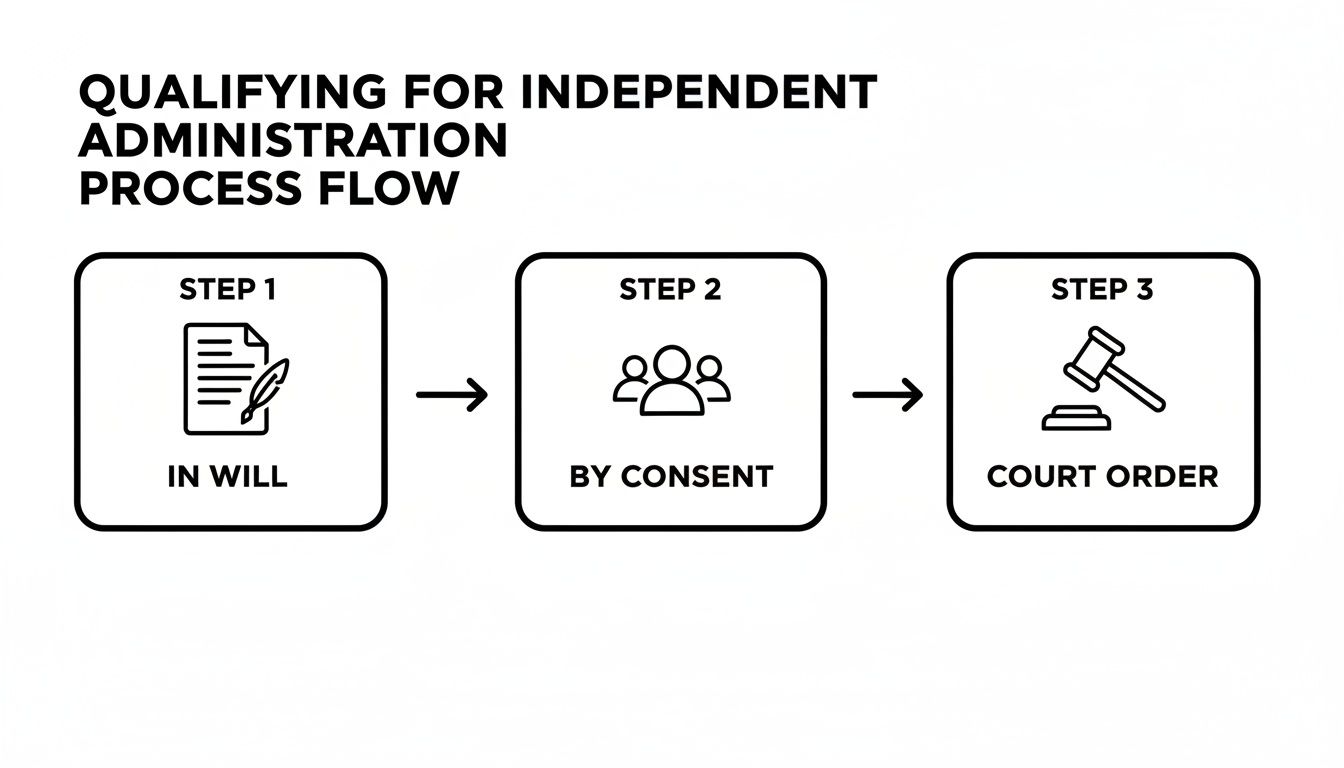
As you can see, a well-drafted will is the most direct path. Relying on consent from all beneficiaries introduces a human element that can be unpredictable, depending on family dynamics. But once you're appointed, the core of the process is the same.
Stage 1: Filing the Application and Getting Appointed
The first move in the Texas Probate Process is to file an "Application for Probate" with the correct county court. This legal document is your official request to the court, asking it to recognize the will as valid and to appoint you as the independent executor.
After filing, the court clerk will post a notice, and a hearing will be scheduled. This is a short, formal meeting where a judge reviews the paperwork, confirms you're qualified to serve, and has you take an oath of office. Once the judge signs the order, you’ll be issued Letters Testamentary—the official document that gives you the legal power to manage the estate.
Stage 2: Notifying Creditors
With your Letters Testamentary in hand, your next legal duty is to let potential creditors know the person has passed away. This isn't optional; it's a critical step required by the Texas Estates Code.
You'll handle two different kinds of notices:
- Published Notice: You have to publish a general "Notice to Creditors" in a local newspaper where the decedent lived. This acts as a public announcement, giving any unknown creditors a chance to step forward and make a claim against the estate.
- Direct Notice: For any secured creditors you know about—like a mortgage lender or a car loan company—you are required to send a formal notice directly to them via certified mail. This ensures they have been officially informed of the probate.
Stage 3: Gathering the Assets and Filing the Inventory
You have 90 days from your appointment to file a document called the "Inventory, Appraisement, and List of Claims." This is essentially a detailed catalog of everything the person owned when they died. It must be sworn to be accurate, listing everything from bank accounts and real estate down to cars and valuable personal items.
This document is a cornerstone of transparency for both the beneficiaries and the court, even in an unsupervised administration. Think of the inventory as the foundation for the entire administration. It creates an official record of the estate's assets and their values, which you'll use to pay debts, handle any taxes, and ensure every beneficiary receives a fair distribution.
Stage 4: Managing the Estate
This is where the real work begins. During this phase, you’ll use the authority from your Letters Testamentary to take control of the estate’s assets and manage its day-to-day affairs.
Your duties will likely include:
- Consolidating bank and investment accounts.
- Paying off valid debts and any claims from creditors.
- Filing the decedent's final income tax return, along with any necessary estate tax returns.
- Maintaining estate property, like a house, until it's ready to be sold or distributed.
Careful record-keeping is non-negotiable here. You are acting as a fiduciary, which means you have a legal and ethical duty to manage the estate's assets responsibly and only for the benefit of the creditors and beneficiaries. A well-drafted will, created with help from a Wills & Trusts attorney, often contains clear instructions that can make this stage much less stressful.
Stage 5: Distributing Assets and Closing the Estate
Once all debts have been paid and all tax issues are settled, you're cleared for the final step: distributing the remaining assets to the beneficiaries named in the will. It's a best practice to have each beneficiary sign a receipt to formally acknowledge they've received their inheritance.
While independent administration doesn't require a formal court closing, you have the option to file a "Notice of Closing Estate." This creates a public record that your duties are complete, giving you and the beneficiaries peace of mind and a definitive end to the process.
Independent Administration vs. Dependent Administration
To really understand why independent administration without court supervision is the gold standard in Texas probate, it helps to see what the alternative looks like. When you're grieving the loss of a family member, the last thing you want is a legal process that feels designed to be slow, public, and expensive. A little planning can make all the difference, and this is where that difference becomes crystal clear.

Think of it this way. Independent administration is like having an E-ZPass on the Texas toll roads. You’re trusted to move forward efficiently, paying what’s due as required, but you don't have to stop for approval at every single tollbooth. Dependent administration, on the other hand, is like being stuck in the "cash only" lane during rush hour—you have to stop, wait for the attendant (the judge), and get explicit permission before you can move forward even a few feet.
What Is Dependent Administration?
Dependent administration is the scenic route nobody wants to take. It's a probate process that is fully supervised by the court, making it far more hands-on, time-consuming, and costly. This path is usually mandatory when a will doesn't specifically ask for independent administration or when all the heirs can't agree to it. It also comes into play when the court needs to protect vulnerable heirs, like minors or individuals under a Guardianship, who can't speak for themselves.
In this scenario, the estate’s personal representative is called a "dependent administrator," and their power is severely limited. They must get a judge's formal, written permission for nearly every significant action—from selling a house to paying a credit card bill.
Independent vs Dependent Administration in Texas
The distinctions between these two paths shape everything—the timeline, the final cost, and the executor's freedom to get the job done. Court-supervised dependent administration is a much heavier lift that dramatically increases both the time and expense of settling a Texas estate. Let’s break down the major differences side-by-side.
| Feature | Independent Administration | Dependent Administration |
|---|---|---|
| Court Involvement | Minimal after appointment. The executor acts freely. | Constant. The court must approve most actions. |
| Executor Freedom | High. Can sell property, pay debts, and distribute assets. | Low. Must ask the court for permission for nearly every task. |
| Typical Timeline | Can often be completed in 6 to 12 months. | Frequently takes over a year, sometimes several years. |
| Estimated Cost | Significantly lower due to fewer court filings and hearings. | Higher legal fees and court costs are almost guaranteed. |
| Transparency | Executor still must provide an inventory and communicate. | Every action is part of the public court record. |
This table makes it obvious why most Texans who plan their estate opt for independence. The goal is to make things easier for your family, not harder.
When Court Supervision Becomes Necessary
While we almost always recommend independent administration, there are times when the "cash only" lane is unavoidable—or even helpful. For instance, if there's deep conflict and mistrust among the heirs, having a judge oversee the process can stop disputes from escalating into expensive and bitter Probate Litigation.
Likewise, if an estate has very complex business assets or is facing serious creditor claims, judicial oversight can actually protect the administrator from personal liability if something goes wrong.
The stark contrast between these two methods is exactly why we are such strong advocates for proactive estate planning. Just a few specific sentences in your will can save your family from months, or even years, of court dates and mounting legal fees. And if you're looking for other ways to simplify the process, you might be interested in our guide on the Muniment of Title in Texas, which is another streamlined probate alternative for certain estates.
Frequently Asked Questions About Independent Administration
As you start to explore independent administration without court supervision in Texas, you're bound to have questions. The probate process, even when it’s streamlined, can feel overwhelming. Below, we’ve put together answers to the most common questions we hear from families every day, offering straight talk to give you clarity and confidence.
How Long Does Independent Administration Usually Take?
One of the biggest draws of independent administration is its speed. While every estate is different, a typical independent administration can often wrap up within six to twelve months. That’s a world away from a court-supervised dependent administration, which can easily drag on for more than a year.
Of course, the timeline depends on a few moving parts:
- The complexity of the assets involved.
- Whether there are debts that need to be tracked down and paid.
- How quickly beneficiaries respond to communications.
- Any unexpected hiccups, like delays in selling a property.
Even with its faster pace, the process has some built-in waiting periods. For instance, once an executor is appointed, they have to send out mandatory notices to creditors. Those creditors then get a specific amount of time to file a claim. But without needing a judge to sign off on every little thing, the whole process moves much, much faster.
What Happens If a Beneficiary Disagrees with the Executor?
The phrase "without court supervision" can be a bit misleading. It doesn’t mean the executor can do whatever they want with no accountability. Beneficiaries have rights, and the Texas Estates Code gives them legal tools to make sure the executor is holding up their end of the bargain.
If a beneficiary is worried about how the estate is being managed, they can take a few different routes:
- Request an Accounting: Beneficiaries have the legal right to demand a formal accounting from the independent executor. This is a detailed report showing every dollar that has come into the estate and every payment that has gone out.
- Seek Removal: If there’s solid proof of mismanagement, self-dealing, or a major breach of their duties, a beneficiary can go to court and ask to have the independent executor removed. This isn't a step to be taken lightly and requires strong evidence.
- Initiate Probate Litigation: For major disputes or when there's a real suspicion of wrongdoing, a beneficiary might need to file a lawsuit. This can escalate into Probate Litigation, where the court steps back in to sort out the conflict.
Honestly, the best way to prevent these showdowns is clear communication. An executor who keeps beneficiaries in the loop and acts transparently is far less likely to run into trouble.
Can I Get Paid for Serving as an Executor?
Absolutely. Serving as an executor is a serious job with real responsibilities, and Texas law recognizes that it’s work worth paying for. The Texas Estates Code says that an independent executor is entitled to a commission for their time and effort.
The standard commission for an executor in Texas is 5% of all amounts the executor actually receives or pays out in cash while managing the estate. This 5% fee does not apply to cash that was already in the bank at the time of death or to the final distributions made to beneficiaries.
The will can also name a different amount for compensation or even state that the executor should serve without pay. And if the standard 5% commission feels unreasonably low for the amount of work required, the executor can ask the court to approve a higher, more reasonable fee. It’s a role with significant legal and financial duties, and the law provides for fair compensation.
Do I Still Need a Lawyer for This Process?
Even though it’s called independent administration without court supervision, trying to handle it alone is a gamble. The role of a probate attorney isn't to create red tape; it's to make sure everything is done right and to shield the executor from personal liability.
An experienced lawyer is your most valuable resource, helping you by:
- Ensuring Compliance: Making sure you hit every legal deadline, like filing the inventory within 90 days and giving proper notice to creditors.
- Preventing Costly Errors: Helping you sidestep common mistakes that could leave you personally liable for estate debts or spark family fights.
- Providing Clarity: Offering clear-headed advice on tricky issues, like valuing unique assets or figuring out which creditor claims are legitimate.
- Resolving Disputes: Acting as a neutral third party to help mediate disagreements before they turn into expensive and painful court battles.
Think of an attorney as your professional guide, making sure you follow the map correctly so you don't get lost along the way. Their fee is an investment in protecting the estate, protecting yourself, and giving you peace of mind that you're honoring your loved one’s wishes perfectly.
Key Insight
While independent administration is designed to be efficient, it does not eliminate legal complexity or responsibility. Partnering with a probate attorney is the surest way to protect yourself from personal liability, navigate legal requirements correctly, and ensure a smooth process for the entire family. For more detail on an executor's specific responsibilities, see our guide on independent executor powers in Texas.
If you’re facing probate in Texas, our team can help guide you through every step — from filing to final distribution. Schedule your free consultation today.