Skip to content
When a loved one names you as an independent executor, they’re handing you a profound vote of confidence. It’s a role built on trust, giving you the authority to manage their final affairs with as little court meddling as possible. This is a core feature of the Texas Probate Process, specifically designed to make settling an estate quicker and less expensive for families already navigating a difficult time.
What an Independent Executor in Texas Actually Does

Losing a family member is overwhelming on its own. Being handed a stack of legal duties on top of that can feel like another world of stress. We understand. The role of an independent executor is a big one, but with compassionate guidance, it’s entirely manageable.
Think of yourself as the estate's temporary manager. Your job is to follow the instructions in your loved one’s will while adhering to the rules of Texas law. The word “independent” is the key here. Unlike a dependent administration, where a judge has to sign off on almost every single move, an independent executor has the freedom to act without constant court supervision.
The Core Responsibilities
This special authority, granted under Title 2 of the Texas Estates Code, is all about streamlining the probate process. It lets you handle essential tasks efficiently, which ultimately preserves more of the estate's value for the people who are supposed to inherit it. Your main duties will fall into three big buckets:
- Gathering All Estate Assets: This means finding and taking control of everything the person owned—from bank accounts and real estate to family heirlooms and vehicles.
- Paying Valid Debts and Expenses: You’ll use the estate’s money to pay off any legitimate bills, outstanding taxes, and funeral costs.
- Distributing Property to Heirs: After all the debts are squared away, you’ll transfer the remaining assets to the beneficiaries listed in the will.
These independent executor powers in Texas exist to cut down on the time and money that probate can often drain from an estate.
Of course, with great power comes great responsibility. This autonomy is balanced by a strict legal obligation known as a fiduciary duty. In plain English, this means you must always act in the absolute best interest of the estate and its beneficiaries. Failing to do so can open you up to personal liability and even messy Probate Litigation. This guide is here to walk you through your powers and duties, giving you the clarity and confidence you need to get the job done right.
The Specific Powers Granted to an Independent Executor
Once the probate court officially names you the independent executor, you're essentially given the keys to your loved one's financial life. Texas law grants you a powerful set of authorities designed to let you settle the estate efficiently and with care, all without a judge constantly looking over your shoulder.
Think of it like this: the court has made you the temporary CEO of the estate, and the will is your operations manual. You have the authority to manage the day-to-day—paying bills, securing property, and eventually distributing the assets—without asking for permission at every turn. This freedom is exactly why independent administration in Texas is the preferred method for settling estates.
Your Authority Under the Texas Estates Code
The Texas Estates Code is the official rulebook for your new role. The key statute here is Section 402.001, which states that unless the will specifically holds you back, you can do anything you believe is necessary to properly administer the estate without running to the court for approval.
This isn't just vague legal language. It translates into real, tangible powers, including:
- Gathering and Securing Assets: You have the legal right to take control of everything—bank accounts, investment portfolios, real estate, cars, and personal belongings.
- Paying Valid Debts and Expenses: You can use estate funds to settle legitimate creditor claims, pay for the funeral, handle final medical bills, and cover the costs of administration.
- Managing Estate Property: This means you can maintain property, keep it insured, and even sell it if necessary to pay debts or to make a fair distribution to the heirs.
This level of autonomy is a game-changer, allowing you to honor your loved one's wishes while protecting the value of their legacy.
The Power to Sell Property
One of the most significant independent executor powers in Texas is the ability to sell property, particularly real estate, without a judge's sign-off. This is absolutely critical in many common scenarios. For instance, an estate might not have enough cash to pay off debts, or the will might require a property to be sold and the proceeds split among several people.
Realistic Scenario: Imagine your father’s will leaves his house to his three children equally. It’s impossible to physically divide a house three ways. As an independent executor, you can list the home with a realtor, sell it at a fair market price, and then distribute the cash to the beneficiaries. You can handle that entire transaction without ever stepping foot in a courtroom. In a dependent administration, you’d need the court's approval for nearly every one of those steps, which can drag the process out for months.
Your Step-by-Step Duties and Responsibilities
Being named an independent executor is a huge vote of confidence from a loved one. But let's be honest—it can also feel overwhelming. You've just been handed the keys to someone's financial life and told to settle it all. Where do you even begin?
The good news is that the process isn't a mystery. It's a series of clear, logical steps. By tackling one stage at a time, you can confidently navigate your duties and honor the trust placed in you.
Think of it as a roadmap. Here are the key milestones you'll need to hit to get the estate from where it is today to its final destination.
Step 1: Obtain Your Authority
Your journey officially begins in court. The first thing you must do is probate the will by filing an application with the appropriate Texas probate court. This kicks off a legal process to validate the will and formally appoint you.
The goal of this first hearing is to walk out with Letters Testamentary. This document is your golden ticket. It's the official court order proving you have the legal power to act for the estate. Without it, banks, title companies, and other institutions won't recognize your authority.
Step 2: Notify Interested Parties
With your Letters Testamentary in hand, you have two crucial notice requirements to fulfill right away, as required by the Texas Estates Code. You need to formally alert both the beneficiaries and any potential creditors.
- Notice to Beneficiaries: Texas law gives you 60 days from the day the will is probated to notify every beneficiary named in it. This is a formal heads-up, letting them know the will is official and that they have an interest in the estate.
- Notice to Creditors: You also have to publish a general notice in a local newspaper. This serves as an announcement to any person or company the deceased might have owed money to, and it starts the clock for them to submit a claim.
Getting these notices out on time is a core part of your independent executor powers in Texas. It's not just a formality; it protects the estate from surprise claims popping up months or years down the road.
Step 3: Gather and Inventory All Assets
Now comes the detective work. This is often the most demanding part of the job, where you'll need to track down, secure, and value everything the person owned. We're talking about bank accounts, real estate, cars, stocks, retirement funds, and even personal belongings.
You’ll compile all of this information into a document called an Inventory, Appraisement, and List of Claims. This detailed report must be filed with the court, usually within 90 days of your appointment. However, many modern wills include a provision for an Affidavit in Lieu of Inventory. This lets you file a statement confirming the inventory is complete and has been shared with beneficiaries, all without making the sensitive financial details a public record.
The process boils down to these three core phases.
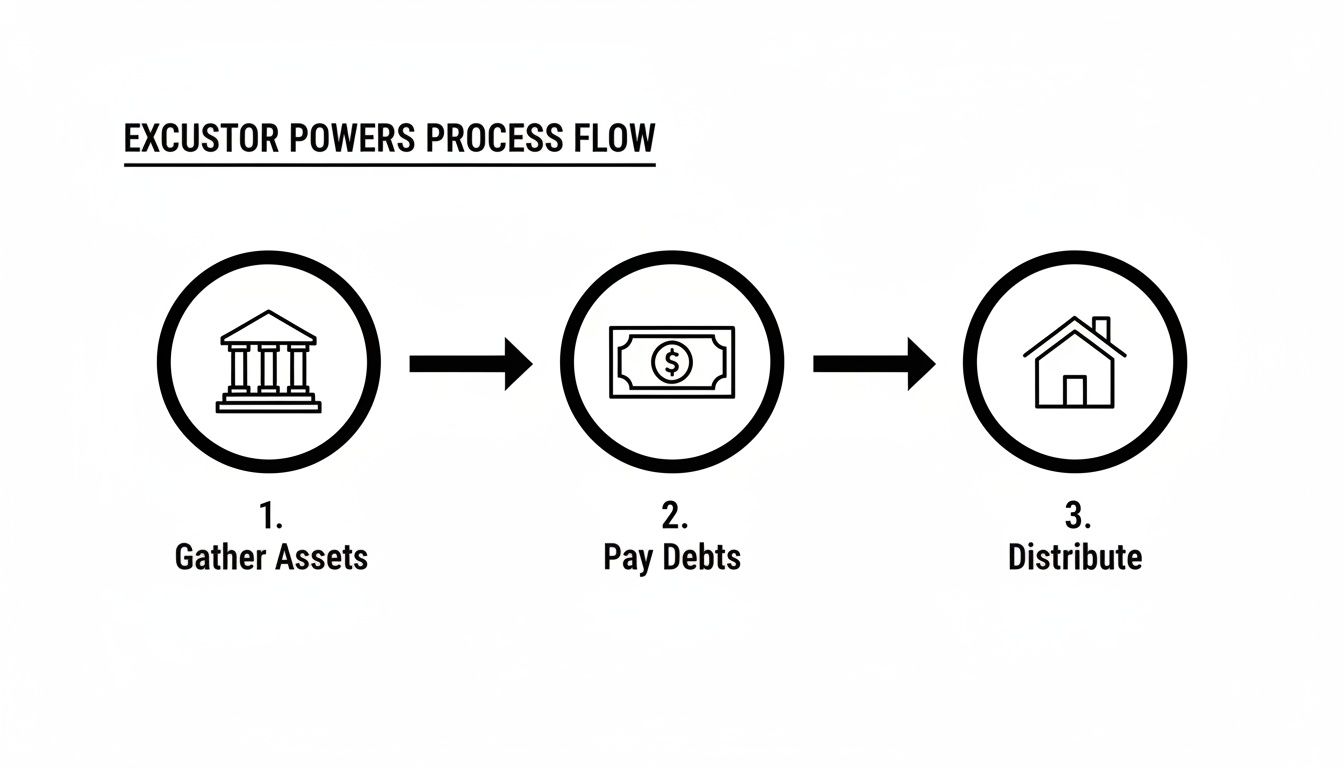
As you can see, your role is to first gather everything, then clean up the financial obligations, and finally pass on what's left to the rightful heirs.
Step 4: Manage Finances and Pay Debts
Once you have control of the assets, you’ll open a dedicated bank account for the estate. This is where you'll deposit all cash and from which you'll pay all the estate’s legitimate debts and expenses. These typically include:
- Funeral costs
- Final medical bills
- Credit card balances and loans
- Administrative costs (like attorney fees, court costs, and appraisal fees)
- Final income taxes
Keeping meticulous records here is non-negotiable. Every penny in and every penny out must be accounted for. This protects you from any future accusations of mismanagement and ensures total transparency. To learn more, check out our guide on an executor of a will's responsibilities for a deeper dive.
Step 5: Distribute Assets and Close the Estate
This is the final and most rewarding step. After all debts, taxes, and expenses are paid, you can finally distribute the remaining assets to the beneficiaries as laid out in the will. This is the moment all your hard work has been leading up to—fulfilling your loved one's final wishes.
Once everyone has received their inheritance and signed receipts confirming it, you can take the last few steps to formally close the estate with the court. At that point, your job as executor is officially complete.
Selling Estate Property Without Court Approval

One of the biggest advantages of being an independent executor in Texas is the power to sell estate property—especially real estate—without getting a judge’s permission for every move. This single authority is what makes independent administration so much faster and more efficient than its court-supervised cousin, a dependent administration.
Think about a common situation: a loved one passes away, leaving their home as the main asset. But the cash in their bank accounts isn’t enough to pay off final medical bills or nagging credit card debts. As an independent executor, you aren't stuck. You can hire a realtor, list the house, accept a good offer, and use the sales proceeds to settle those debts, all without waiting weeks or months for a court hearing.
Where Does This Power to Sell Come From?
Your authority to sell property doesn't just appear out of thin air. It comes from one of two places, and knowing which one applies to you is key to acting with confidence.
-
A Power of Sale Written into the Will: The most straightforward source is the will itself. A well-drafted will almost always includes a "power of sale" clause. This is explicit language giving the executor the green light to sell property as needed to manage the estate. It’s clear, direct, and leaves no room for argument.
-
Power Granted by Texas Law: But what if the will is silent on the issue? Thankfully, the Texas Estates Code provides a powerful statutory backup. The law was changed to fix a common problem where estates got stuck. Now, an independent executor has clear legal authority to sell property to pay debts, cover administration expenses, and make distributions to heirs. The relevant statutes can be found in Estates Code §§ 402.051-402.054. For a deeper dive, check out our guide on selling real estate during the Texas probate process.
Don’t Forget Your Fiduciary Duty
While you have the power to sell, you can't just do whatever you want. You are a fiduciary, which is a legal term meaning you must act in the absolute best interest of the estate and its beneficiaries. When selling property, this duty is paramount.
Here’s what it means in practice:
- Get Fair Market Value: You can't sell the family house to your cousin for a rock-bottom price. Your duty requires you to get a fair price, which usually means getting a professional appraisal and listing it on the open market.
- Act with Prudence: Manage the sale responsibly. This means hiring qualified real estate agents, working with a title company, and ensuring all the paperwork is handled correctly. Don't cut corners.
- Communicate with Beneficiaries: Keep the heirs in the loop. Letting them know why a sale is necessary and providing updates on the process builds trust and helps prevent disputes later.
Selling estate property is a heavy responsibility, but it's also a powerful tool that allows you to settle the estate efficiently. By acting carefully and leaning on professional guidance when you need it, you can handle the sale with confidence and honor your loved one's legacy.
Common Pitfalls and Your Fiduciary Duties

While the word "independent" feels freeing, it's critical to remember that your independent executor powers in Texas are anchored by a serious legal obligation: your fiduciary duty. This isn't just a fancy legal term; it's the highest standard of loyalty the law recognizes.
In plain English, it means you must act with absolute integrity, always putting the interests of the estate and its beneficiaries ahead of your own. No exceptions.
With great power comes the potential for major missteps. Juggling family expectations, financial pressures, and legal deadlines is a real minefield. Knowing the common pitfalls is the first step to avoiding them—and protecting yourself from being held personally liable.
What Is a Breach of Fiduciary Duty?
A breach happens when an executor’s actions—or lack thereof—harm the estate or its beneficiaries by violating the core duties of loyalty, care, and fairness. Here are some of the most common ways executors get into trouble:
- Self-Dealing: This is the classic conflict of interest. It looks like selling an estate car to yourself for way below market value, "loaning" yourself cash from the estate's bank account, or hiring your own business to do repairs on an estate property and charging an inflated rate.
- Mismanaging Funds: This can be anything from outright carelessness to recklessness with the estate's money. Co-mingling estate funds with your personal bank account is a huge red flag. So is failing to pay estate taxes on time and racking up penalties, or making speculative, high-risk investments with the estate's assets.
- Showing Favoritism: The will dictates who gets what, and your job is to follow it impartially. You can't distribute assets to one heir ahead of everyone else just because they're your favorite, nor can you give one sibling detailed updates while ghosting the others.
These aren't just etiquette blunders; they carry severe legal weight. You could be forced to repay the estate for any losses out of your own pocket and even be removed as executor.
A Scenario Unpacking a Common Mistake
Let's walk through a common scenario. Imagine Sarah is the executor for her late father's estate. The biggest asset is the family home, which needs to be sold. Sarah's cousin, a handyman, offers to renovate the kitchen before putting it on the market, promising it'll boost the sale price. Sarah agrees and pays him from the estate account without getting any other bids.
The renovation costs more than planned, and the work is shoddy. When the house sells for less than everyone hoped, the other beneficiaries find out about the arrangement. They could argue Sarah breached her fiduciary duty. Why? She engaged in a form of self-dealing (by favoring a relative) and failed to act prudently (by not getting competitive bids to ensure a fair price and quality work).
This is exactly the kind of situation that can explode into a contentious Probate Litigation case, where Sarah could be held personally liable for the estate's financial loss.
Grounds for Removal Under the Texas Estates Code
If beneficiaries believe an executor is dropping the ball, they aren't powerless. They have every right to hold you accountable, and Texas courts take that accountability very seriously. You can see how courts handle these situations in the detailed analysis of the Graff v. 2920 Park Grove Venture ruling from The National Law Review.
Under Texas Estates Code §§ 361.051-361.052, any interested person can ask the court to remove an independent executor for several reasons, including:
- Embezzling or misapplying estate property.
- Gross misconduct or mismanagement in performing their duties.
- Failing to file a required inventory or accounting on time.
- Becoming legally incapacitated or being sentenced to prison.
- Having a material conflict of interest that makes it impossible to perform their duties fairly.
Your independence as an executor is a privilege granted to make the process smoother and more efficient. It is not a license to operate without oversight. Think of your fiduciary duty as the legal guardrail keeping you on the right path, ensuring you honor your loved one’s final wishes with integrity and care.
Key Takeaway: Balancing Power with Responsibility
Stepping into the role of an independent executor is a huge responsibility—one built on a foundation of trust. The whole reason independent executor powers in Texas exist is to make a difficult time a little easier for your family by keeping probate simple, fast, and less expensive.
Key Insight: The title says "independent," but you're never truly on your own. Your freedom to manage the estate is balanced by your absolute duty to answer to the heirs.
This means that even with all the power you've been given, keeping meticulous records and communicating openly aren't optional. Every dollar in and out should be tracked. Beneficiaries should be kept in the loop. This builds trust and becomes your strongest shield if anyone ever questions your actions later. Your most critical responsibility is your fiduciary duty. This is your legal and ethical promise to be completely transparent and loyal, always putting the interests of the beneficiaries first.
The job of an independent executor is certainly manageable, but it’s also riddled with legal traps. The smartest thing you can do is get help from a Texas probate attorney who’s been down this road many times before. Good legal advice helps you honor your loved one's final wishes, shields you from personal financial risk, and makes sure the whole Texas Probate Process is handled correctly. If you find yourself facing potential Probate Litigation, our team is here to back you up. We can also help with related family matters like Guardianship or helping you set up your own Wills & Trusts.
If you’re facing probate in Texas, our team can help guide you through every step — from filing to final distribution. Schedule your free consultation today.
Answering Your Top Questions
When you’re tasked with settling an estate, the big legal concepts are one thing, but it's the practical, day-to-day questions that really keep you up at night. Let’s tackle some of the most common questions we hear from families about serving as an independent executor in Texas.
How Long Does an Independent Administration Take in Texas?
Because you’re not waiting on a judge to approve every single move, independent administration is dramatically faster than its court-supervised counterpart. While every estate has its own unique twists and turns, a reasonably straightforward administration can often be wrapped up within 6 to 12 months.
Of course, that timeline isn't set in stone. It can stretch out depending on a few key factors:
- The complexity of the assets involved.
- Whether you need to sell real estate or other major property.
- Any disputes that pop up with creditors or between the beneficiaries themselves.
Even with those potential hurdles, the entire point of independent administration is to get things settled efficiently, thoroughly, and fairly without getting bogged down in court delays.
Can an Independent Executor Get Paid?
Absolutely. Texas law understands that being an executor is real work, and it allows you to be paid a reasonable fee from the estate's funds for your time and effort. If the will doesn’t name a specific payment, Title 2 of the Texas Estates Code steps in with a default commission.
The standard fee is 5% of all cash the estate takes in and 5% of all cash it pays out. But here’s the critical part: you must keep meticulous records of your time and every task you perform. This documentation is your justification for the fee, which is considered taxable income you'll need to report on your personal tax returns.
What if the Will Does Not Name an Independent Executor?
This is a common and costly oversight. If the will is silent on creating an independent administration, the estate is typically forced into a "dependent administration." That means more court hearings, more legal fees, and a lot more time and money drained from the estate itself.
But there’s a powerful workaround. If all beneficiaries can unanimously agree, they can petition the court to appoint an "independent administrator" who will have all the same streamlined powers. This is where a skilled probate attorney becomes essential. They can help the heirs find common ground and make a compelling argument to the judge that this approach is in everyone's best interest.
Do I Really Need a Lawyer if I Am an Independent Executor?
While Texas designed this process to be less court-heavy, trying to go it alone is a huge gamble. The role of an executor carries immense legal responsibility and personal liability. One wrong move, even an honest mistake, can lead to serious financial consequences for you personally.
Hiring a probate attorney isn't a sign of weakness; it's a smart business decision. A lawyer acts as your guide and your shield, providing critical support on:
- Hitting every legal deadline and notice requirement.
- Correctly interpreting the will and Texas probate law.
- Handling tricky creditor claims and tax obligations.
- Steering you clear of actions that could be seen as a breach of your fiduciary duty.
Think of it this way: investing in legal counsel is the best insurance you can buy to protect yourself, honor your loved one’s wishes correctly, and carry out your duties with confidence.
If you’re facing probate in Texas, our team can help guide you through every step — from filing to final distribution. Schedule your free consultation today.