When a family can’t find the original will after a loved one dies, the room changes. What started as a practical search through desk drawers, file folders, and a home safe quickly becomes something heavier. People begin asking hard questions. Was there really a will? Did someone move it? Does a copy count? What happens now?
That situation is more common than many families expect. In Texas, a missing original will creates both an emotional problem and a legal one. Grief is already doing enough damage. Then probate adds deadlines, notice requirements, hearings, and the possibility of a family dispute.
Lost will probate texas cases are difficult, but they aren’t hopeless. Texas law does give families a path forward. The challenge is that the court won’t automatically accept a photocopy because everyone in the room believes it reflects your loved one’s wishes. The judge needs proof, and the proof has to address very specific legal concerns.
What follows is a practical guide for families, executors, and heirs. It explains what Texas courts worry about, what evidence matters, when a missing will can still be probated, and when it may be wiser to choose a different path.
The Unsettling Silence When a Will Goes Missing
Maria’s father told the family for years that he had “taken care of everything.” After he died, his children found deeds, insurance papers, tax returns, and a folder labeled “estate.” But the original will wasn’t there. There was a copy in an old email attachment and another copy in a filing cabinet, yet no signed original. One sibling was calm. Another was suspicious. A third kept saying, “He would never want the state deciding this.”
That’s the moment many families land in. They aren’t ready for a legal fight. They’re trying to plan a funeral, secure a house, and answer relatives’ questions. Then the missing will turns the estate into a mystery.
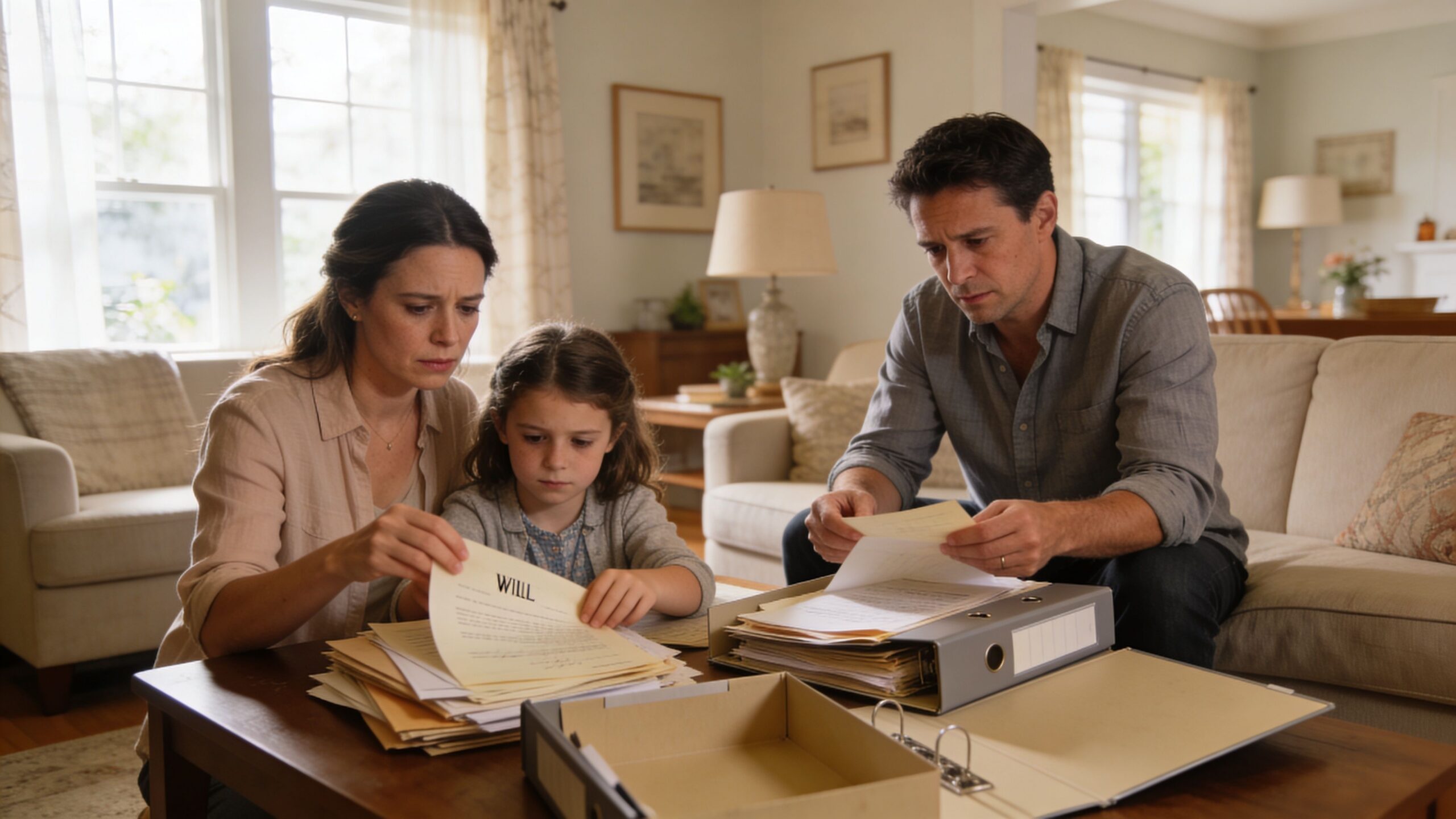
A lost will case usually starts with uncertainty, not conflict. Someone remembers seeing the will years ago. Someone else believes the drafting attorney may still have a copy. Another person thinks the original might be in a safe deposit box, a storage unit, or with a former spouse. Those details matter because the court wants more than a story. The court wants a documented explanation.
Why families feel stuck so quickly
Texas probate law treats a missing original will differently from a will that’s inconvenient to locate. If the original can’t be found after death, the family has to decide whether to try to prove the missing will or move forward another way. That decision affects who inherits, how long probate may last, and how much tension the estate can absorb.
A practical first step is to slow down and create a written search log. Write down where you looked, who had access to the home, whether a lawyer drafted the will, and whether anyone recalls seeing the original near the end of life.
First comfort, then process: A missing will is serious, but it doesn’t automatically mean your loved one’s wishes are lost forever.
Families often benefit from reading about similar probate mysteries before taking action. This discussion of lost wills and forgotten heirs in Texas probate court helps show how these situations unfold in real life.
What you should gather right away
- Any copy of the will: Printed copies, scanned copies, emailed versions, or drafts from the lawyer’s office.
- Names of witnesses: Anyone who signed the will or was present when it was discussed.
- Storage history: Notes about safes, safe deposit boxes, home offices, and digital files.
- Family timeline: When the will was last seen, who handled papers, and whether the decedent ever talked about changing it.
Those early facts often shape the entire case.
Understanding Texas's Legal View on a Lost Will
A missing original will changes the legal starting point in Texas.
If the original was last in the testator's possession and cannot be found after death, the court may presume the person destroyed it with the intent to revoke it. Families are often surprised by that rule. They have a copy, they know what their loved one wanted, and they expect the copy to settle the matter. Texas law asks a different question first. Why is the signed original gone?
That presumption does not end the case, but it does raise the burden. The court is not treating the family as dishonest. The judge is applying a common-sense safeguard. If people could probate any missing document based only on memory or a photocopy, estates would be much easier to manipulate after someone dies.
A lost will case usually turns on three separate issues:
Was the will properly executed?
The court needs proof that the document was signed with the formalities Texas requires. An unsigned draft or a set of handwritten notes will not do the same work as a validly executed will.Can the court determine the will's contents?
A clear copy is often the strongest evidence. Testimony from the drafting attorney, witnesses, or someone who saw the document can also help fill gaps.Was the will revoked?
This is often the hardest point. If the original disappeared from the decedent's own files, the family must present facts that make revocation less likely.
A practical way to view this is to picture a house key that has gone missing. Finding a photo of the key shows what it looked like. It does not prove whether the owner misplaced it, handed it to someone else, or threw it away on purpose. A copy of a will works the same way. It may prove content, but it does not automatically answer the revocation question.
That distinction matters because some families spend time and money chasing a lost-will probate without first asking whether it is the better path. If the evidence of non-revocation is thin and the heirs under intestacy are the same people who would inherit under the missing will, probate without the will may be the cleaner and less expensive option. Intestacy is not always a disaster. Sometimes it is the practical choice that avoids a long fight over a document the court may never admit.
What judges look for in real cases
Consider a common family scenario. A widowed mother signs a will leaving everything equally to her three children. Her lawyer keeps a scanned copy. The original stays in a desk drawer at home. After her death, the drawer is empty.
At that point, the court wants evidence, not assumptions. Helpful evidence might include:
- testimony from the lawyer who supervised the signing
- testimony from the subscribing witnesses
- proof that the scanned copy matches the signed original
- facts showing the mother continued to describe that will as her plan
- evidence that other people had access to the home or papers
- a careful record of the search for the original
Texas law also imposes a four-year deadline to probate a will, including a lost one. Delay can weaken a case in very practical ways. Witnesses forget details. Paper trails disappear. Relatives become more suspicious of each other.
A lost will case asks the court to answer two questions at once: what did the document say, and why is the signed original missing?
Terms that often cause confusion
Families often hear probate vocabulary at the worst possible time. A few definitions make the process easier to follow:
- Testator: the person who made the will
- Heirs-at-law: the people who inherit if there is no valid will under Texas intestacy rules
- Beneficiaries: the people named in the will to receive property
- Intestacy: the default Texas inheritance system that applies when no valid will is admitted
- Self-proving affidavit: a notarized statement signed with the will that can make execution easier to prove
For readers comparing general planning concepts across states, a guide to Utah estate documents can help explain broader differences between wills and trusts, even though Texas law controls a Texas probate case.
One early mistake families make
Families often focus only on finding a copy because a copy feels tangible. The harder legal issue is usually intent. Did the decedent mean to cancel the will, or did the original disappear for some other reason?
That is why the surrounding facts matter so much. Who had access to the papers? Did the decedent ever talk about changing the will? Was there a move, a hospital stay, a cleanout, or a period of confusion near the end of life? Those facts often carry as much weight as the paper itself.
If you want a step-by-step explanation of what the court process looks like after a copy is found, this Texas guide to probating a lost will lays out the filing and proof requirements in more detail.
If your family is also reviewing broader planning issues, the firm’s resources on Wills & Trusts and the Texas Probate Process can help place a lost will in the larger probate picture.
How to File and Prove a Lost Will in Court
A lost will case usually stops feeling theoretical the moment someone asks, “What do we file?” At that point, grief collides with procedure. Families are sorting through papers, calling relatives, and trying to tell the court a clear story about a document no one can put on the table.
That story matters as much as the paperwork. A judge is being asked to admit a will that cannot be produced in original form. So the court will want more than a copy and a good-faith explanation. It will want proof, context, and notice to every person whose rights could change if the will is admitted. For a closer look at the mechanics, this step-by-step Texas guide to probating a lost will walks through the filing and proof process.

Start with the right court and the right people
The application is usually filed in the probate court for the county where the decedent lived. That sounds simple. In practice, the harder part is naming everyone who has a legal stake in the outcome.
The court will usually need to see two groups clearly identified:
- Beneficiaries named in the lost will
- Heirs-at-law who would inherit if no will is admitted
Families often focus on the first group because those are the people the decedent chose. Texas probate law also cares about the second group because intestacy stays on the table until the lost will is proven. If an omitted child, sibling, or grandchild would inherit under intestate succession, that person may need notice even if the missing will leaves them nothing.
A helpful way to view this is as two maps laid on top of each other. One map shows where the estate goes if the lost will is accepted. The other shows where it goes if the case fails. The judge needs both.
Notice is part of the proof
Service and citation can feel like procedural side issues. They are not.
If an heir is missed, the case can stall while notice is corrected. In some cases, a mistake here can force a family to start over. That is why a careful family tree matters early, before the hearing date is set and before positions harden.
This point also connects to strategy. If proving the lost will will require locating distant relatives, serving notice on multiple heirs, and preparing for objections from people who stand to gain more through intestacy, some families pause and ask a hard but healthy question. Is probate of the lost will worth the cost, delay, and conflict, or would intestate administration produce an acceptable result at lower expense? That is not giving up. It is making a practical decision with open eyes.
Build an evidence file that answers the judge’s questions
A lost will hearing often turns on whether the evidence fits together like pieces from the same box. One witness says the decedent kept the original in a home safe. Another says the house was cleared out during a hospital stay. The lawyer has a signed copy in the file. A child testifies that the decedent never mentioned revoking it. Put together, those facts may support admission of the copy.
The court is usually looking for answers to a few basic questions:
| Question the judge has | Evidence that may help |
|---|---|
| Did a real will exist? | Signed copy, drafting attorney’s file, witness testimony |
| Was it properly executed? | Self-proving affidavit, subscribing witnesses, notary records |
| What were its terms? | Photocopy, draft that matches testimony, attorney notes |
| Why is the original missing? | Search records, testimony about moves or cleanouts, facts showing no revocation |
The strongest cases usually do not rely on one dramatic piece of evidence. They rely on many ordinary pieces that line up.
A real-world example
A widow in Fort Bend County signed a will years before her death. Her attorney kept a copy. The original was believed to be in a file cabinet at home. During a period of declining health, her daughter moved paperwork to prepare the house for sale, and several boxes were taken to storage. After the widow died, the original could not be found.
The family did not just tell the judge, “We know she had a will.” They gathered the attorney’s copy, asked the drafting lawyer to testify, documented the search of the home and storage unit, and explained who handled the papers during the move. That gives the court something solid to evaluate.
Cases like this show why lost will probate can feel like reconstructing a shredded contract from scraps and memories. The more complete the reconstruction, the better the court can trust it.
Witness testimony often fills the gaps
A self-proving affidavit helps with execution, but it does not erase the missing-original problem. Courts often want live testimony or sworn statements that explain the surrounding facts. The judge may want to hear about:
- the decedent’s mental capacity when the will was signed
- where the original was usually kept
- whether the decedent ever talked about changing or revoking the will
- who had access to the papers near the end of life
- what search efforts were made after death
Many families are often surprised. They expected the case to rise or fall on whether a copy exists. Often the more disputed issue is intent. If the original was last known to be in the decedent’s possession and is gone at death, the court may worry that the decedent destroyed it on purpose. Testimony and surrounding facts are what address that concern.
A hearing is about persuasion, not volume
Bringing a stack of documents to court is not the same as proving a case. The judge needs a believable sequence of events. Who saw the will? Where was it kept? What happened to the papers during a move, hospitalization, or house cleanout? Why should the court conclude the will was lost rather than revoked?
A concise, consistent presentation usually carries more weight than a binder full of disconnected records.
A practical checklist before the hearing
- Confirm the filing deadline.
- Identify all heirs-at-law, not only will beneficiaries.
- Collect every copy, scan, draft, and attorney record.
- Document the search for the original in specific places.
- Secure witness statements while memories are still fresh.
- Prepare a timeline that explains how the original went missing.
Families looking for hands-on help with this process sometimes work with probate counsel, and the Law Office of Bryan Fagan, PLLC handles probate filings, heirship issues, and contested estate matters in Texas.
Common Pitfalls and Contests in Lost Will Cases
A missing will can turn an already painful season into a family dispute no one expected. One sibling says Dad would never have changed his plan. Another says the missing original proves he did. By the time everyone reaches court, the underlying issue is often not the paper itself. It is the suspicion that grows around the missing paper.
Lost will cases tend to break down in a few predictable ways. Deadlines get missed. A relative who would inherit under intestacy objects. A copy appears late and looks convenient rather than convincing. Or the family spends so much time fighting over the missing will that no one stops to ask a harder and sometimes wiser question. Is proving this will worth the cost, delay, and damage to relationships?
That last question matters more than many families realize. If the likely intestate result is close to what the lost will said, a court fight may give you a larger bill, not a meaningfully better outcome.
Late filings create an uphill battle
Texas generally expects a will to be offered for probate within four years of death. In a lost will case, that deadline can sneak up on a family. Papers may have been stored in several homes. One child may assume another has the original. Grief slows everything down.
Courts can allow a late filing in limited situations, but families should not treat that as a safety net. Judges usually want a clear, documented explanation for the delay. Dates matter. Search efforts matter. So does who knew what, and when.
A simple statement like, “we were dealing with a lot,” may be emotionally true and legally weak.
Contests usually start where money and mistrust meet
People contest lost wills for practical reasons. If the will is rejected, the estate may pass under intestacy instead. That can benefit someone who received less under the missing document, or someone left out of the copy altogether.
Common pressure points include:
- Unequal gifts among children. A child who receives less under the copy has a reason to challenge it.
- Blended families. Children from a prior marriage and a surviving spouse may have very different views of what the decedent intended.
- Control over records. If one relative handled finances, mail, or the home, others may suspect that person had access to the original will.
- Late-found copies or drafts. The later a copy appears, the more likely someone is to question where it came from and why it surfaced when it did.
- Unclear heirship. Unknown heirs, estranged children, or relatives from prior relationships can complicate notice and increase resistance.
A lost will hearing can start to resemble a family history trial. The court may hear from relatives, neighbors, the drafting lawyer, office staff, or anyone who saw where important papers were kept.
If your case is heading toward active litigation, the firm’s Probate Litigation resources are worth reviewing early.
Ordinary mistakes can weaken an otherwise honest case
Many families assume the hard part is finding a copy. Often the harder part is avoiding small procedural mistakes that create doubt.
| Pitfall | Why it hurts the case |
|---|---|
| Leaving out an heir in the application | The court may require additional notice, delay the hearing, or question whether everyone affected has been brought into the case |
| Treating a copy as self-proving | A copy does not answer the court’s concern about whether the original was revoked before death |
| Waiting too long to talk to witnesses | Memories soften, details blur, and key witnesses may move away or become unavailable |
| Failing to record the search for the original | Without a specific search history, the court may suspect the family stopped looking too soon |
| Fighting over principle instead of outcome | Legal fees and hostility can exceed any practical benefit of proving the missing will |
That last pitfall is easy to miss. Families often feel morally bound to prove “what Mom wanted.” Sometimes that instinct is right. Sometimes it leads them into a long dispute even though intestacy would produce a similar result. In that setting, alternatives such as probate through muniment of title in the right circumstances may become part of the broader conversation about efficient estate administration.
A short explanation of the issues can also help families prepare for the hearing process.
An attorney ad litem can change the tone of the case
Families are often surprised when the court appoints an attorney ad litem. That lawyer does not represent the family member who filed the case. The ad litem is there to protect people whose interests may be affected, such as unknown heirs or others who may not be fully represented.
A good analogy is a referee checking whether everyone who should be in the game is on the field. If someone is missing, the court slows down. That can add cost and time, but it also protects the final order from later attack.
The ad litem may test the family tree, review notice, question the search for the original, and examine whether admitting the lost will would harm someone who has not yet been heard.
Courts treat missing wills cautiously because fraud is harder to detect after death. That caution can feel personal to a grieving family, but it is aimed at protecting the estate and everyone connected to it.
Procedure can decide the case
Families sometimes focus on the big emotional facts and overlook the technical ones. That is dangerous. A strong story can still lose if the evidence is not properly offered, the hearing record is incomplete, or objections are not preserved.
Probate court is less like telling your side of the story at the kitchen table and more like building a chain. Every link matters. Notice. Witnesses. exhibits. Testimony. The court record. If one link fails, the whole effort can give way.
For many families, that practical reality changes the decision-making process. The question stops being, “Can we fight for the lost will?” and becomes, “Should we, given the likely result, the cost, and the strain on the people left behind?”
Strategic Alternatives to Probating a Lost Will
Sometimes the right legal advice is not “fight harder for the copy.” Sometimes the better advice is “look at the full picture first.”
That’s especially true when the missing will is likely to trigger conflict, when the estate is modest, or when intestate heirs are the same people who would inherit under the missing will anyway. In those situations, insisting on a lost will hearing may create more expense and family strain than practical value.
A thoughtful explanation of this appears in the discussion of copies of wills and intestate alternatives, which notes that accepting intestate succession can be a strategic choice rather than a legal defeat.
Intestacy is not always a failure
Families often hear intestacy described in catastrophic terms. Sometimes that’s accurate. If a missing will would have protected a blended family, excluded an estranged relative, or made special arrangements for a vulnerable child, intestacy may distort the decedent’s intent.
But other times, the result under intestacy is close to the result under the missing will. If so, a contested lost will case may not be worth the strain. The question becomes practical: does proving the copy materially improve the outcome enough to justify the fight?
Other probate paths may fit better
Texas probate offers several tools besides a full lost will proceeding. Which one works depends on the assets, family agreement, and the estate’s needs.
Dependent administration
This route gives the court closer supervision over the estate. It can be useful when conflict is already high and the family needs structure. The tradeoff is more court involvement and less flexibility.
Muniment of title
In limited cases, muniment of title can transfer property through probate without a full administration. It’s often discussed when there are few debts and the main need is clearing title to property. Families considering this option can review a plain-English explanation of muniment of title in Texas.
Small estate affidavit
For qualifying estates, a small estate affidavit may offer a simpler route. It’s not a substitute for every probate problem, and eligibility depends on the facts, but it can reduce complexity in the right case.
Affidavit of heirship and intestate administration
When the will case is weak or likely to explode into litigation, proceeding under heirship rules may be more sensible. This route acknowledges that the court may never be persuaded by the missing copy.
Comparing your options for a missing Texas will
| Option | Best For | Typical Timeline | Estimated Cost | Key Challenge |
|---|---|---|---|---|
| Lost will probate | Families with strong proof of execution, contents, and non-revocation | Case-specific and often longer if contested | Varies widely based on notice, witnesses, and disputes | Rebutting the presumption that the will was revoked |
| Dependent administration | High-conflict estates needing court oversight | Court-driven and more supervised | Higher than simpler uncontested paths in many cases | More hearings and procedural requirements |
| Muniment of title | Estates with limited administration needs and qualifying facts | Often simpler than full administration when available | Usually lower than a contested administration, but fact-specific | Not available in every estate |
| Small estate affidavit | Smaller qualifying estates | Often more streamlined when eligibility exists | Generally lower if the estate qualifies | Asset type and statutory eligibility limits |
| Intestate administration or affidavit of heirship | Families whose practical outcome under intestacy is acceptable | Often more predictable than fighting over a missing will | Can avoid some costs tied to proving the copy | It may not match the decedent’s exact wishes |
A realistic cost-benefit question
Take a family with three adult children. The missing will supposedly leaves everything equally among them. If that’s also the likely practical outcome under intestacy, a lost will fight may not improve anyone’s share very much. It may delay distribution and inflame suspicion.
Now change the facts. The missing will leaves the house to one child who lived with the parent for years, while intestacy would divide the house among all children. That difference may justify the effort to probate the copy.
The best probate strategy is the one that protects both the estate and the family’s long-term stability. Sometimes that means proving the will. Sometimes it means choosing a cleaner ending.
The hard part is emotional. Families often feel that abandoning the lost will means abandoning the loved one. Legally, that isn’t always true. Sometimes it means choosing a path the court is more likely to accept and the family is more likely to survive.
Key Insights and When to Call a Texas Probate Attorney
By the time a family realizes the original will is gone, several decisions have to be made quickly. Who are the legal heirs? Is there a reliable copy? Was the original last in the decedent’s possession? Is the family united, or is conflict already starting?

Takeaway
The most important insight is this. A lost will case is won or lost on proof, not family confidence. The search for the original, the paper trail, the witness testimony, and the family tree all matter.
Another key point is more personal. Family harmony may be worth protecting, even when a legal fight is possible. If intestacy reaches a similar result and avoids a long conflict, that can be a rational and respectful choice.
Call a lawyer quickly if any of these are true
- You’re not sure who all the heirs are: This is common in blended families, estrangements, and second marriages.
- Someone may contest the will: Even one unhappy heir can change the case.
- There’s no complete copy: Missing pages or unclear signatures raise the stakes.
- You’re close to the filing deadline: Delay can become its own legal problem.
- A vulnerable heir is involved: If a child or incapacitated adult may be affected, related planning issues may overlap with Guardianship.
A probate lawyer can help evaluate whether the better path is a lost will application, heirship, muniment of title, or another probate option. Just as important, counsel can help create a clear record, which matters if the case becomes contested or reviewed later.
For many families, the goal isn’t to “win” against another relative. It’s to finish probate lawfully, protect assets, and reduce the chance of a lasting family rupture.
Frequently Asked Questions About Lost Texas Wills
What if the witnesses to the lost will have also passed away or can’t be found
That problem raises the proof burden, but it does not always end the case.
A court may still consider other reliable evidence, such as the drafting lawyer’s file, notary records, a clean copy of the will, or testimony from people who saw the will and can describe what it said. The judge is trying to answer three practical questions: Was the will properly signed, what did it say, and was it lost by accident rather than destroyed on purpose?
A missing witness is a little like a missing piece from a puzzle. The picture may still come together if the remaining pieces are clear enough.
How much does it cost to probate a lost will in Texas
Costs depend on how much proof must be built and whether the family agrees on the path forward.
An uncontested case with a good copy, known heirs, and signed waivers is usually less expensive than a fight over validity or revocation. Costs often increase with formal service on heirs, extra hearings, attorney ad litem appointments, witness preparation, and disputes over who should inherit.
This is also where families sometimes need a candid cost-benefit conversation. If proving the lost will will require a long evidentiary fight, and intestate succession would produce a similar result, choosing heirship may be the more practical and less damaging option for the family.
How long does a lost will probate case take
There is no single timeline.
Some cases move steadily because the family has a full copy, cooperative heirs, and a clear explanation for why the original cannot be found. Others slow down because notice is difficult, a witness cannot be located, or one relative believes the missing original was destroyed to revoke it.
Lost will cases usually take longer than standard probate because the court needs more than “we know Mom had a will.” The court needs proof it can rely on.
What if no copy of the will exists at all
These are the hardest cases.
Without a copy, the family must rely much more heavily on witness testimony about the will’s contents and the circumstances surrounding it. That is often difficult in real life. Memories fade, relatives remember different details, and even honest witnesses may only know part of the story.
If the terms cannot be proven with enough clarity, the court may refuse to admit the lost will and instead treat the estate as intestate. That result is not always a failure. In some families, it is the cleaner and more affordable path, especially when the likely intestate outcome is close to what the missing will probably said.
Can a scanned PDF or emailed copy work
Sometimes, yes, but only as part of the proof.
A scanned PDF or emailed copy can help show the will’s contents. It usually does not solve the larger problem by itself. The court still wants evidence that the original was properly executed and that the testator did not later destroy it to revoke it.
A simple example helps. If a son finds a PDF in his mother’s email, that file may help show what the document looked like. It does not automatically prove that the signed original was still meant to control at death.
If you’re facing probate in Texas, our team can help explain the available options, from a lost will application to heirship or other probate procedures. Contact the Law Office of Bryan Fagan, PLLC to discuss a missing will, filing deadlines, heirship questions, or which strategy best fits your family’s situation.