When a loved one passes away, reading their will should bring a sense of closure—a final confirmation of their wishes. But what happens when the document feels like it was written by a stranger?
If the will shockingly disinherits children in favor of a new acquaintance, a caregiver, or one sibling over all the others, it’s natural to feel hurt, confused, and suspicious. You may be looking at the aftermath of undue influence, and we understand that navigating this is incredibly difficult, especially while grieving.
This guide is designed to help Texas families, executors, and heirs understand what undue influence is, how to spot it, and what steps you can take to protect your loved one’s true legacy.
What Is Undue Influence in a Texas Will Contest?

In Texas probate law, undue influence isn't just about persuading someone. It’s a subtle but powerful form of coercion where one person’s agenda completely smothers the will-maker’s own intentions. The legal term for the person who made the will is the testator. Proving their free will was hijacked is a tough legal battle, but it’s often the only way to protect your loved one’s true legacy.
Understanding the High Bar for Proof
Texas courts start with the assumption that the testator was of sound mind and acted freely. To challenge that, you need to do more than just point out that they were old, sick, or made a decision that seems “unfair.” You have to bring forward real evidence showing their mind was so overpowered that the will is not theirs at all.
It’s the difference between someone giving advice and someone hijacking the decision entirely. As outlined in the Texas Estates Code, a court will dig into questions like these to determine if a line was crossed:
- Was the testator physically frail or mentally vulnerable when the will was signed?
- Did a specific person isolate them from family and trusted friends?
- Was there a confidential relationship—like a power of attorney—that was abused?
- Did the person who benefits from the will also help get it written?
- Does the will represent a sudden, unnatural departure from what they always said they wanted?
A Growing Concern for Texas Families
Sadly, undue influence has become one of the most common reasons for will contests. With an aging population and the rise of conditions like dementia, which now affects over 10% of U.S. adults over 65, more families are facing this crisis. Courts are left to untangle incredibly complex situations, weighing a testator's mental state against evidence of isolation and the terms of the will itself—especially when it cuts out heirs who were promised an inheritance for years. You can find more national data and analysis on this trend in this Duke Journal of Comparative & International Law article.
If these red flags look familiar, it's critical to understand all the potential grounds for contesting a will in Texas. Knowing your rights is the first step toward honoring what your loved one truly wanted. The path is difficult, but you don't have to face it alone.
The Key Elements of an Undue Influence Claim
When you look at a loved one’s will and it just doesn’t feel right, Texas law provides a way to challenge it. But it's not as simple as arguing the will is "unfair." To successfully contest a will based on undue influence, you have to build a case that proves specific legal elements.
Think of it like building a legal argument with several pillars. If even one is weak, the whole claim can come tumbling down. A Texas court will expect to see clear and convincing evidence for each one.
1. The Existence and Exertion of an Influence
First, you have to prove that a specific, improper influence was not only present but was actively used to manipulate the testator (the person who made the will). This is more than just showing someone had the opportunity to be persuasive. You need to demonstrate a deliberate pattern of behavior aimed at subverting the testator's own wishes.
This could be a caregiver who constantly badgers the testator about changing their will, a new acquaintance who isolates them from family and friends, or a relative who manufactures a sense of total dependency. The key is showing they didn’t just have access; they actively used their position to push an agenda.
2. The Influence Overpowered the Testator's Mind
Next, and this is often the toughest part, you must show the influence was so powerful it completely overpowered the testator’s free will at the exact time the will was signed. This requires a deep dive into the testator's mental and emotional state.
Since you can't read their mind, the evidence here is almost always circumstantial. Was the testator battling dementia or cognitive decline, making them more vulnerable? Were they physically frail and reliant on the influencer for everything from meals to medication? Your goal is to paint a clear picture for the court that shows the testator was no longer in the driver's seat of their own decisions.
3. The Will Wouldn't Exist Otherwise
The third element connects the influencer's actions directly to the document itself. You must prove that "but for" the manipulator's conduct, the testator would never have signed that specific will. This is where you draw a straight line from the influence to the outcome.
Realistic Scenario: Imagine a father in Austin with a decades-long plan to divide his estate equally among his three children. After a stroke, one child moves in to be his full-time caregiver and cuts off communication with the other siblings. During this time, the father abruptly signs a new will leaving everything to that one child. The new will is a dramatic departure from his long-stated intentions, and its creation lines up perfectly with the influencer's isolating actions, making a powerful "but for" argument.
4. An Unnatural Disposition of Property
Finally, the will itself has to result in what the law calls an "unnatural disposition." In plain English, this just means the outcome is surprising, illogical, or goes against what anyone would normally expect based on the family's relationships.
Disinheriting a loving spouse or a devoted child in favor of a brand-new "friend" or a hired caregiver is a textbook example. While someone has the right to leave their property to whomever they choose, a bizarre or cruel distribution is often the final piece of evidence that makes the other elements click into place. It’s the tangible proof that something went very wrong. We see this often in probate litigation court.
The Essential Elements to Prove Undue Influence
To make these legal concepts easier to grasp, let's break them down into a simple table. Each element builds on the last, forming the complete picture a court needs to see to invalidate a will.
| Legal Element | Plain-English Explanation | Real-World Example |
|---|---|---|
| Existence & Exertion | Someone had a manipulative power over the testator and actively used it. | A nephew moves in with his aunt and begins managing her finances, telling her lies about other family members to isolate her. |
| Overpowered Mind | The manipulation was so effective that it destroyed the testator's free will when they signed the will. | The aunt, who is in the early stages of dementia and emotionally fragile, becomes completely dependent on the nephew and believes his lies. |
| "But For" Causation | Without the manipulation, the will would not have been written as it was. | The aunt, who always planned to leave her estate to a charity, signs a new will giving everything to the nephew after he pressures her for weeks. |
| Unnatural Disposition | The result is shocking, unfair, or goes against natural family ties. | The will disinherits the charity she supported for 30 years and gives her entire fortune to a nephew she barely knew until a year ago. |
Understanding these elements is the first step in building a strong case. If you can gather evidence that supports each of these pillars, you have a real chance of challenging an unjust will and honoring your loved one’s true wishes.
Identifying and Gathering Crucial Evidence
Winning an undue influence claim isn't about what you suspect; it’s about what you can prove. While everyone hopes for a "smoking gun"—like a recorded confession or a threatening email—the reality is that those are incredibly rare. Most of these cases are won by piecing together a puzzle of circumstantial evidence.
This means gathering a collection of facts that, when looked at together, paint a clear and undeniable picture of manipulation. We know how stressful this can be, and we are here to guide you. You have to be organized and act fast, as documents can get "lost" and people's memories fade.
Building Your Case with Tangible Proof
Your goal is to find proof that shines a light on your loved one's vulnerability, the influencer's controlling behavior, and the unnatural will that resulted. This involves looking for patterns, sudden changes in behavior, and the isolation of the person who passed away.
Here are the key categories of evidence you'll need to start hunting for:
- Medical Records: These are absolutely vital. Records documenting dementia, Alzheimer's, a severe illness, or heavy doses of pain medication can prove that your loved one was in a weakened state and highly susceptible to influence.
- Financial Records: Bank statements, credit card bills, and property records can be a goldmine. You're looking for red flags like large, unexplained cash withdrawals, a new person suddenly added to a bank account, or property being sold for far less than it's worth.
- Communication Records: Emails, text messages, and even old-fashioned letters can give you a direct window into the influencer's playbook. You might find messages where they bad-mouth other family members or documents showing their efforts to control who your loved one could talk to.
- Drafts of Previous Wills: This is powerful stuff. When you compare a new, shocking will to a series of older, consistent ones, the change speaks for itself. Disinheriting children who were always the main beneficiaries is a classic sign something is wrong.
This flowchart breaks down the three core elements a Texas court will examine when looking at an undue influence claim.
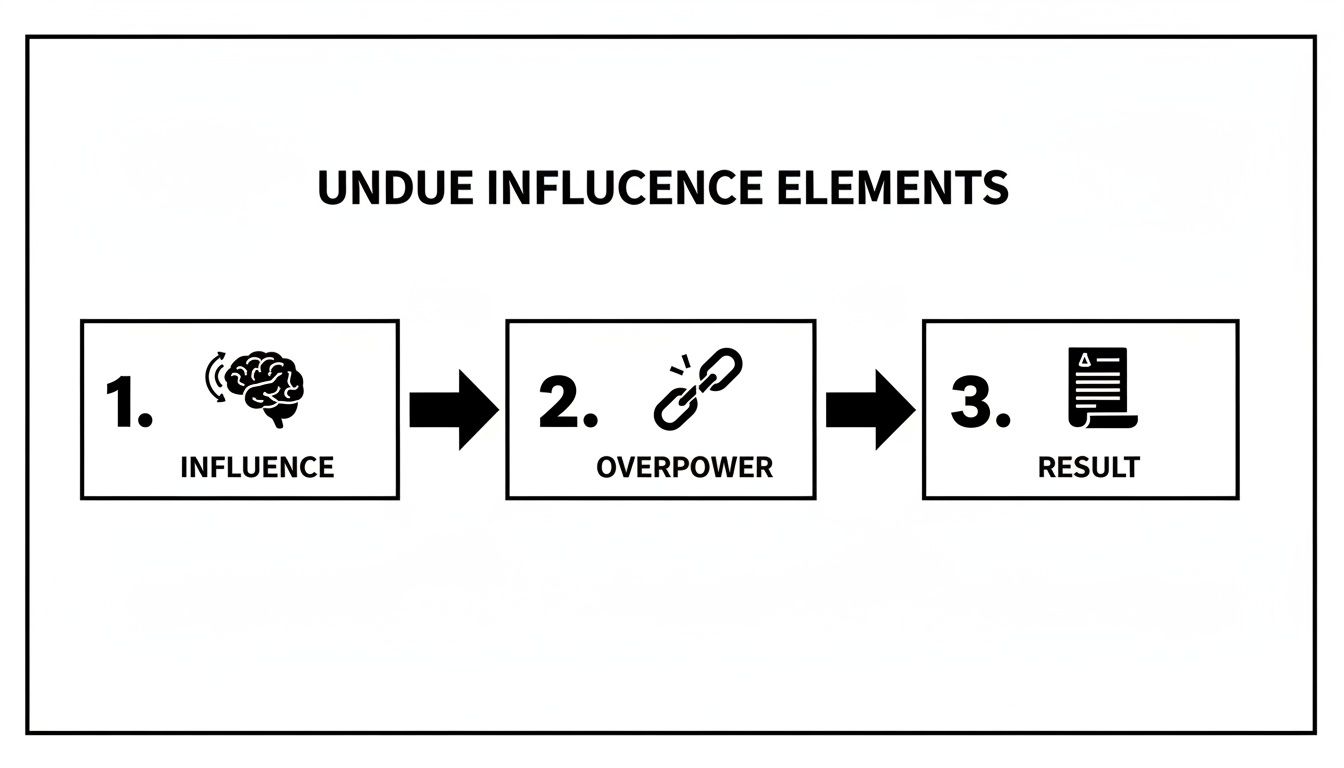
As you can see, you have to connect the influencer’s actions directly to their overpowering the testator's free will, which then led to an unnatural estate plan.
The Power of Witness Testimony
What people saw and heard is often just as crucial as what’s written on paper. Testimony from neutral, third-party witnesses can add a massive amount of credibility to your case because they have nothing to gain.
Think about anyone who was regularly around your loved one:
- Neighbors who saw them become more isolated.
- Old friends who were suddenly told not to call anymore.
- In-home health aides or caregivers who witnessed controlling behavior firsthand.
- Doctors or nurses who noticed your loved one's cognitive decline or suspicious interactions during appointments.
Getting detailed statements from these individuals is a key part of your evidence-gathering strategy. Knowing how to use a witness statement template can help you capture all the necessary details accurately and efficiently. These firsthand accounts are what bring the dry, circumstantial evidence to life for a judge or jury.
This legal maneuver is a game-changer. By establishing that the influencer was in a position of trust and that the situation was suspicious—like a sudden change to the will while your loved one was isolated—you create a legal presumption that something is wrong. It puts the other side on the defensive, forcing them to disprove your claim.
Ultimately, the strength of your case hinges on the quality and quantity of proof you can pull together. For a deeper look at the specific documents you'll need, check out our guide on the evidence needed to contest a will. This methodical approach is the single most important step you can take to honor your loved one's true wishes.
Navigating the Legal Process for a Will Contest
Taking the first formal step to contest a will can feel like standing at the foot of a mountain. We understand the mix of grief, anger, and uncertainty you're likely experiencing. Knowing the path forward can make the entire journey feel much more manageable.
Once you and your attorney have gathered your initial evidence and believe you have a strong claim for undue influence, the legal process officially begins. This isn't a chaotic courtroom battle right out of the gate; it's a structured, methodical process designed to uncover the truth. The journey starts with a formal filing in the correct Texas probate court.
Step 1: Filing the Petition and Entering Discovery
The first official step is for your attorney to file a formal will contest. This is a legal document, often called a petition, that lays out exactly why you believe the will is invalid according to Titles 2 and 3 of the Texas Estates Code. It identifies everyone involved, states the legal grounds for the contest (in this case, undue influence), and asks the court to deny the will's admission to probate.
After the petition is filed, the case moves into a phase called discovery. Think of this as the formal, legal process of gathering evidence from the other side. It’s where your attorney takes the informal proof you’ve collected and uses legal tools to get more information—often the very details the opposing party would prefer to keep hidden.
Common discovery tools we use include:
- Requests for Production: Legally demanding that the other party turn over crucial documents like bank statements, phone records, emails, and medical releases.
- Interrogatories: Sending a list of written questions that the other party is required to answer under oath.
- Depositions: Questioning the alleged influencer, key witnesses, and even the attorney who drafted the will. This all happens under oath with a court reporter transcribing every word.
This phase is absolutely critical. It’s how we build the evidentiary backbone of your claim, confirm suspicions, and often uncover new facts that strengthen your case.
Step 2: The Critical Role of Mediation
Before a case ever sees the inside of a courtroom for a full-blown trial, most Texas courts will require both sides to attend mediation. This is a confidential meeting where a neutral third-party, the mediator, helps everyone try to reach a settlement.
It’s important to understand that mediation isn't about deciding who is right or wrong. The mediator’s job is to facilitate a productive conversation and help each party realistically see the risks and costs of going to trial. It’s a valuable opportunity to resolve the dispute on your own terms, which can save an enormous amount of time, money, and emotional strain. A surprising number of will contests are successfully resolved at this stage.
You can learn more about what to expect by reading our detailed guide on the Texas will contest process.
The Burden of Proof and How It Can Shift
In any will contest, the burden of proof—the legal duty to prove your claim—initially rests on you, the person contesting the will. As we've discussed, you must present enough evidence to establish the key elements of undue influence.
A major turning point in an undue influence case is when the burden of proof shifts. Under Texas law, if you can successfully prove that a confidential relationship existed between the testator and the influencer (like having a power of attorney) and that there were suspicious circumstances surrounding the will's creation, the legal burden can flip.
This shift is a powerful strategic advantage. Once you establish this presumption of undue influence, it suddenly becomes the other side's responsibility to prove that the will was, in fact, fair, just, and created without any coercion. This is a very difficult hurdle for them to overcome and significantly strengthens your position as you move toward either a settlement or trial.
Common Red Flags and Signs of Vulnerability

Undue influence rarely comes out of nowhere. It’s a predator that seeks out a specific type of environment—one where a person's vulnerability makes them an easy target for a manipulator. Learning to spot these warning signs is the first, most critical step in understanding how to prove undue influence and protect a loved one’s final wishes.
While every family's story is different, certain factors create the perfect storm for coercion. These aren't definitive proof on their own, but they are the tell-tale signs that a Texas court will look for when trying to piece together what really happened.
Factors That Open the Door to Manipulation
A person’s physical and mental health is often the cornerstone of an undue influence case. When someone is struggling with their health, their natural defenses are down, and their ability to push back against persistent pressure can crumble.
Here are the key conditions that signal a high risk of manipulation:
- Advanced Age: While getting older doesn't automatically mean someone is weak, it often brings with it an increased and sometimes total dependency on others for daily care.
- Cognitive Decline: Conditions like dementia or Alzheimer’s are devastating because they erode a person's judgment and memory. This makes it nearly impossible to grasp the long-term consequences of signing a legal document.
- Serious Physical Illness: Someone battling chronic pain, a terminal diagnosis, or severe mobility issues can become completely reliant on a single caregiver, giving that person immense power.
- Social Isolation: Loneliness is a manipulator’s best friend. By cutting someone off from their family, friends, and social circles, an influencer can make themselves the center of that person’s world.
- Recent Bereavement: The grief that follows the loss of a spouse or child can leave a person emotionally shattered and desperate for comfort, making them incredibly susceptible to a "new friend" who suddenly appears.
The Blaring Red Flags of Coercion
When you see those vulnerabilities combined with suspicious behavior, the picture of undue influence starts to come into focus. These are the practical, real-world warning signs we see time and again in Texas probate litigation that tell us something is deeply wrong.
Look for these common red flags:
- A new person suddenly inserting themselves into finances or attending every single doctor's appointment.
- Sudden, secretive changes to a will or trust that had been in place for years.
- A brand-new will that shockingly disinherits children or close family in favor of a new caregiver, neighbor, or acquaintance.
- The person becoming uncharacteristically secretive, paranoid, or fearful, especially when the topic of their estate comes up.
- The influencer actively isolating the person—screening their calls, making excuses for why they can't have visitors, and turning away family at the door.
This isn't just anecdotal. Research backs up what we see in the courtroom every day. One study found that elderly individuals who reported attempts to influence their Wills & Trusts were far more likely to be in poor health, suffer from depression, and lack close friends or family to confide in. These findings are a near-perfect match for how Texas courts weigh circumstantial evidence. You can dig deeper into the data by reviewing the comprehensive study on victim vulnerability.
This combination of factors is exactly what you need to start building a powerful legal challenge. Recognizing these signs is crucial, whether you’re trying to protect a loved one who is still with you or fighting for justice after they’re gone. If you're worried about a loved one right now, it may be time to explore protective measures like a Guardianship.
Key Takeaway
While vulnerability by itself isn't enough to prove undue influence, it's a critical part of the story. When you combine it with suspicious actions and a will that makes no logical sense, you create a powerful narrative that a Texas judge will take very seriously. Proving undue influence is about showing that the testator’s free will was essentially destroyed, leaving a will that reflects the influencer's wishes, not their own.
Common Questions About Texas Undue Influence Claims
When you suspect a loved one was manipulated into signing a will that doesn't reflect their true wishes, the questions come fast and furious. It’s a deeply emotional time, and the legal maze of a will contest can feel overwhelming.
Here are some of the most common questions we hear from Texas families, along with straightforward, plain-English answers from our experience in probate court.
How Long Do I Have to Contest a Will in Texas?
This is the most time-sensitive question, and the answer is unforgiving. In Texas, the clock starts ticking the moment a will is admitted to probate. From that day, you generally have just two years to file a will contest.
This deadline is called the statute of limitations, and as outlined in the Texas Estates Code, it is brutally strict. If you miss this two-year window, it’s almost certain that the court will throw out your case, no matter how strong your evidence of undue influence is.
Are there exceptions? Yes, but they are incredibly narrow and risky to rely on—think cases involving outright fraud or a beneficiary who was a minor. Because of this rigid deadline, it is absolutely critical to speak with a probate litigation attorney the moment you suspect something is wrong. Acting fast is the only way to protect your right to challenge the will.
Is It Undue Influence if My Parent Simply Liked My Sibling More?
No. Texas law gives people a powerful right to leave their property to whomever they choose, for any reason—or no reason at all. A parent is completely free to be "unfair," to show favoritism, or to give one child everything and another child nothing.
An undue influence claim isn't about your parent’s feelings. It’s about the influencer’s actions.
To win your case, you have to prove that the person who benefited from the will didn’t just have a good relationship with your parent; they actively used coercion and manipulation to the point that it completely overpowered your parent's own free will. The entire focus is on proving the will reflects the influencer’s desires, not your parent's. A court’s job isn't to enforce fairness; it's to protect the testator's true intent.
What Happens if We Successfully Prove Undue Influence?
If you successfully prove your case, the court will declare the will invalid. It's legally set aside, as if it never existed in the first place. What happens next depends on one simple fact: was there another, older will?
Here are the two paths the estate will then take:
- A Prior Valid Will Exists: If your loved one had a previous, untainted will, the court will often "revive" it. That older will is then admitted to probate, and the estate is distributed according to its terms.
- No Other Will Exists: If there is no other valid will, your loved one's estate is considered intestate—meaning they died without a will. The property is then divided according to a default formula set by the Texas Estates Code, which typically passes assets to the closest living relatives, such as a spouse and children.
Knowing these potential outcomes is a crucial part of navigating the Texas Probate Process.
Can I Afford to Hire an Attorney for a Will Contest?
This is a huge—and completely valid—concern for most families. The idea of a long, expensive legal battle is daunting. The good news is that pursuing a legitimate claim is often far more accessible than you might think.
Many experienced probate litigators, including The Law Office of Bryan Fagan, handle these cases on a contingency fee basis.
What does that mean in plain English? It means you pay zero attorney's fees upfront. The law firm covers the costs of the litigation. The attorney's fee is simply a percentage of the inheritance you recover if—and only if—you win the case. If you don't recover anything, you owe no fee. This model levels the playing field, ensuring you can fight for your loved one's true wishes without worrying about how you'll pay for it.
If you’re facing probate in Texas, our team can help guide you through every step — from filing to final distribution. Schedule your free consultation today.