Skip to content
Two sisters sat across from their brother in a probate lawyer’s office, all three grieving their mother. They weren’t arguing about greed. They were arguing about the house, the wedding ring, and what their mother had “always said” she wanted.
That scene is common in Texas. When a loved one dies, grief, old family dynamics, and unclear legal rights can turn a painful loss into a dispute over inheritance.
A Family Divided The Heartbreak of Heir Disagreements
Families rarely walk into probate court because they planned to fight. More often, they get there because no one understood the rules, emotions ran high, and each person believed they were protecting something important.
One child may want to keep the family home because it feels like the last connection to a parent. Another may need cash from a sale to pay bills. A surviving spouse may believe certain property is theirs already, while adult children may see that same property as part of the estate. Everyone feels hurt. Everyone thinks they’re being reasonable.
That’s why heir disagreement distribution texas issues are so difficult. These cases aren’t just about who gets what. They’re about grief, family history, fairness, and sometimes promises that were never put into writing.
Consider a familiar situation. A father dies without a will. His children assume they’ll divide everything equally. His widow assumes the bank account, the truck, and the home are all hers because she and her husband built a life together. Then someone learns Texas law treats different assets differently. Suddenly, what felt simple isn’t simple at all.
Families often say, “We were fine until we started talking about the estate.” Probate disputes usually begin with confusion, not bad intent.
The good news is that conflict doesn’t always have to end in a courtroom battle. Texas law provides a framework. Families can also use practical tools to lower tension, clarify rights, and preserve relationships where possible.
What helps most is understanding the dispute before reacting to it. Once you know whether the problem is a missing will, unclear title, asset classification, or a breakdown in communication, the next step becomes easier to see.
Why Estate Distribution Leads to Family Conflict
Some disputes start with a legal problem. Others start with a human one. In most contested estates, both are happening at the same time.
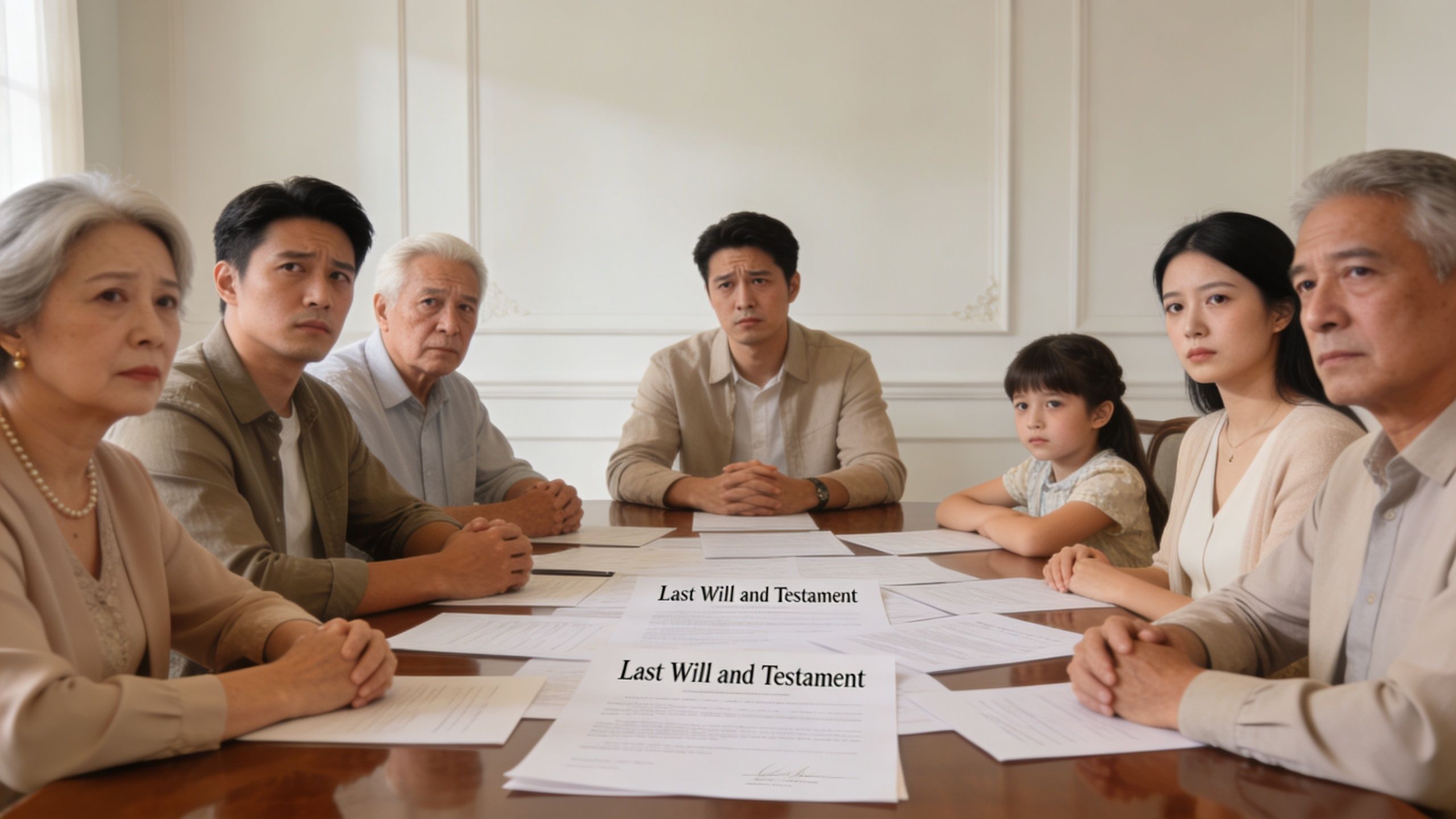
No will means Texas decides
When someone dies without a valid will, they die intestate. That means the State of Texas supplies the distribution plan through the Estates Code. Families are often shocked to learn that the law doesn’t ask who was closest to the deceased, who provided care, or what the deceased said informally at Thanksgiving.
That gap between legal reality and family expectation creates immediate tension. One heir may say, “Dad told me the land was mine.” Another says, “That’s not in writing, so it doesn’t control.” Both are reacting to different ideas of fairness.
Property doesn’t always belong to the estate in the way people assume
One of the most common triggers in Texas is confusion over community property and separate property. In plain English, community property usually means property acquired during marriage, except for certain excluded categories. Separate property generally includes assets owned before marriage and some assets received by gift or inheritance.
For a married decedent with children from that marriage, community property is split 50/50 between the spouse and the children, and disputes often arise when heirs disagree about whether an asset was really community or separate property. Misclassifying separate property, such as an inheritance, as community property can trigger litigation and extend probate by an average of 18 to 24 months according to the Bexar County intestacy chart and related fiduciary litigation data.
That sounds technical until you put it into a family setting. A widow may say, “We used that account for household bills for years.” An adult child may answer, “But those funds came from Dad’s inheritance from Grandma.” Now the dispute isn’t just emotional. It’s legal.
Ambiguous documents and informal promises cause trouble
Even when there is a will, conflict can still grow if the document is vague or if family members remember conversations differently. A parent may have “promised” a firearm collection to one child, jewelry to another, and the home to a third, without updating legal documents to match.
When the paperwork doesn’t line up with those memories, heirs often feel betrayed. Not by the law alone, but by one another.
Sentimental value and unequal effort matter to people
Families also fight over issues the law doesn’t measure well:
- Caregiving resentment: One child handled doctor visits, meals, and finances and feels entitled to more consideration.
- Possession disputes: A relative may already have taken furniture, documents, or keepsakes before anyone agreed on distribution.
- Value disagreements: Heirs may not agree on what a home, mineral interest, or business interest is worth.
- Old wounds: Estate disputes can reopen decades-old conflict between siblings, stepparents, and adult children.
A strong estate plan often prevents these fights before they start. Families who want to reduce future conflict should consider updating wills, trusts, and title documents with guidance through Wills & Trusts planning.
Practical rule: If two heirs are using the word “fair” to mean different things, you probably have both an emotional dispute and a legal one.
Texas Intestacy The Government's Plan For Your Estate
When there’s no will, Texas uses its own default plan. Lawyers call this intestate succession. Most families understand it better when you think of it as the state’s backup estate plan.
The governing rules appear in Texas Estates Code Title 2, Chapter 201, often referred to as the Laws of Descent and Distribution. These rules assign fixed shares to relatives based on family relationship. They don’t adjust for closeness, promises, estrangement, or sacrifice.
Why these rules surprise families
People often assume the surviving spouse gets everything. That isn’t always true. Others assume all children inherit equally in every circumstance. That also isn’t always true.
Texas uses relationship-based formulas. Those formulas can create deep disagreement because a result may feel legal but not fair.
For example, if someone dies with no spouse and no children, Texas law sends the estate to the parents equally. If only one parent survives, that parent takes half, and the other half goes to siblings or their descendants under the Tarrant County Probate Court intestacy manual. Fractions like these often lead to real conflict, especially when the estate includes land or a house that can’t be neatly divided.
Texas intestate succession at a glance
| If You Are Survived By | Your Separate Property Goes To | Your Community Property Goes To |
|---|---|---|
| No spouse, no children, both parents living | Parents inherit equally | Not applicable |
| No spouse, no children, one parent living | Half to surviving parent, half to siblings or their descendants | Not applicable |
| Spouse and children | Distribution depends on the type of property and the family relationships involved | Distribution depends on the family relationships involved |
| Married decedent with children from that marriage | Separate property follows intestacy rules for spouse and descendants | 50% to the surviving spouse and 50% divided equally among the children or their descendants per stirpes |
| Spouses die close in time | Distribution may be affected by survival rules | The 120-hour survival rule may control |
This is a simplified view. For a fuller overview of how Texas divides estates, families often benefit from reviewing a Texas descent and distribution chart.
The 120-hour rule matters more than people expect
Texas also has an important survivorship rule. If spouses die and neither survives the other by 120 hours, community property is distributed as if half passed as though the husband survived and half as though the wife survived, according to the same Tarrant County probate materials noted earlier.
That rule can sound abstract, but it exists for a practical reason. It prevents accidental windfalls and reduces fights over who legally survived whom when deaths occur close together.
Real property creates some of the hardest fights
Money in an account can usually be divided. A house, ranch, or mineral interest often cannot. If multiple heirs inherit real property together, they may own undivided shares. That means each owns an interest in the whole, not a specific room, acre, or corner.
That arrangement is uncomfortable for families. One heir may want to live there. Another may want to lease it. Another may want to sell immediately. If they can’t agree, partition issues can follow.
Probate still has a process even without a will
No will doesn’t mean no process. It usually means more process. A Texas intestate estate may require the court to identify the legal heirs, appoint an administrator, gather and value assets, pay debts, and only then authorize distribution.
For many families, a careful walkthrough of the Texas Probate Process is the first step toward lowering anxiety. People make better decisions when they understand what the law is doing.
The law can answer “who inherits.” It can’t answer “who should get the dining table because Mom promised it years ago.” Families still have to solve that part thoughtfully.
How to Resolve an Heir Disagreement in Texas
Not every estate fight needs a lawsuit. In many cases, the best result comes from choosing the least destructive option that still protects everyone’s rights.

Start with the real issue, not the loudest argument
Families often focus on the visible conflict. “She won’t sell the house.” “He won’t turn over the keys.” “They’re hiding information.” But the underlying issue may be different.
Ask these questions first:
- Is this a legal heirship problem?
- Is this a title or property-classification problem?
- Is this a communication problem?
- Is this about a sentimental item rather than estate value?
- Is this really a trust issue involving the executor or administrator?
When you identify the actual dispute, resolution gets easier. A family argument about a house sale may really be about one heir fearing displacement. A fight over jewelry may really be about feeling excluded from a parent’s final days.
Option one is direct, structured family discussion
This is the least formal path, but it works best when it’s more organized than a heated call between siblings. Use a written agenda. List each asset. Separate legal questions from emotional requests. Keep one person from dominating the conversation.
A useful approach is to divide issues into three groups:
- Clear legal items: assets controlled by statute, title, or beneficiary designation
- Negotiable items: personal property, move-out timelines, reimbursement requests
- Items needing professional input: valuation, title issues, taxes, tracing, mineral interests
This method helps families stop arguing about everything at once.
Mediation often preserves more than money
Texas families frequently benefit from mediation, which is a guided negotiation led by a neutral third party. Mediation is private, practical, and often far less damaging than courtroom litigation.
Many disputes involve non-probate assets such as beneficiary designations and payable-on-death accounts. In those situations, heirs may use Family Settlement Agreements under Texas Estates Code § 352.051 or mediation under Texas Civil Practice & Remedies Code Chapter 154. Those approaches can save 50 to 70 percent in legal fees compared to a full probate contest, as discussed in this article on hidden estate disputes in Texas.
Families who want to understand that process in more detail often explore probate mediation in Texas.
Mediation works especially well when the law is clear but the family still needs a humane way to carry it out.
Family Settlement Agreements can solve practical deadlocks
A Family Settlement Agreement is a binding agreement among interested parties about how to resolve an estate dispute. In plain language, it lets heirs choose a workable solution instead of waiting for a judge to impose one.
These agreements can help when:
- One heir wants the house: another heir may agree to a buyout over time.
- Personal property is the flashpoint: heirs can alternate selections, assign categories, or use agreed appraisals.
- A spouse and children disagree: the family can settle usage, occupancy, reimbursement, or sale timing even while honoring Texas law.
A settlement agreement isn’t a shortcut around the law in every case. It’s a tool for resolving disputes within a legal framework.
Partition is sometimes unavoidable
When heirs jointly own real property and can’t agree, one co-owner may seek partition. In simple terms, partition asks the court to divide the property if possible or order a sale if division isn’t practical.
This is often the point where people realize delay has a cost. One heir’s refusal to act can freeze everyone else. At the same time, one heir’s rush to sell can feel like an attack on family history. The court can resolve the impasse, but it usually won’t heal the relationship.
Litigation is the last stop
Sometimes there’s no honest path around formal probate litigation. That may happen when there are allegations of fraud, concealed assets, forged documents, breach of fiduciary duty, or complete communication breakdown.
At that stage, families often need targeted representation through Probate Litigation. The Law Office of Bryan Fagan, PLLC handles determination of heirship matters, administration-related disputes, and contested probate proceedings as one available legal option for Texas families facing these issues.
Litigation can be necessary. It can also be expensive, public, and emotionally draining. If there’s a safe way to resolve the conflict earlier, that path is usually worth serious effort.
A Practical Guide for Executors and Heirs
Many probate fights get worse because nobody knows what they should be doing. The executor or administrator feels attacked. The heirs feel ignored. Silence fills the gap, and people assume the worst.

What an executor or administrator should do early
The person handling the estate has a fiduciary duty. In plain English, that means they must act for the benefit of the estate and the people entitled to it, not for personal convenience.
A strong early checklist helps.
- Secure property first: Lock the home, preserve records, protect vehicles, and prevent items from disappearing.
- Create a written inventory: List real estate, accounts, vehicles, business interests, debts, and personal property in one organized place.
- Communicate regularly: Even a short update can lower suspicion. Silence tends to create conflict.
- Don’t distribute too early: Debts, claims, title issues, and heirship questions may need to be resolved before anyone receives assets.
- Get legal authority when needed: If a decision is contested, seek formal guidance rather than improvising.
Executors who want a practical overview of their role can review executor of will responsibilities.
What heirs should ask for, and how to ask for it
Heirs do have rights, but the way those rights are asserted matters. A respectful written request is often more effective than a confrontational demand.
Heirs should focus on clarity:
- Ask for the status of the case: Has probate been opened? Was an administrator appointed?
- Request basic documents: Application, letters, inventory if filed, and major court orders.
- Ask asset-specific questions: Is the house insured? Are mortgage payments current? Has anyone obtained appraisals?
- Keep communications in writing: A calm email usually helps more than repeated emotional calls.
If there are minors, incapacitated adults, or other vulnerable family members involved, separate protective planning may also become important through Guardianship.
Heirship proceedings matter in intestate estates
In many intestate cases, the first major issue isn’t distribution. It’s identifying who the legal heirs are.
For estates involving wrongful death or survival actions, a formal heirship determination proceeding is mandatory under Texas Estates Code Chapter 204. This court process requires an attorney and averages 6 to 12 months, and it identifies legal heirs before any funds can be distributed, helping prevent premature payouts and potential personal liability for the executor, as explained in this discussion of wrongful death claims and survival action claims in Texas.
That matters because families often assume they can divide settlement funds informally. In these cases, they can’t. The court must determine heirship first.
Here’s a helpful overview of the probate role in practice:
A steady process lowers suspicion
A practical rhythm often helps families avoid escalation:
- Open the estate properly
- Identify heirs and interested parties
- Gather and protect assets
- Address debts and claims
- Share updates before major decisions
- Use mediation or counsel if disputes develop
When families understand the order of operations, they’re less likely to mistake delay for wrongdoing.
The Reality of Timelines and Costs in Contested Estates
A contested estate doesn’t just delay inheritance. It can drain the estate while the family waits.

Delay changes the economics of an estate
A standard Texas probate process can take 12 to 18 months, but heir disagreements can extend matters to years. Nationally, the average contested estate takes 16 months to settle, and Texas probate court data reflects that litigated distributions, especially those involving out-of-state heirs or complex assets such as mineral rights, can take 2 to 3 years or longer, as reflected in the Fifth Circuit materials tied to the Langille Trust dispute.
That extra time has consequences. A vacant house still needs insurance. Property taxes still come due. Lawn maintenance, repairs, utilities, and storage costs don’t stop because siblings are arguing.
The emotional bill is often larger than the legal bill
A drawn-out case changes family behavior. People stop trusting one another. Holidays become awkward or disappear. Grandchildren feel the tension. A parent’s legacy becomes a source of bitterness instead of stability.
Consider a common Texas scenario. Three heirs inherit a house. One wants to keep it. One wants to sell. One lives out of state and won’t sign anything until old grievances are addressed. While they argue, the home sits in limbo. Maintenance gets deferred. Communication gets worse. By the time the dispute is resolved, the family has lost time, peace, and negotiating advantage.
Early resolution usually preserves more
Families often underestimate the cost of waiting. Even when nobody files a lawsuit right away, delay itself can become expensive because the estate remains stuck.
A practical way to think about it is this:
- Mediation costs attention now
- Litigation costs attention, money, and family relationships later
- Delay costs the estate even while no one feels “at fault”
That’s why experienced probate counsel often pushes for clarity early. The goal isn’t to force agreement. It’s to identify what must be decided, who has authority, and where compromise is still possible.
The cheapest estate dispute is usually the one the family resolves before positions harden.
Key Insight When to Seek Legal Counsel
The central lesson in heir disagreement distribution texas cases is simple. Most estate fights become harder, more expensive, and more personal the longer families wait to get clear legal guidance. Understanding the law early often protects both the inheritance and the relationship.
Takeaway
If you’re grieving and your family is starting to disagree, don’t assume the conflict will fix itself. Texas probate rules are technical, especially when the estate involves intestacy, mixed family relationships, real property, or unclear ownership. Calm, informed action usually works better than emotional reaction.
The right legal help can do more than prepare court papers. It can clarify rights, set expectations, organize communication, and create room for settlement before the case turns into a family fracture.
Signs it’s time to call a probate attorney
- The executor or administrator has gone silent: You’re not getting updates, documents, or clear answers.
- Family members disagree about who the heirs are: This is common in blended families, estrangement situations, and intestate estates.
- There’s a dispute over community versus separate property: These cases can become technical quickly.
- Someone is pressuring others to sign documents immediately: Fast pressure is often a warning sign.
- Real estate is stuck: No one agrees whether to sell, occupy, refinance, or maintain inherited property.
- A wrongful death or survival recovery may be involved: Formal heirship rules may control distribution.
- You suspect misconduct: Missing assets, changed documents, unexplained transfers, or self-dealing deserve prompt legal review.
- Communication has broken down completely: Once every conversation becomes a fight, neutral legal structure can help.
Families don’t need to wait for a full-scale legal war before asking questions. Early advice often creates options. Late advice often deals with damage control.
Final Call to Action Block
If you’re facing probate in Texas, our team can help guide you through every step, from filing to final distribution. Schedule your free consultation today.
If you’re facing probate in Texas, the attorneys at Law Office of Bryan Fagan, PLLC can help you understand your options, protect your rights, and move toward a practical resolution with clarity and compassion.