Skip to content
Probate will witness challenges often become the turning point in estate litigation because witness testimony can determine whether a court accepts or rejects a will. When a loved one passes away, families expect the probate process to provide answers and bring closure. Instead, disagreements sometimes arise over whether the will was properly signed, whether the deceased understood what they were signing, or whether someone improperly influenced them. In many of these disputes, the people who witnessed the signing of the will become some of the most important individuals in the courtroom.
Picture a family gathered after the funeral of a respected grandfather. Most relatives assume the estate will be divided according to the will they believe he carefully prepared years earlier. Then one heir claims the witnesses never actually saw the document being signed. Another insists one witness has changed their story. Suddenly, what appeared to be a routine probate proceeding transforms into a legal battle centered on witness credibility.
These situations demonstrate why probate will witness challenges deserve careful attention. Witness testimony can either reinforce the validity of a will or create enough doubt for the court to investigate further. Understanding how courts evaluate witness testimony helps beneficiaries, executors, and family members better appreciate the role witnesses play throughout probate litigation.
Understanding Probate Will Witness Challenges
At its simplest, probate will witness challenges involve disputes over the testimony, credibility, qualifications, or observations of individuals who witnessed the execution of a will.
Most jurisdictions require certain legal formalities when creating a valid will. Although the exact requirements differ, many require witnesses to observe the signing or acknowledge the testator’s signature in accordance with state law.
When someone later contests the will, questions often arise such as:
- Did the witnesses actually observe the signing?
- Were they legally qualified?
- Can they accurately remember what happened?
- Did anyone pressure the deceased?
- Was the deceased mentally capable of signing the will?
The answers to these questions frequently determine whether the court accepts the will as valid.
Why Witnesses Matter So Much During Probate
A properly drafted will speaks through its written language, but witnesses provide context that written documents cannot.
They may testify about:
- The deceased’s mental condition.
- Conversations before signing.
- The signing ceremony.
- Whether anyone appeared to pressure the testator.
- Whether legal formalities were followed.
- The overall circumstances surrounding execution.
Because witnesses personally observed important events, courts often give considerable weight to their testimony.
However, witness testimony is never accepted automatically. Judges carefully evaluate its reliability alongside every other piece of evidence.
Common Reasons Probate Will Witness Challenges Arise
Several situations commonly lead to probate will witness challenges.
Fading Memories
Probate sometimes occurs years after a will was signed.
During that time:
- Memories fade.
- Details become unclear.
- Witnesses confuse one signing with another.
- Important conversations are forgotten.
Even honest witnesses may struggle to recall events accurately after many years.
Conflicting Testimony
Sometimes two witnesses describe the same event differently.
For example:
One witness remembers everyone signing together.
Another recalls signing later.
One believes the deceased appeared healthy.
Another remembers visible confusion.
These inconsistencies may not automatically invalidate a will, but they often become important issues during litigation.
Questions About Witness Qualifications
Certain jurisdictions restrict who may serve as a witness.
Although laws vary, courts sometimes examine whether a witness:
- Benefited from the will.
- Met minimum age requirements.
- Was mentally competent.
- Properly observed the execution process.
If a witness failed to satisfy applicable legal requirements, parties may raise probate will witness challenges during court proceedings.
Mental Capacity Frequently Becomes Central
One of the most common probate disputes concerns the deceased’s mental capacity.
Witnesses may provide valuable observations regarding whether the individual:
- Recognized family members.
- Understood property ownership.
- Appreciated the purpose of the will.
- Appeared alert and aware.
- Communicated clearly.
Witnesses generally cannot provide medical diagnoses unless appropriately qualified, but they may describe what they personally observed.
Their firsthand observations often become important evidence.
Undue Influence and Witness Testimony
Many contested probate cases involve allegations of undue influence.
This occurs when someone allegedly exerts improper pressure that overcomes the free will of the person making the will.
Witnesses may testify regarding:
- Who attended meetings.
- Whether anyone isolated the deceased.
- Conversations before signing.
- Unusual behavior.
- Emotional pressure.
- Financial dependence.

These observations may help courts evaluate whether the will reflected independent decision-making.
Real-Life Example
Imagine an elderly woman updates her will shortly before her death.
The revised document leaves nearly everything to one caregiver.
Two neighbors serve as witnesses.
Years later, relatives challenge the will.
One witness remembers the woman discussing her decisions confidently.
The other cannot remember much beyond signing paperwork.
Medical records reveal declining memory around the same period.
The court must evaluate all available evidence—including witness testimony—to determine whether the will satisfies legal requirements.
This example illustrates why probate will witness challenges often become central to contested estate proceedings.
How Courts Evaluate Witness Credibility
Judges rarely decide cases based on a single statement.
Instead, they consider numerous factors when evaluating witness credibility.
These may include:
- Consistency.
- Opportunity to observe.
- Personal interest.
- Prior statements.
- Relationship with the parties.
- Ability to remember details.
- Demeanor while testifying.
A witness who provides clear, consistent testimony supported by other evidence generally carries greater credibility than someone whose account changes repeatedly.
Documentary Evidence Can Support or Contradict Witnesses
Witness testimony rarely exists in isolation.
Courts often compare it against:
- Medical records.
- Attorney notes.
- Estate planning files.
- Video recordings.
- Emails.
- Text messages.
- Financial documents.
- Calendar entries.
Sometimes documents reinforce witness accounts.
Other times they expose inconsistencies that require additional explanation.
Self-Proving Affidavits
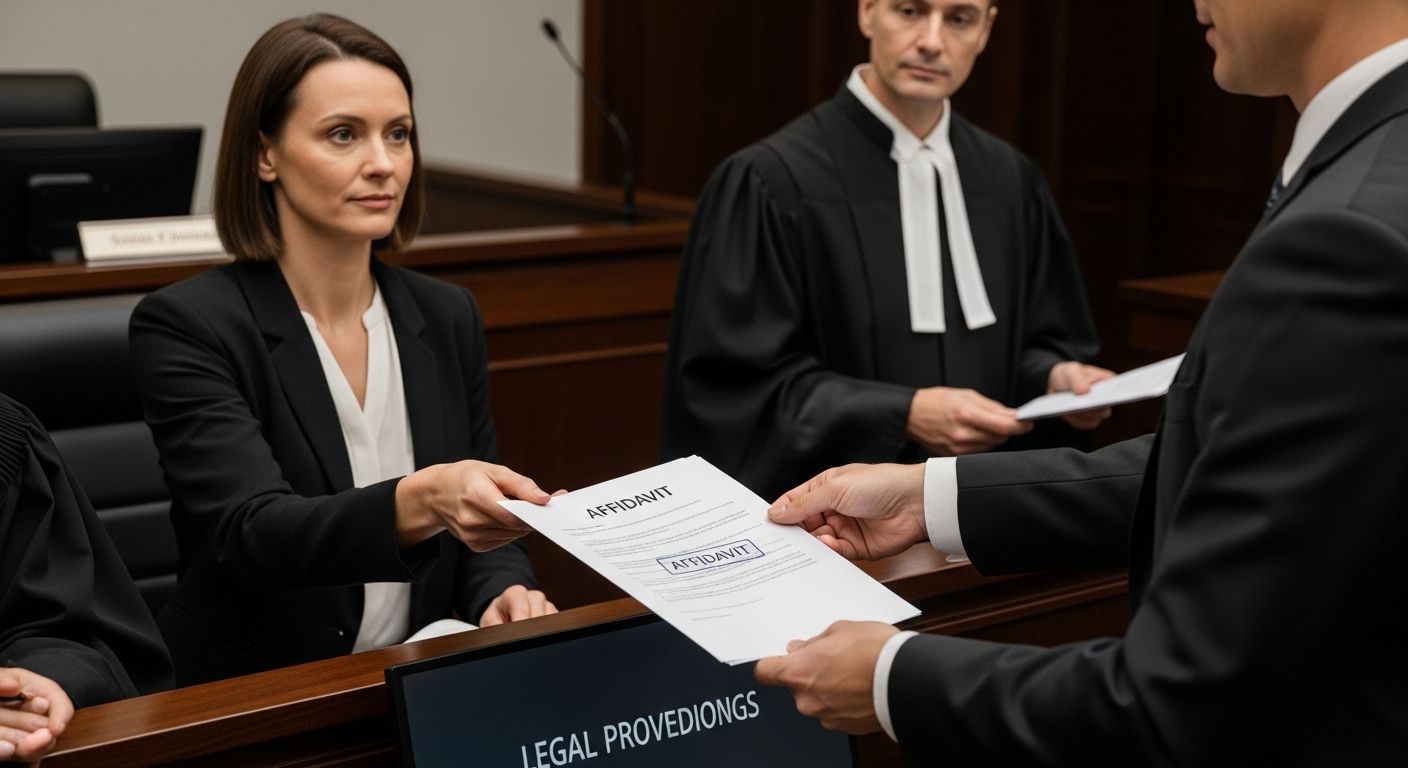
Many jurisdictions permit wills to include self-proving affidavits.
These sworn statements generally confirm that required execution formalities occurred.
Although self-proving affidavits often simplify probate proceedings, they do not necessarily eliminate probate will witness challenges.
Parties may still dispute issues such as:
- Fraud.
- Forgery.
- Lack of capacity.
- Undue influence.
The affidavit simply reduces the need for witnesses to appear in uncontested cases.
Expert Witnesses in Probate Litigation
While attesting witnesses describe what they observed, expert witnesses provide specialized opinions.
Examples include:
- Handwriting experts.
- Forensic document examiners.
- Medical specialists.
- Geriatric psychiatrists.
Experts generally interpret evidence rather than replace firsthand witness testimony.
Courts consider both forms of evidence together.
Cross-Examination Plays a Critical Role
Cross-examination allows attorneys to test witness reliability.
Questions often explore:
- Inconsistent statements.
- Memory limitations.
- Relationships with beneficiaries.
- Prior conversations.
- Timing of observations.
- Possible bias.
Effective cross-examination helps courts distinguish between accurate recollections and uncertain assumptions.
When Witnesses Cannot Be Located
Sometimes witnesses have:
- Passed away.
- Moved without leaving contact information.
- Become incapacitated.
- Forgotten key events.
These situations complicate probate proceedings but do not necessarily invalidate the will.
Courts may instead consider:
- Affidavits.
- Attorney testimony.
- Business records.
- Other admissible evidence.
Every case depends on the governing law and available proof.
Digital Technology Is Changing Probate Cases
Modern estate planning increasingly incorporates digital records.
Although execution requirements still depend on applicable law, technology may provide additional evidence through:
- Electronic calendars.
- Email correspondence.
- Video conferences.
- Digital document storage.
- Electronic communications.
Where legally permissible, these materials may help clarify disputed facts surrounding will execution.
Common Misunderstandings About Probate Will Witness Challenges
Several misconceptions frequently arise.
“If a witness forgets details, the will automatically becomes invalid.”
Not necessarily.
Minor memory lapses are common, especially when many years have passed.
“Every disagreement between witnesses destroys the will.”
No.
Courts evaluate the overall evidence rather than isolated inconsistencies.
“Family members cannot testify.”
Family members may testify if permitted under applicable evidentiary rules, although courts carefully evaluate potential bias.
“Witness testimony always outweighs written evidence.”
Not always.
Judges consider the entire evidentiary record before reaching conclusions.
Preventing Probate Will Witness Challenges
Many future disputes can be reduced through careful estate planning.
Helpful practices include:
Following Legal Formalities
Proper execution remains one of the strongest protections against future litigation.
Selecting Appropriate Witnesses
Choosing qualified, disinterested witnesses may reduce later credibility disputes.
Maintaining Complete Records
Attorneys often preserve:
- Meeting notes.
- Draft revisions.
- Execution checklists.
- Signed affidavits.
These records frequently provide valuable context years later.
Reviewing Estate Plans Periodically
Regular updates help ensure the will reflects current wishes while creating additional evidence demonstrating thoughtful planning.
Why Credibility Often Matters More Than Perfect Memory
Courts understand that witnesses rarely remember every conversation word for word.
Instead, judges often focus on whether testimony appears honest, logical, and consistent with surrounding evidence.
A witness who openly admits uncertainty about minor details may appear more credible than someone who confidently recalls events with unrealistic precision decades later.
This practical approach reflects how courts analyze probate will witness challenges in real-world litigation.
The Emotional Side of Witness Disputes
Probate litigation involves more than legal principles.
Family members may feel hurt, suspicious, or excluded.
Witnesses sometimes experience stress when asked to testify about events that occurred years earlier involving someone they cared about.
Recognizing these emotional realities helps explain why probate disputes often become deeply personal despite focusing on legal requirements.
Why Early Preparation Matters
Individuals involved in contested probate proceedings benefit from gathering relevant information early.
Important materials may include:
- Copies of the will.
- Medical records.
- Attorney correspondence.
- Witness contact information.
- Prior estate planning documents.
- Property inventories.
- Financial records.
Early preparation allows legal issues to be evaluated before memories fade further or records become difficult to locate.

Conclusion
Probate will witness challenges frequently determine whether a contested will survives judicial scrutiny. While written estate planning documents establish a person’s intentions, witness testimony often provides the factual foundation that helps courts evaluate whether those intentions were expressed freely, knowingly, and according to legal requirements.
From an analytical perspective, these disputes involve far more than simply deciding who remembers the signing ceremony most clearly. Courts carefully assess witness credibility, supporting documentation, medical evidence, applicable legal standards, and the surrounding circumstances before deciding whether a will should be admitted to probate. Small inconsistencies do not necessarily invalidate a will, but significant credibility concerns or procedural defects may require closer examination.
Ultimately, understanding probate will witness challenges helps families appreciate the importance of proper estate planning, qualified witnesses, thorough documentation, and compliance with probate law. By taking these steps before disputes arise, individuals can reduce uncertainty, strengthen the reliability of their estate plans, and help ensure their final wishes are honored as intended.