Dealing with the death of a loved one is never easy. But when legal matters start piling up—especially around transferring ownership of property—it can make the grieving process even more complicated. The good news? In certain situations, an affidavit of heirship in Texas probate can be a simpler, faster, and more affordable alternative to traditional probate. It’s a tool many families don’t even realize exists until they find themselves tangled in legal red tape.
In this article, we’ll explore the ins and outs of how and when an affidavit of heirship in Texas probate can be used to avoid full probate court proceedings. You’ll get practical advice, real-life examples, and a clear explanation of when this document works—and when it doesn’t.
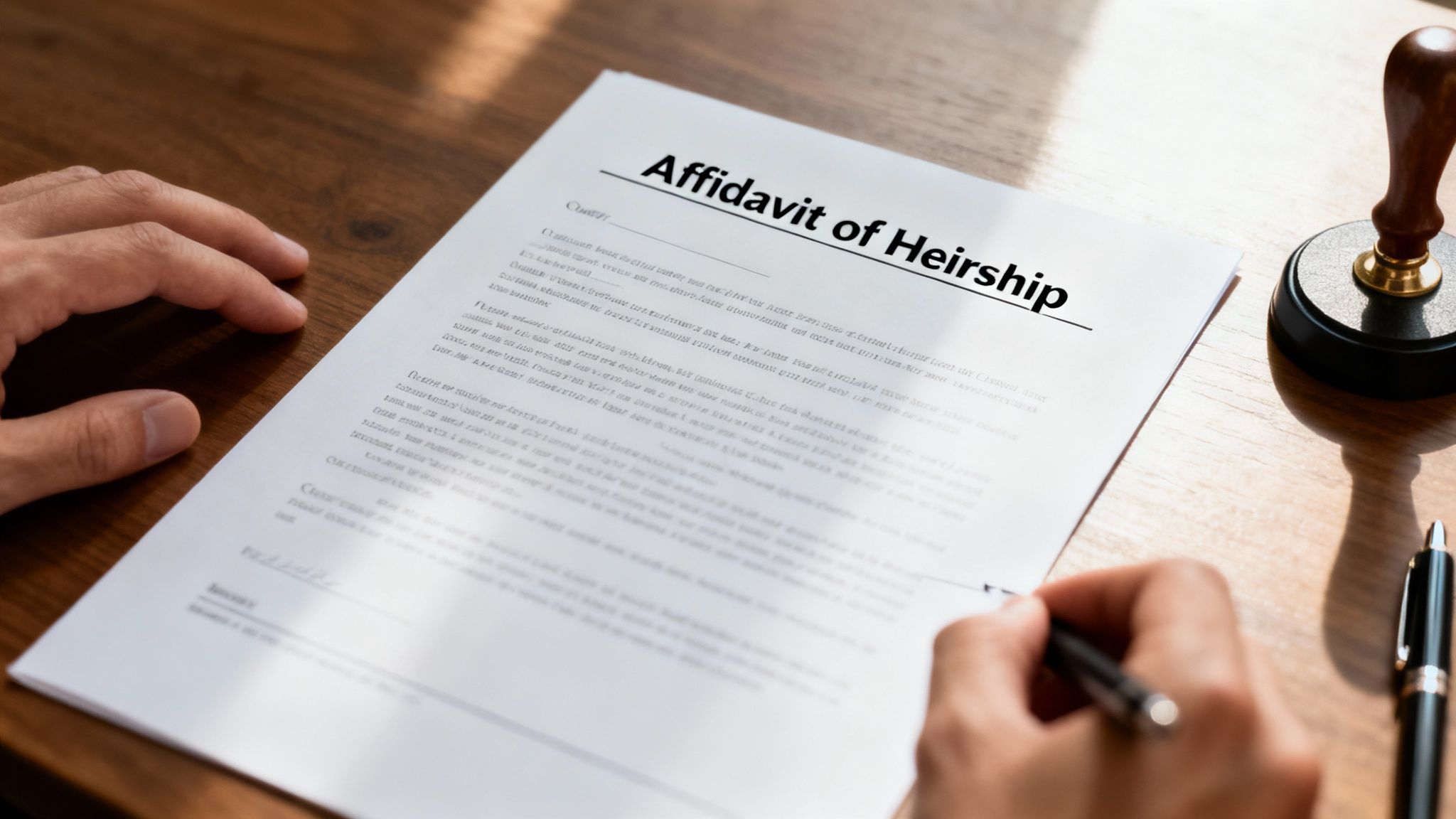
What Is an Affidavit of Heirship in Texas?
A Shortcut Around Probate—But Not a Free Pass
An affidavit of heirship in Texas probate is a legal document used to establish the rightful heirs of someone who died without a will. It’s typically used to pass down real estate or other property without going through the formal and often time-consuming probate process.
The affidavit must be signed by individuals who knew the decedent and their family history—usually disinterested third parties, not heirs. Once it’s completed and filed with the county clerk, it becomes part of the official property records and helps clarify who owns what.
But here’s the catch: it doesn’t always replace probate, and it comes with its own rules.
When Can an Affidavit of Heirship Be Used Instead of Probate?
Not Every Estate Qualifies
Texas law allows families to use an affidavit of heirship in probate matters only when the estate is relatively simple and uncontested. Generally, this approach works best when:
- The decedent died without a will (intestate)
- The estate consists primarily of real property (like a home or land)
- The property was titled solely in the decedent’s name
- There are no outstanding debts (except those secured by real estate)
- All heirs agree on the inheritance
Example: John passed away in Midland, Texas, owning a single-family home and no other major assets. He didn’t have a will, but he left behind two children. There were no creditors knocking on the door, and everyone was in agreement. Instead of opening probate, the family completed an affidavit of heirship and recorded it with the county clerk, successfully transferring ownership of the house.
This example shows just how valuable the affidavit of heirship in Texas probate cases can be when conditions are right.
Legal Weight of the Affidavit
It’s Strong—But Not Bulletproof
While an affidavit of heirship holds weight in property records and can be accepted by title companies, it’s not a court order. That means it’s less powerful than a probate decree.
Its legal strength depends on:
- The number and credibility of affiants (people who sign and swear the information is true)
- The length of time it’s been on record (after five years, it’s presumed valid under Texas law)
- The absence of disputes among heirs or creditors
If someone contests the affidavit—or if a will turns up later—the court may invalidate it. So while it’s a handy alternative, it doesn’t come with the finality of probate.
Who Can Sign an Affidavit of Heirship?
It’s Not Just About Family
To be legally valid, the affidavit of heirship in Texas probate must be signed by two or more people who:
- Knew the decedent personally
- Are not heirs of the estate (disinterested parties)
- Can testify to the family history and relationships
- Can confirm the decedent died without a will

These individuals might include family friends, neighbors, clergy, or longtime coworkers. Their job is to attest to facts like marriage history, children, and the absence of a will.
The heirs themselves don’t usually sign the affidavit, though they benefit from it.
Steps to File an Affidavit of Heirship in Texas
A Breakdown of the Process
If you’re considering using an affidavit of heirship in Texas probate, here’s how it generally works:
- Obtain a blank affidavit form – You can get one from an attorney, online legal platforms, or sometimes the county clerk.
- Complete the affidavit – List the decedent’s full legal name, date of death, marital history, children, and property owned.
- Identify and contact affiants – Ensure they meet the legal criteria and are willing to sign.
- Notarize the affidavit – All signatures must be witnessed by a notary public.
- File with the county clerk – The affidavit should be filed in the same county where the property is located.
- Wait five years for presumption of validity – Though often accepted immediately, after five years, the affidavit gains more legal weight under Texas law.
Many families work with a probate or real estate attorney to ensure everything is done correctly—especially if the property will be sold.
Real-Life Story: Avoiding Probate Through Affidavit
Karen lost her father unexpectedly in Fort Worth. He owned a modest home but didn’t leave a will. Karen was overwhelmed at the thought of probate—court forms, hearings, and fees she couldn’t afford. A friend told her about the affidavit of heirship Texas probate workaround.
After talking with a probate attorney, Karen learned her father’s estate qualified. She completed the affidavit with help from her dad’s neighbor and a former coworker. They filed it with the Tarrant County clerk. Six months later, Karen was able to refinance and transfer the home into her name.
The affidavit saved her months of legal stress—and thousands in court costs.
When Probate Is Still Required
The Limits of the Affidavit
As helpful as it can be, an affidavit of heirship in Texas probate cases isn’t always enough. You may need formal probate if:
- The estate has significant debts or lawsuits
- There are disputes among heirs
- The decedent owned out-of-state property
- A valid will is discovered
- The property is to be sold to a buyer requiring title insurance
- There’s a minor or incapacitated heir
In these situations, probate provides a formal court ruling that establishes legal rights—something affidavits alone can’t do.
Affidavit vs. Small Estate Affidavit
Know the Difference
Another common question: How does an affidavit of heirship differ from a small estate affidavit?
Here’s the breakdown:
- Affidavit of Heirship
- Used primarily for real estate
- No court filing required
- Used when the person died without a will
- Small Estate Affidavit
- Can be used for personal property like bank accounts
- Filed with the probate court for approval
- The estate must be worth $75,000 or less, not counting homestead orexempt property

Both serve similar purposes—streamlining transfers—but apply to different asset types and situations.
Affidavit of Heirship and Real Estate Sales
Title Companies May Hesitate
While an affidavit of heirship in Texas probate cases can clear up ownership, some title companies are wary of relying solely on it—especially if it’s been recently filed.
They may require:
- A five-year waiting period for validity under the Texas Property Code
- Additional documents proving identity and relationship
- A title policy exception, meaning future issues with ownership aren’t covered
If you’re planning to sell property shortly after a loved one’s death, it may be better to go through probate or use a court-approved alternative.
Common Mistakes When Filing an Affidavit
Avoiding Costly Errors
If you’re going to use an affidavit of heirship in Texas probate matters, don’t rush. Mistakes can derail the process and cause headaches later.
Common errors include:
- Choosing affiants who are also heirs (which invalidates the document)
- Failing to list all known children or marriages
- Not properly notarizing the affidavit
- Forgetting to file it with the county clerk
- Assuming it applies to out-of-state property
Accuracy matters. Take your time, or consult an attorney to double-check your work.
Cost of Filing an Affidavit of Heirship in Texas
A Budget-Friendly Option
One of the best reasons to explore this option is cost. Compared to full probate, an affidavit of heirship in Texas probate proceedings is affordable.
Here’s a general breakdown:
- Attorney fees (if used): $300–$1,200, depending on complexity
- Notary services: Often free or $10–$50
- Filing fee with county clerk: $20–$50, depending on the county
- Title search or title company review (optional): $100–$400
Compare that to traditional probate, which can cost $2,000–$6,000 or more and take months to complete.

Final Thoughts on Using an Affidavit of Heirship in Texas Probate
The affidavit of heirship in Texas probate is a powerful tool—when used appropriately. It can simplify property transfers, reduce legal expenses, and save families time and stress after a loved one passes. But like all legal shortcuts, it has its limits.
Knowing when you can use it—and when you can’t—is key. If the estate is small, there’s no will, and heirs agree on everything, this document could be your golden ticket to bypassing probate. On the other hand, if there are disputes, debts, or complex assets, probate may still be necessary.
Either way, your best bet is to consult with a probate attorney familiar with Texas law. They can help you decide whether this approach fits your situation or if formal probate is the better route.