In Texas, probate is generally required when a deceased person's estate is over $75,000, excluding the homestead and exempt personal property. But that number is only the starting point, because probate may also be necessary whenever assets were owned solely in the deceased person's name and don't pass automatically to someone else.
If you're sitting at a kitchen table with a will, a death certificate, and a stack of unopened mail, you're in the same place many families find themselves after a loss. You're grieving, but bills still arrive, bank accounts still exist, and someone has to figure out what happens to the house, the car, and everything else your loved one left behind.
Navigating the Path After a Loss
One of the hardest parts of probate is that it often begins before anyone feels ready. A daughter may be looking at her father's will for the first time. A surviving spouse may know where the deed is but have no idea whether the home can be transferred without court involvement. An adult son may be named executor and wonder what that even means.
Probate is the court process used to sort out a person's estate after death. In plain English, it's the legal system's way of bringing order to property, debts, and inheritance. It can feel intimidating, but it isn't always a fight and it isn't always complicated.
For many families, the first emotional hurdle is this: they assume a will means no probate is needed. In Texas, that's often not true. A will usually makes probate easier, but it doesn't automatically avoid it. The court may still need to recognize the will and give the executor authority to act.
A moment many families recognize
A common scene looks like this. You find the original will in a desk drawer. You know your loved one owned a home, had a checking account, and maybe a vehicle. You also know relatives are beginning to ask questions. Someone says, “Just take the will to the bank.” Someone else says, “If there's a will, you don't need court.”
That kind of conflicting advice creates stress fast.
Probate isn't meant to punish families. It exists to confirm who has authority, protect creditors and heirs, and create a legal path for transferring property.
There's also the personal side of loss that legal articles often ignore. While you're handling paperwork, you may also want ways to preserve cherished family stories so the process doesn't become only about forms and deadlines. That balance matters.
Why clarity matters early
The first practical question is usually simple: When is probate required in Texas? Once you know the answer, many other decisions become easier. You can tell whether you need formal probate, whether a shortcut may apply, and what steps an executor should take first.
That clarity can replace panic with a plan.
The Core Question Understanding Texas Probate Triggers
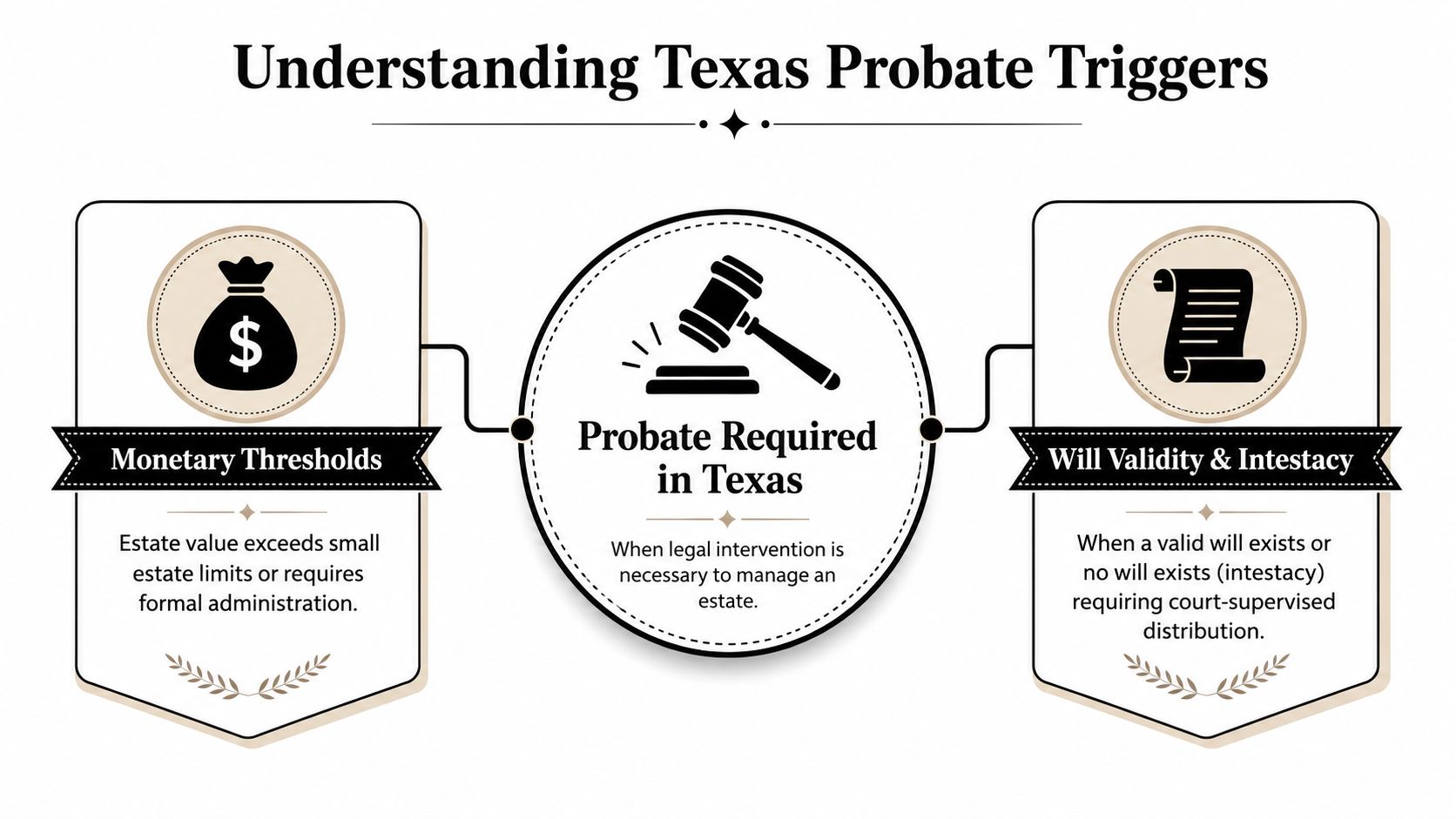
Texas probate usually becomes necessary for two main reasons. The first is the size of the estate. The second is how the assets were titled.
The $75,000 threshold
Texas uses a specific benchmark to decide whether some simplified procedures are available.
Under Texas Estates Code §205.001, a formal probate administration is legally required when the total value of a deceased person's estate exceeds $75,000, excluding the homestead and exempt personal property, as explained in this discussion of when probate is necessary in Texas.
That rule matters because families often hear the phrase “small estate” without knowing what Texas means by it. Not every estate can use a shortcut. If the estate is above that threshold, formal administration is often required.
Asset title matters just as much
Even when an estate seems modest, probate may still be required if property is stuck in the deceased person's name alone.
A simple way to think about it is this:
- Non-probate assets usually pass automatically.
- Probate assets usually need legal authority to transfer.
Here are common examples:
- A bank account with a payable-on-death beneficiary may pass directly to that beneficiary.
- A house held with a valid transfer-on-death deed or Lady Bird deed may transfer outside probate.
- A bank account in the deceased person's name only often can't be accessed without probate authority.
- A home titled only in the deceased person's name typically can't be sold or retitled to heirs without a legal process.
If you want a broader overview of how the process works, this guide on what probate is in Texas is a helpful companion.
A practical example
Suppose Maria dies owning a home in Harris County. The home is in her name alone. She also has a checking account with no beneficiary listed. She leaves a will naming her son as executor.
In that situation, the will helps, but it doesn't avoid probate by itself. Her son will usually need the probate court to admit the will and issue authority so he can deal with the bank account and transfer or manage the house.
A will answers the question “Who should inherit?” Probate answers the question “Who has legal authority to make that happen?”
The rule families often miss
Some people focus only on the dollar amount and overlook title. Others focus only on the existence of a will. Texas probate law cares about both.
If you're trying to decide whether probate is necessary, start with these two questions:
- Is the estate over $75,000, excluding the homestead and exempt personal property?
- Did the deceased own assets in their sole name with no built-in transfer method?
If the answer to either question raises concern, it's time to look closely at the probate path.
Pathways to Avoid Full Probate Key Alternatives
Not every Texas estate needs full administration. In some situations, the law offers a narrower, simpler route. These alternatives can save time, reduce paperwork, and spare a grieving family from unnecessary court involvement.
Small Estate Affidavit
The Small Estate Affidavit is one of the most important shortcuts in Texas probate practice.
The Small Estate Affidavit, authorized under Texas Estates Code §205, is available only if the estate value is $75,000 or less excluding the homestead, there is no valid will, and there are no significant unpaid debts except those secured by real estate, as outlined in this overview of probate in Texas.
In plain language, this option is designed for a modest estate where there isn't a will and the financial situation is fairly clean. Heirs can use it to bypass full probate entirely if the legal requirements are met.
A realistic example helps. A widowed father dies without a will. He leaves a homestead and a small bank account. There are no major unpaid debts apart from the mortgage. His children may be able to use a Small Estate Affidavit to deal with the account and move forward without opening a full administration.
For readers comparing options, The Small Estate Affidavit in Texas is a simplified path for modest estates with no will.
Muniment of Title
Muniment of Title is another shortcut, but it serves a different kind of case. It's often used when there is a valid will, real property is the main concern, and there are no unpaid debts other than debt secured by liens.
This procedure can be useful when the family mainly needs to clear title to property rather than go through a full administration. In practical terms, it's often a title-transfer solution rather than a full estate-management process.
Affidavit of Heirship
An Affidavit of Heirship is not the same thing as probate, but it can sometimes help establish who inherited property when someone died without a will. It's commonly discussed when families are dealing with real estate and there's been no formal administration.
This tool can be useful, but it isn't a universal fix. Title companies, buyers, and specific facts about the estate all matter. Families should be careful not to assume that recording an affidavit solves every ownership issue.
Texas probate alternatives at a glance
| Alternative | Best For | Estate Value Limit | Requires a Will? |
|---|---|---|---|
| Small Estate Affidavit | Modest estates with no will and limited debt | $75,000 or less, excluding the homestead | No |
| Muniment of Title | A valid will with property-focused transfer needs and limited debt | No specific value limit stated here | Yes |
| Affidavit of Heirship | Certain intestate real property situations where heirs need to document family history | No specific value limit stated here | No |
Families who want to reduce the chance of probate problems later often benefit from planning tools that transfer property more cleanly. That's where Wills & Trusts planning options become important, especially when a person wants to avoid leaving heirs with title questions.
Practical rule: A shortcut only works if every requirement fits. One missing piece, such as a valid will where a Small Estate Affidavit requires none, can change the entire path.
If Probate Is Needed Independent vs Dependent Administration
For many families, this is the point where probate starts to feel real. You are no longer asking whether court involvement can be avoided. You are asking what kind of court process lies ahead, how much oversight to expect, and how much work will fall on the executor.
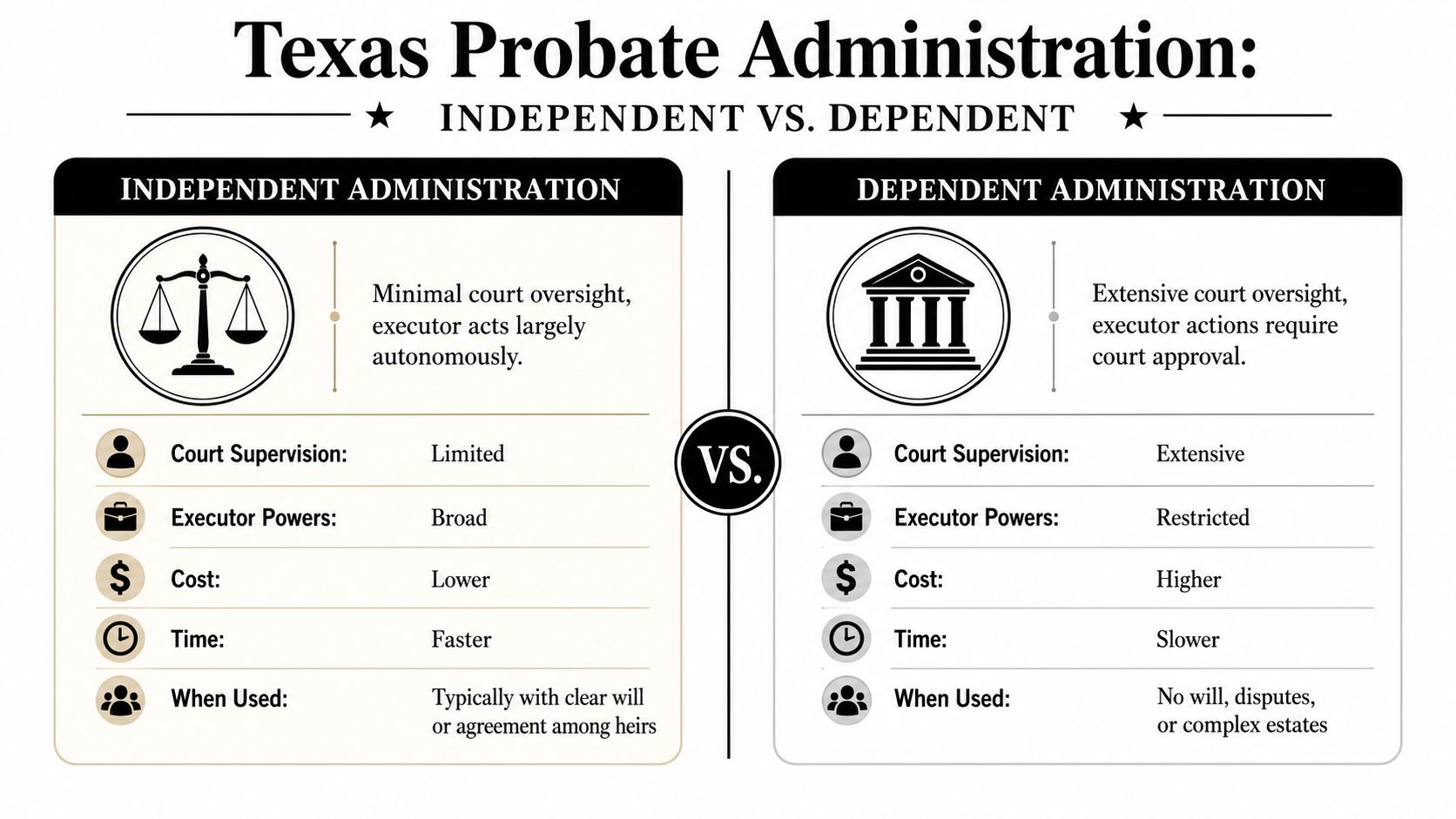
Texas probate usually follows one of two paths. Independent administration gives the executor more freedom to handle estate business without returning to court for repeated approvals. Dependent administration involves closer court supervision, which can mean more filings, more hearings, and more delay.
A simple way to understand the difference is to focus on permission. In an independent administration, the executor can often take the next required step after meeting the legal rules. In a dependent administration, the executor may need the court to approve major actions before they happen.
Independent administration
Independent administration is common in Texas because it tends to reduce cost, delay, and court involvement. If there is a valid will that allows it, or if the people entitled to inherit agree, the court may permit this less supervised process. For a family that is already juggling grief, bills, and questions about property, that often makes the estate easier to handle.
That does not mean the executor can act casually. The executor still owes legal duties to the estate and to the beneficiaries. Deadlines still matter. Notice requirements still matter. Good recordkeeping still matters.
One rule that surprises families is the inventory requirement. Under the Texas Estates Code, a personal representative generally must file an Inventory, Appraisement, and List of Claims within 90 days after qualification, unless the court approves an alternative allowed by law. The Texas Legislature lays out those duties in the Texas Estates Code provisions on inventories and appraisements.
If you want a side by side explanation of how these two probate paths work in practice, this guide on independent vs. dependent administration in Texas gives a more detailed comparison.
Here's a helpful visual explanation:
Dependent administration
Dependent administration places the estate under tighter court control. This path often appears when family members disagree, the will is missing or contested, there are concerns about creditor issues, or the court believes closer supervision is needed to protect heirs and estate property.
Families sometimes hear "dependent administration" and assume someone must have done something wrong. That is not always true. In some estates, extra oversight acts like a guardrail. It can protect a minor child, reduce the chance of misuse of estate funds, or create a clearer court record when the facts are disputed.
The tradeoff is time and procedure. Selling property, paying certain claims, or distributing assets may require court approval first. For an executor, that means less discretion and more formal steps.
Here is the practical difference many families feel first:
- Independent administration usually works best when the will is clear and the family is cooperative.
- Dependent administration is more common when there is conflict, uncertainty, or a need for stronger court supervision.
- Both require careful handling of money, property, notices, and deadlines.
The better option is the one the law allows for your family's facts. The goal is not to choose the easier label. The goal is to use the process that protects the estate and gets property to the right people lawfully.
Your Role as an Executor A Practical Starting Guide
Being named executor can feel like an honor and a burden at the same time. Few individuals have experience with this role. They worry about making a mistake, upsetting relatives, or missing something important.
What an executor actually does
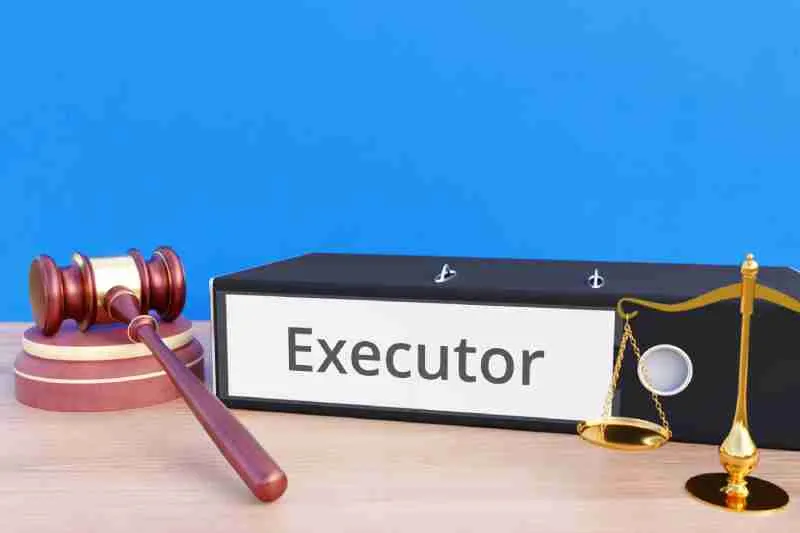
An executor is the person named in a will to handle the estate. If there's no will, the court may appoint an administrator, which is a similar role with a different source of authority.
Your job is not to guess what seems fair. Your job is to follow the law, protect estate property, handle required filings, and distribute what remains to the right people.
The first steps that matter most
Start with the basics.
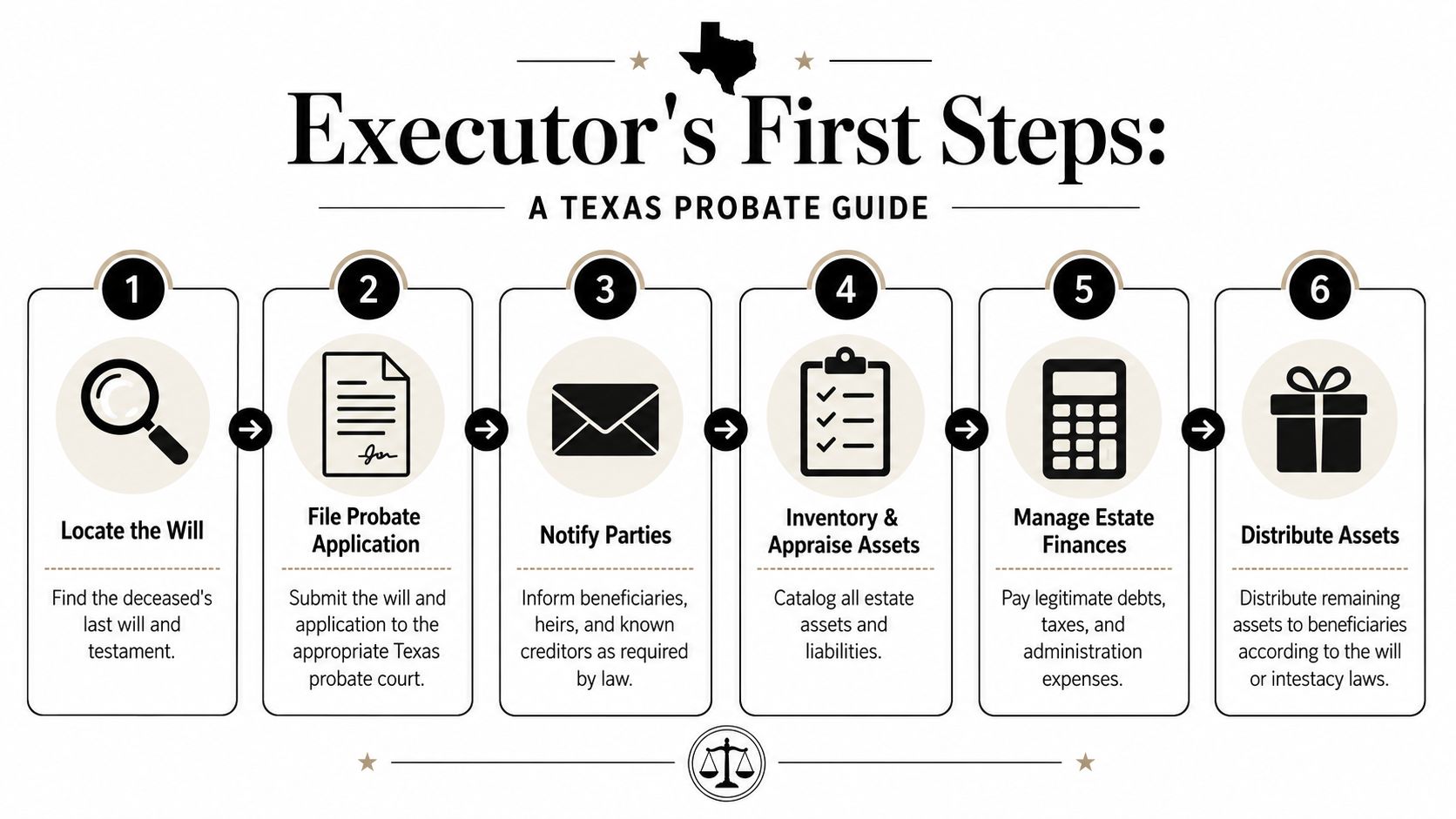
Find the original will and death certificate.
The original will matters. Courts usually want the original document, not just a copy, and it should be located as early as possible.Identify what the deceased owned and how it was titled.
Look for deeds, account statements, vehicle titles, and beneficiary designations. This helps you separate probate assets from assets that may transfer outside court.Speak with a probate attorney early.
Probate representatives often act on behalf of multiple people, not just themselves. That's one reason early legal guidance is so valuable.File the probate application in the correct court.
The filing is usually made in the county where the deceased lived. The application starts the legal process of admitting the will and asking the court to appoint the executor.
The court hearing and Letters Testamentary
At the initial hearing, the judge determines whether the will can be admitted to probate and whether the named executor should be appointed. If approved, the court issues Letters Testamentary.
In plain English, Letters Testamentary are the documents that show banks, title companies, and others that you have authority to act for the estate. Without them, many institutions won't let you access accounts or complete transfers.
- Secure property first. Lock the home if needed, protect valuables, and forward important mail.
- Open an estate account when appropriate. Estate money should be kept separate from personal money.
- Keep records from day one. Save receipts, statements, and notes about what you've done.
If a vulnerable adult or minor may be affected by estate issues, families sometimes also need to look at related court processes such as guardianship matters in Texas.
Careful recordkeeping is one of the executor's best protections. If a beneficiary asks questions later, your paperwork becomes your answer.
In some cases, a family may choose to work with a Texas Probate Lawyer for representation through Texas probate and estate administration when filing, obtaining letters, and managing the estate's next steps.
Common Probate Pitfalls and How to Avoid Them
A lot of probate trouble starts with a simple moment. Someone finds the will in a drawer, assumes there is plenty of time, pays a few bills out of a personal account, and plans to sort everything out after the funeral. Those early choices can create legal and family problems that are much harder to fix later.

Grief makes ordinary paperwork feel heavier. That is why it helps to know where families in Texas commonly get stuck.
Waiting too long to deal with the will
One of the most painful mistakes is delay. Texas law places a time limit on offering a will for probate, and waiting too long can change whether the will can still be used in the usual way.
For a family, this often feels unfair. You may be trying to clean out a house, help a surviving parent, or avoid conflict between siblings. Meanwhile, the legal clock keeps running.
How to avoid it: treat the will like a document with an expiration issue, not a paper you can revisit whenever life calms down. If you have the original will or believe one exists, speak with a probate lawyer early and confirm what deadline applies in your situation.
Mixing estate money with personal money
This mistake is common because it looks harmless at first. An executor pays the electric bill with a personal debit card, deposits a refund check into a personal account, or reimburses themselves later without a clear paper trail.
That is how suspicion starts. Even honest choices can look improper if the records are messy.
How to avoid it: keep estate funds separate from your own money from the beginning. Use an estate account when appropriate, save receipts, and write down why each payment was made. Good records work like a map. They show beneficiaries and the court exactly what happened.
Saying too little to beneficiaries
Families usually handle bad news better than silence. When heirs do not know why a house has not been sold, why distributions are delayed, or why a bank account is still frozen, they often fill in the blanks themselves.
That is when ordinary delay turns into distrust.
How to avoid it: give steady updates in plain language. A short message explaining, "the court has not issued authority yet," or "we are still resolving title paperwork," can prevent weeks of resentment. You do not need to share every legal detail. You do need to show that the estate is being handled carefully.
Paying heirs before debts and paperwork are resolved
Many executors feel pressure to "just split everything up" and move on. That can backfire. Estates often need time to identify debts, handle claims, confirm ownership of property, and make sure transfers are done correctly.
A simple way to think about it is this. Distribution comes near the end of the job, not the beginning.
How to avoid it:
- Identify known debts and claims before handing out property.
- Confirm who has legal title to real estate, vehicles, and accounts.
- Put important family agreements in writing.
- Pause and get legal help if someone is demanding an early payout.
Overlooking conflict until it becomes a lawsuit
Small tensions can grow fast after a death. One sibling thinks another is taking too long. A beneficiary believes an item disappeared from the home. Someone questions whether the executor is being fair.
These problems rarely begin with a courtroom fight. They begin with unanswered questions, poor records, and rising frustration. If that is happening, probate litigation guidance may become necessary.
Probate problems often grow in silence. Clear records, early action, and calm communication usually prevent the worst outcomes.
If you are serving as executor, you do not have to do the job perfectly on day one. You do need to act carefully, keep things separate, and ask questions before making a move that cannot be undone.
Key Insights and Your Next Steps
If you've made it this far, you already know more than most families know in the first days after a loss. That matters. Probate becomes less frightening when you can identify key decision points and separate myths from Texas law.
Key insights
- The $75,000 rule matters, but it isn't the whole story. Asset title can trigger probate even when an estate doesn't seem large.
- A will doesn't automatically avoid probate. It often makes the process more orderly, but court authority may still be necessary.
- Texas offers alternatives in the right case. Small Estate Affidavits, Muniment of Title, and Affidavits of Heirship can help some families avoid full administration.
- Independent administration is common. Many probate cases don't involve constant court control.
- Deadlines and paperwork matter. Delay can change legal rights in serious ways.
- Executors don't have to figure this out alone. Good guidance early can prevent expensive mistakes and family conflict.
If you're asking when probate is required in Texas, the most honest answer is this: it depends on the estate's value, how assets were owned, whether a will exists, and whether a simpler legal option fits. The sooner those questions are answered, the easier it becomes to protect the estate and reduce stress for everyone involved.
If you're facing probate in Texas, our team can help guide you through every step, from filing to final distribution. Schedule your free consultation today.
If your family is dealing with a loved one's estate, Law Office of Bryan Fagan, PLLC can help you evaluate whether probate is required, determine whether a shortcut may apply, and guide you through the filing and administration process with clear, practical advice. If you're facing probate in Texas, our team can help guide you through every step, from filing to final distribution. Schedule your free consultation today.