When someone dies, families rarely get a quiet moment before paperwork starts showing up. A bank asks for authority. A title company wants proof. Siblings want to know what happens next. If you're searching for a probate attorney in San Antonio, you're probably trying to grieve and handle legal responsibilities at the same time.
That mix of loss, urgency, and uncertainty is normal. Probate can feel intimidating at first, but in Texas it's a structured process with clear rules. Once you understand the path, the next step usually becomes much easier to see.
Navigating Loss and Legal Duties in San Antonio
A common situation looks like this. Your mother named you in her will, or maybe she never signed one at all. Now you're standing in her kitchen in San Antonio, sorting through mail, trying to figure out whether the house, bank account, and bills all need court involvement.
Probate is the legal process that gives someone authority to handle those loose ends the right way. It helps transfer property, deal with valid debts, and make sure the estate follows Texas law. That may sound formal, but the structure often helps families because it replaces guesswork with a roadmap.
If you're also trying to learn the practical side of managing someone's affairs after death, these trustee resources for inherited estates can help you think through day-to-day responsibilities alongside the probate process.
Grief makes routine legal tasks feel heavier than they are. A clear checklist and the right support can make the process feel manageable again.
Some families live in Bexar County and can attend everything in person. Others are handling a parent's estate from another state, coordinating documents by phone, email, and video call. Both situations are common, and both can be handled. The key is knowing which probate path fits the estate and what the court will expect from you.
What Is Probate and Why Is It Required in Texas
Probate is the court process used to settle a person's estate after death. In plain English, it's the legal method for closing out someone's financial life. It confirms who has authority, what property is involved, and who should receive it.
Plain-English probate terms
A few words come up often in Texas probate cases:
- Decedent means the person who died.
- Executor means the person named in a will to carry out instructions.
- Administrator means the person the court appoints when there isn't a valid executor in place.
- Heir means a person who inherits under Texas law when there is no will.
- Beneficiary means a person named in a will to receive property.
Texas probate law is largely found in Titles 2 and 3 of the Texas Estates Code. Those rules explain how wills are admitted to probate, how courts appoint personal representatives, and how estates are administered. If there's a valid will, probate helps the court recognize it officially. If there isn't a will, probate creates a legal process for identifying the right heirs and appointing someone to act.
Why families often need probate
Probate isn't just bureaucracy. It protects people.
Without probate, a bank may refuse to release funds, a buyer may refuse to close on real estate, and family members may disagree about who has authority. Probate creates the legal record that third parties rely on. It also gives creditors a process for asserting valid claims and gives the estate a way to resolve them.
One example is a family home. Even when everyone agrees the house should pass to the children, title problems can linger if no legal transfer process is completed. Probate helps clear that up.
For readers who want a broad overview of representation in these matters, Texas Probate Lawyer describes legal help through Texas probate and estate administration.
Think of probate as the court's way of saying, “This is the right person, this is the valid will or heirship path, and this property can now move legally.”
Common Types of Probate Administration in Bexar County
Not every estate follows the same road. Texas offers more than one probate path, and the right option depends on whether there's a will, how much property is involved, whether debts remain, and how much court supervision is needed.
The main probate paths
Independent administration is the most common route when a valid will names an executor and allows that person to act with limited court involvement. In Texas, independent administration is the dominant choice in over 80% of Texas wills, and independent administrations typically conclude within 6–12 months, while dependent administrations often require 12–24 months. For many families, this is the most practical path because the executor can handle most tasks without asking the court for approval at every turn.
Dependent administration involves much tighter court supervision. The representative usually needs court authorization for major actions. This may be necessary when there's conflict, concern about asset handling, or no workable basis for independent administration.
Muniment of title is a simplified option when there's a valid will, no unpaid debts other than debt secured by real estate, and no Medicaid claim against the estate. It's often used to transfer title to real property efficiently when full administration isn't needed.
Small Estate Affidavit is a separate shortcut for certain estates without a will. It only fits narrow circumstances, which are covered more closely below.
If you want a more focused discussion of the first two options, this guide on independent vs. dependent administration in Texas is useful background.
Comparing Texas Probate Options
| Probate Type | Best For | Court Involvement | Typical Timeline |
|---|---|---|---|
| Independent Administration | Valid will or other basis for independent handling, low conflict | Lower court supervision | 6–12 months |
| Dependent Administration | Higher-risk estates, disputes, or need for close supervision | Ongoing court oversight | 12–24 months |
| Muniment of Title | Valid will, no unpaid debts except debt tied to real estate, no Medicaid claim | Limited court involvement | Often more streamlined than full administration |
| Small Estate Affidavit | No will, limited qualifying estate, no need for full administration | Avoids formal probate if accepted | Often faster than formal probate |
A practical way to think about the choice
If your father left a will, named you executor, and the family agrees on what should happen, independent administration may fit. If your aunt died without a will and relatives disagree about who should manage the estate, the court may require a more supervised process.
The right question isn't “How do I avoid probate at all costs?” It's “Which legal path matches this estate and keeps the transfer of property clean and enforceable?”
The San Antonio Probate Process Step by Step
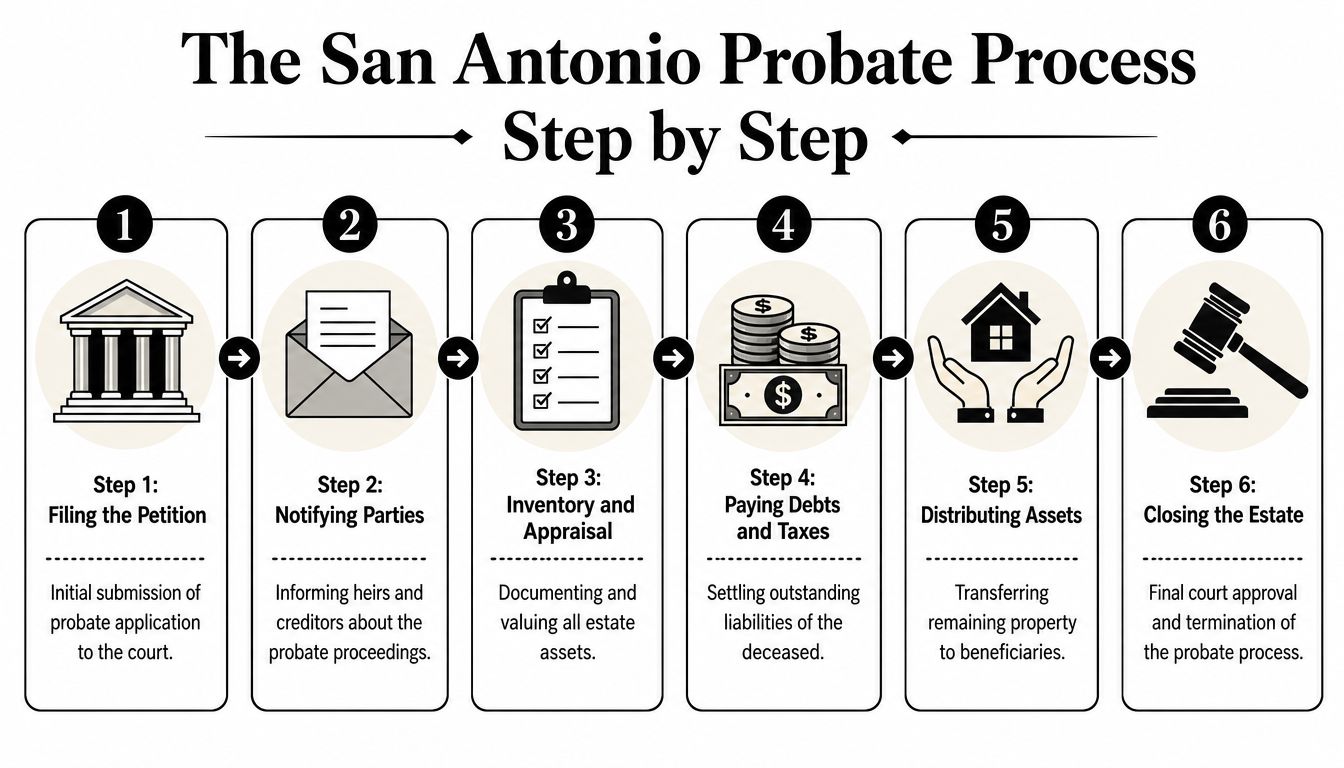
In Bexar County, probate usually starts with a filing at the probate clerk's office. If there's an original will, it's filed with the application. Texas requires a waiting period before the hearing. The Bexar County probate court explains that applicants must wait approximately two weeks after filing before a hearing can be conducted, and under § 256.052 the application must include the last three digits of the applicant's and testator's driver's license and social security numbers.
Step one through step three
Maria is a useful example. Her father lived in San Antonio and left a will naming her as executor. She begins by gathering the original will, death certificate information, and the identifying details needed for the probate application.
File the application
The case starts with filing the probate application in the county where the decedent lived. If there's a will, the original will is usually filed with it.Wait for the hearing date
Texas doesn't allow an immediate hearing. That waiting period gives the court time to process the filing and provide required notice.Attend the probate hearing
At the hearing, the judge reviews the will, confirms the court has jurisdiction, and decides whether the proposed executor is qualified to serve.
Step four through step seven
Once the judge approves the appointment, the process becomes more practical and less ceremonial.
Receive Letters Testamentary or other authority
These documents show banks, title companies, and others that the executor has legal authority to act.Identify and value estate assets
The executor gathers information about bank accounts, vehicles, real property, business interests, and personal property.Address debts and taxes
Valid obligations must be handled before distributions are made. That includes reviewing claims and paying what the estate legally owes.Distribute what remains and close the estate
After debts and required tasks are complete, the executor transfers property to beneficiaries according to the will or Texas law.
Practical rule: Don't start distributing estate property just because the family agrees. Wait until you have legal authority and understand what debts or claims must be resolved first.
For many families, the hardest part is knowing the order of operations. Once you know that filing comes first, hearing comes next, and authority must be established before asset transfers, the process becomes less mysterious.
Avoiding Formal Probate with Small Estate Affidavits
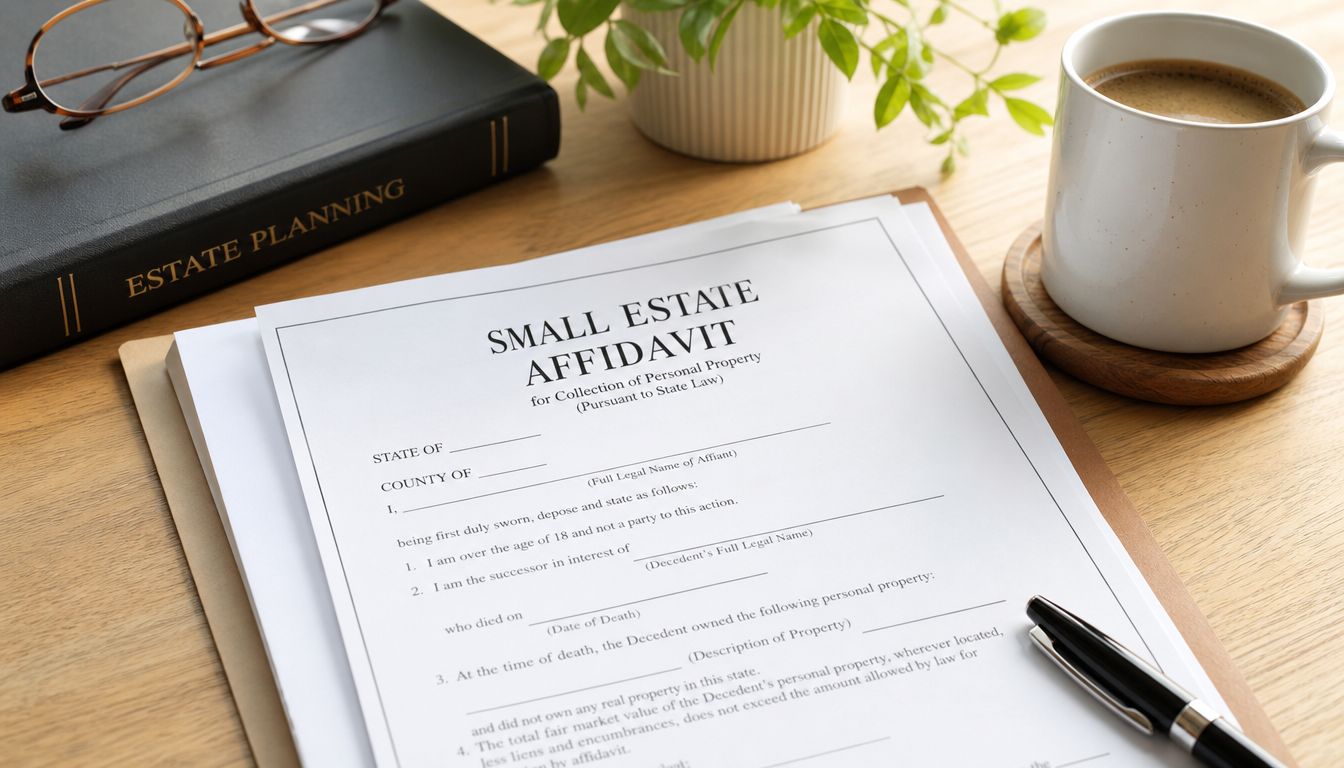
Some families don't need full probate at all. Texas Estates Code § 205.001 allows a Small Estate Affidavit when the person died without a will and the probate estate, excluding the homestead and exempt property, doesn't exceed $75,000. A summary of that rule appears in this discussion of Texas Estates Code § 205.001 and small estate affidavits.
Where families get confused
Many people hear that a “small estate” can skip probate and assume the threshold is higher or that all property counts the same way. That misunderstanding is common. In San Antonio, 42% of probate inquiries in 2025 came from families who thought formal probate was required for estates under $100,000, even though the actual Small Estate Affidavit threshold is a strict $75,000 excluding the homestead and other exempt property.
That distinction matters. A house used as the homestead may be treated differently from non-exempt assets. So may certain exempt personal property. A family can miscalculate the estate if they lump everything together without checking what Texas law excludes.
For a closer look at this option, see this guide to the Texas small estate affidavit process.
A realistic example
Suppose Elena dies without a will. She leaves a homestead, a modest bank account, and household items that may qualify as exempt property. Her son assumes the house value makes the estate too large, so he prepares for formal probate.
That may be the wrong conclusion. If the estate qualifies under the statute after excluding the homestead and exempt property, a Small Estate Affidavit may be enough. But if Elena left a will, this path wouldn't apply at all.
The Small Estate Affidavit is narrow by design. It can be very helpful, but only if the estate truly fits the rule.
Common Pitfalls That Can Delay or Derail Probate
Most probate delays don't happen because families are careless. They happen because the rules are technical, timing matters, and people often act before they understand what the court requires.
Missing deadlines and filing incomplete paperwork
Texas imposes a strict time limit for offering a will for probate. Under Texas Estates Code § 256.003, a will generally must be probated within four years of death unless an exception applies. Families sometimes store a will away, assume they can “deal with it later,” and then discover the delay has real consequences.
A different problem is incomplete filings. Even small omissions can slow the case, especially when identity information, venue facts, or heirship details are missing. When there's no will, the process gets more involved because the court must determine family history and heirship before appointing an administrator.
Out-of-state executors face special issues
Remote estate administration is possible, but it comes with extra care points. A frequently overlooked issue is the local agent requirement for non-resident executors. In Bexar County, a 2024 probate court ruling rejected 18% of non-local executor applications due to improper designation of a required local agent for service, and 35% of San Antonio probate cases in 2025 involved non-resident heirs.
If you live outside Texas and you've been named executor, don't assume you can file exactly the way a local resident would. Courts may require additional compliance steps before issuing authority.
Family conflict and contested matters
Some estates turn contentious quickly. Common trouble spots include:
- Disputes over the will because one relative questions validity or suspects undue influence
- Arguments about property when family members disagree about what belongs to the estate
- Debt surprises when creditors appear after heirs assumed everything could be distributed
- Heirship confusion when there is no will and relatives disagree about marital or family history
If conflict is already brewing, it helps to speak with counsel early and review the firm's Probate Litigation services before positions harden.
Early legal guidance often prevents a manageable probate from turning into a contested one.
When and How to Hire a San Antonio Probate Attorney
Key Insight
Probate feels overwhelming when you're carrying the whole process in your head. It becomes manageable when an attorney helps you identify the correct probate path, meet the court's requirements, and handle each task in order.
A probate attorney in San Antonio can help at different points. Some families call before anything is filed because they don't know whether they need full probate, muniment of title, or a Small Estate Affidavit. Others call after they hit a problem, such as a rejected filing, a title issue, or a dispute among heirs.
What to look for
Choose a lawyer who can do three things well:
- Work in Bexar County practice so local filing habits and probate court expectations aren't new to them
- Explain Texas Estates Code rules in plain English because probate is hard enough without dense legal jargon
- Communicate clearly with remote clients if the executor or heirs live outside Texas
This checklist on how to choose the right probate attorney in Texas can help you compare options.
You may also need related help beyond the probate file itself. Families often benefit from guidance on the Texas Probate Process, Guardianship, and Wills & Trusts, especially when an estate reveals larger planning issues for surviving relatives.
Takeaway: The right attorney doesn't just file forms. They help you understand what matters, what can wait, and how to move forward without creating bigger problems later.
If you're facing probate in Texas, our team can help guide you through every step, from filing to final distribution. Schedule your free consultation today with Law Office of Bryan Fagan, PLLC.