When a loved one passes away, their house or land doesn't just automatically transfer to the family. We understand that grieving a loss is incredibly difficult, and the last thing you want to face is a complicated legal process. If that property was owned solely in their name, it often enters a court-supervised process we call probate. This is what's known as probate real estate.
The legal system steps in to make sure the property is transferred correctly to the rightful heirs or sold to pay off estate debts—all under a judge’s watchful eye. It's a process designed to protect everyone involved, and our goal is to make it as clear and manageable for you as possible.
What Is Probate Real Estate in Simple Terms?
Losing a loved one is overwhelming, and legal jargon only adds to the stress. The word "probate" can sound intimidating, but it’s really just a system designed to bring order and fairness to the process of settling someone's final affairs, especially when their home is involved.
Think of the probate court as a neutral referee. Its job is to ensure everything is handled according to Texas law, as outlined in Title 2 of the Texas Estates Code. This is critically important for real estate, which is often a family's single most valuable asset.
Why Does Real Estate End Up in Probate?
A property almost always lands in probate when it was owned only by the person who passed away. If there isn't a surviving co-owner with automatic inheritance rights (like a joint tenant with right of survivorship) or a legal tool like a living trust in place, the property's title is essentially stuck. There’s no clear, legal way to transfer it.
Probate creates that way forward. The court officially validates the will, gives legal authority to an Executor to manage the estate, and oversees the transfer of the property's title from the deceased to the new owner.
Key Insight: At its heart, probate for real estate is all about one thing: creating a clean and unbreakable chain of title. This is what protects the estate, the heirs, and any future buyers from legal challenges down the road.
To help you see the bigger picture, here’s a quick breakdown of common scenarios.
When Texas Real Estate Enters Probate
| Property Ownership Scenario | Does It Typically Go Through Probate? | Why or Why Not |
|---|---|---|
| Owned solely by the deceased | Yes, almost always. | There is no automatic mechanism to transfer the title. The court must authorize it. |
| Owned jointly with a spouse with right of survivorship | No. | The property automatically passes to the surviving spouse outside of probate. |
| Owned by a living trust | No. | The trust documents control the transfer, keeping the property out of the probate court. |
| Owned jointly with others as "tenants in common" | Yes, for the deceased's share. | The deceased's ownership percentage becomes part of their estate and must be probated. |
As you can see, the way the deed is written makes all the difference.
If your loved one owned property, it's crucial to figure out which assets require probate and which might pass to heirs automatically. A home owned jointly with a spouse who has survivorship rights likely won’t need this process. But a family ranch owned only in the decedent's name almost certainly will. With compassionate and knowledgeable guidance, this journey is entirely manageable.
Navigating The Texas Probate Real Estate Process Step By Step
When you’re named the executor of a loved one's estate, the path forward can feel like trying to read a map in a foreign language—especially when a house is involved. The responsibility is immense, and legal terms don't help. Our goal here is to translate that complex journey into a clear, step-by-step guide you can actually follow.
Think of it less as one overwhelming task and more as a series of manageable actions. You’re not alone in this, and with the right map, you can navigate the Texas probate real estate process successfully.
First Things First: Initiating Probate And Getting Legal Authority
The entire process kicks off when an Application to Probate Will is filed with the court. This is typically done in the Texas county where your loved one resided. You're essentially asking a judge to formally recognize the will as legally valid and to officially appoint you as the executor, just as the will intended.
Once the court approves the application, it will issue a document called Letters Testamentary. Don’t be fooled by the name—this isn’t just a letter. It's a powerful legal certificate that serves as your proof of authority. With these letters in hand, you can now officially act on behalf of the estate. You can open an estate bank account, talk to mortgage companies, and take control of managing the property.
Getting a Handle On It: Inventory, Appraisal, and Notifying Creditors
Your next job is to become the estate's protector. That starts with getting a crystal-clear picture of what the estate owns and what it owes. Texas law is very specific about this.
Under Texas Estates Code, Section 309.051, an executor is required to file a sworn "Inventory, Appraisement, and List of Claims" with the court within 90 days of being appointed. This document is a detailed snapshot of everything the estate owns—real estate, bank accounts, cars, personal items—along with their fair market values on the date of death.
To get this done right, especially for the real estate, you'll need to tackle three key tasks:
- Notify Creditors: You must publish a formal notice in a local newspaper. This announces the death and gives any potential creditors a legal deadline to come forward and file a claim against the estate.
- Get a Formal Appraisal: This isn't optional. You need a certified appraiser to determine the home's fair market value. This number is critical for the official inventory, for calculating any potential estate taxes, and for ensuring fairness among all the heirs.
- Manage and Maintain the Property: From here on out, you're in charge. This means securing the home, keeping the lawn mowed, and making sure the mortgage, property taxes, and insurance premiums are paid on time using estate funds.
This diagram gives you a bird's-eye view of how a property moves through this court-supervised system.
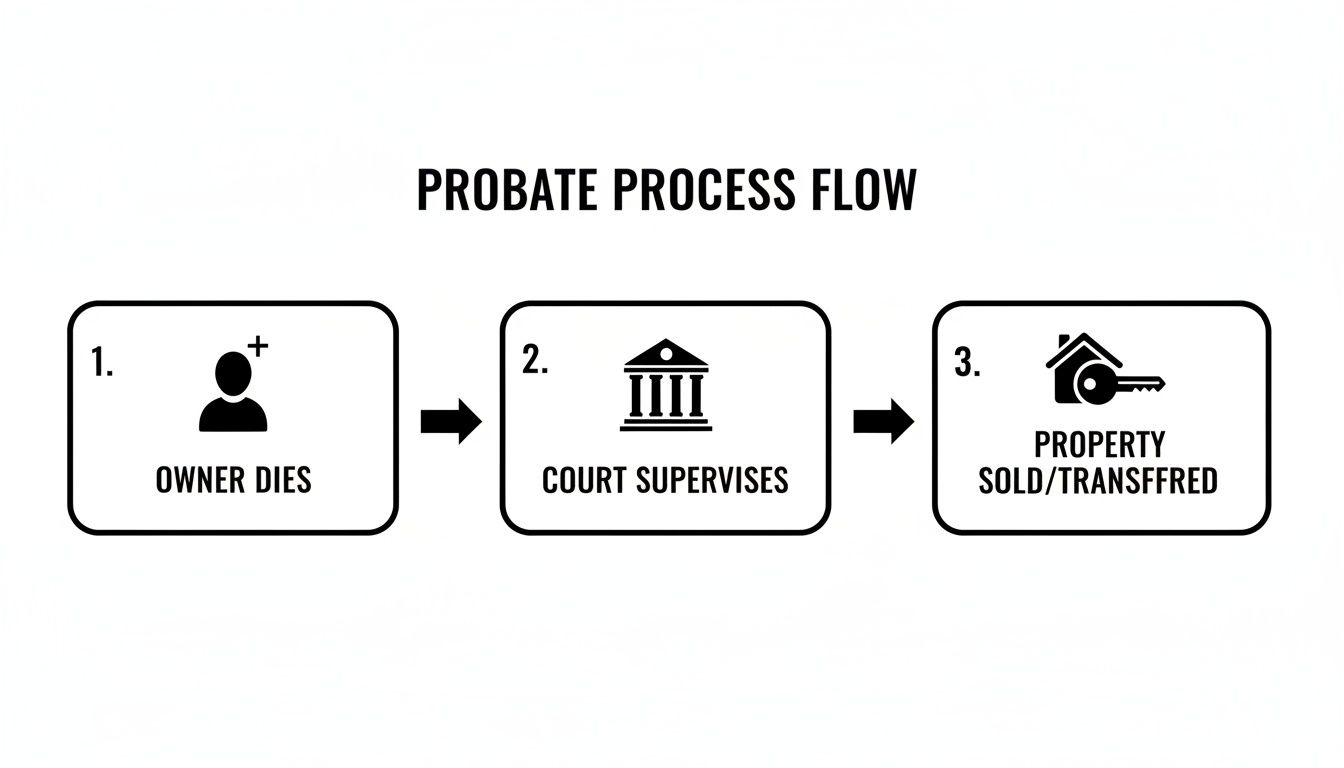
As you can see, the court plays a central role in making sure everything is handled by the book, whether the property is sold or passed directly to an heir.
The Final Stretch: Settling Debts And Distributing The Estate
Once the waiting period for creditors has passed, you can start using estate funds to pay off valid debts. This includes everything from the mortgage and credit card bills to final medical expenses and funeral costs. Remember, all debts must be settled before any assets can be handed out to the beneficiaries.
If the will says to sell the house, you now have the authority to list it and close the sale. If it’s meant to go to a specific heir, your attorney will help you prepare a new deed to legally transfer ownership. If you're looking for more detail on this stage, you’ll find our guide on how to probate a property in Texas very helpful.
Finally, after all the assets have been distributed according to the will, you'll file a final accounting with the court that details every dollar in and every dollar out. Once the judge signs off on it, the estate is officially closed, and your duties as executor are finally complete.
Selling A House During Probate: A Guide For Executors
When an estate includes a house, the executor often faces a tough decision: should we sell it? Sometimes the will gives clear instructions to sell. Other times, selling is the only way to generate the cash needed to pay off estate debts and taxes.
Whatever the reason, your role as executor suddenly expands. You’re not just managing an estate; you’re now a home seller. But selling a house in probate isn't like putting your own home on the market. Before you can even think about hiring a realtor, you need to understand one crucial thing: in Texas, how you sell the house depends entirely on the authority the court gives you.
There are two very different paths you can take: Independent Administration and Dependent Administration. Knowing which one applies to your case is the single most important first step to legally selling the property.
Independent Administration: The Path Of More Freedom
If the will specifically allows for it, or if all heirs agree, a Texas court can grant Independent Administration. This is the route everyone hopes for. Why? Because it gives the executor significant freedom to act without having to run back to the judge for permission at every turn. It’s faster, less expensive, and far less stressful.
Think of it like this: with Independent Administration and the “power of sale,” you can sell the house much like a traditional owner. You can hire an agent, list the property for a price you believe is fair, negotiate with buyers, and sign the closing documents. The court trusts you to handle the sale responsibly.
Dependent Administration: The Court-Supervised Path
Things get a lot more complicated when the will is silent on the matter, if there’s no will at all, or if heirs do not agree on an independent administration. In these cases, the court will almost certainly order a Dependent Administration. The name says it all—you are dependent on the court’s approval for nearly everything you do.
This path is designed to protect the heirs and creditors by adding layers of oversight. But that oversight comes at a price.
Selling a home under Dependent Administration is a slow, methodical process with several mandatory steps:
- File an Application to Sell: You can’t just decide to sell. You have to formally ask the court for permission, explaining exactly why a sale is necessary for the estate.
- Get an Appraisal: The court will require an independent appraisal to determine the home's fair market value. This isn't optional; it sets the baseline for any offers.
- List and Market the Property: Once the judge gives you the green light, you can list the home. However, you must tell all potential buyers that any offer they make is conditional on the court's final approval.
- Report the Sale to the Court: After you accept an offer, the work isn't done. You must file a “Report of Sale” with the court, which outlines every detail of the proposed transaction.
- Attend a Confirmation Hearing: Finally, the judge holds a hearing to approve the sale. It’s not just a formality. Other interested parties can actually show up at the hearing and place higher bids on the property right there in the courtroom. The judge will only sign off if the sale is truly in the best interest of the estate.
Before you even think about putting a "For Sale" sign in the yard, it's vital to get the property valued correctly. As an executor, you have a fiduciary duty to get the best possible price for the estate. Understanding the different real estate property valuation methods is key to setting an accurate asking price and fulfilling your legal obligations to the heirs.
Our firm provides in-depth guidance on the selling real estate during Texas probate, helping you navigate the complexities and choose the right administrative path for your specific situation.
The True Costs And Timelines For Probate Real Estate
When a family in Texas starts navigating probate, two questions almost always surface first: How much is this going to cost, and how long will it actually take? Getting straight answers to these questions upfront is key to managing expectations and keeping stress at bay during an already tough time.
A typical Texas home sale might wrap up in 30 to 45 days. Selling a house in probate, however, is a different ballgame entirely. It's a marathon, not a sprint. Thanks to mandatory waiting periods, court backlogs, and specific legal hurdles, the process can easily stretch from 12 to 18 months. Sometimes, if things get complicated, it takes even longer.
Breaking Down The Financial Impact
The costs tied to probating real estate can be a real shock if you're not prepared. It’s not a single fee but a stack of different expenses, all necessary to legally settle the estate. These costs can eat up anywhere from 7% to 18% of the total estate value—a huge slice for any family. You can discover more insights about probate costs on ProtectingWealth.com to see how these numbers add up.
So, where does all that money go? It’s a mix of several unavoidable expenses:
- Court Filing Fees: Every probate case kicks off with filing an application with the county court, and that comes with a fee.
- Attorney's Fees: Trying to handle probate without legal guidance is a recipe for disaster. An attorney's fees might be a flat rate, hourly, or a percentage of the estate, all of which are allowed under Title 3 of the Texas Estates Code.
- Executor Compensation: Texas law recognizes that being an executor is a tough job. They are entitled to compensation for their time and effort, usually calculated as a percentage of the estate's value.
- Appraisal and Bond Costs: The court will require a formal appraisal of the property. And if it’s a Dependent Administration, the estate will also have to pay for a probate bond.
- Property Maintenance: From the moment of death until the house is sold, the estate is on the hook for the mortgage, property taxes, insurance, and all the general upkeep. These costs can pile up quickly.
Example Scenario: The Sanchez Family Home
The Sanchez family’s mother passed away, leaving behind her home in Houston, valued at $400,000. She had a will but no other estate planning. Her son, appointed as executor, faced a dependent administration. Over 14 months, the estate incurred:
- Attorney's Fees: $12,000
- Executor Fees: $10,000
- Court, Appraisal, and Bond Costs: $3,500
- Mortgage, Taxes & Upkeep: $14,000
Total probate-related costs came to $39,500, nearly 10% of the home's value, before the property could be sold and proceeds distributed to the heirs.
How To Avoid Probate For Real Estate In Texas
After learning about the complexities of probate real estate, almost every Texas family asks the same question: "Is there any way to skip all this?" The good news is, yes, you absolutely can. With proactive estate planning, you can make sure your home or land passes directly to your loved ones, completely sidestepping the court system.
These aren't legal loopholes; they are smart, established strategies that create a clear, private, and immediate path for transferring your most valuable asset. The trick is to put these tools in place now, long before they're ever needed.
Powerful Probate Avoidance Tools
Several effective methods allow Texas real estate to transfer outside of probate. Each one serves a different purpose, and the right choice really depends on your family's unique situation. An estate planning attorney can walk you through the pros and cons of each.
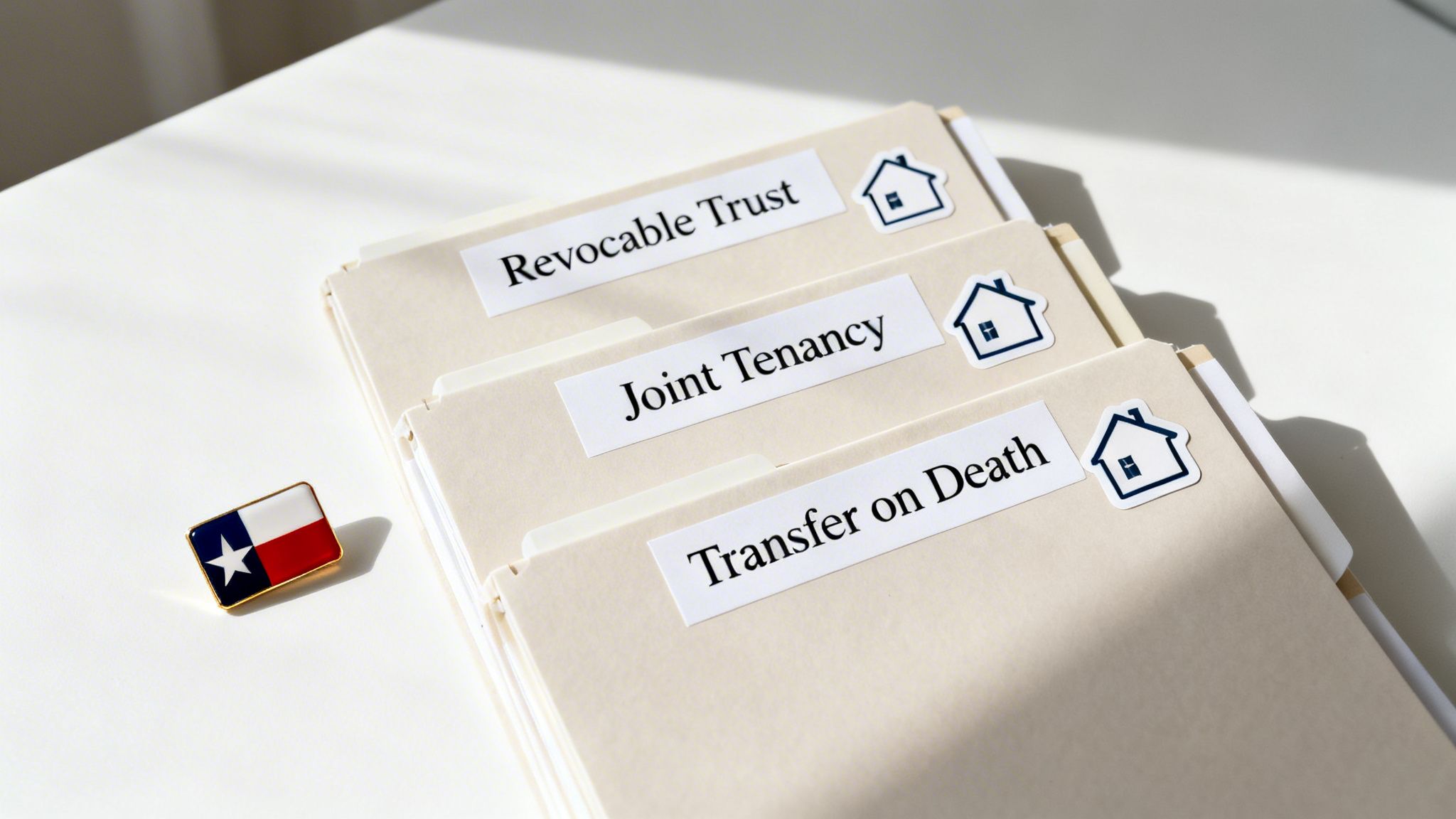
Here are the most common strategies we see in Texas:
- Revocable Living Trust: This is the heavyweight champion of probate avoidance for a reason. You transfer your property's ownership into a trust that you still completely control during your lifetime. When you pass, the successor trustee you named simply follows the trust's instructions to hand the property over to your beneficiaries. No court, no fuss. Our team can help you understand the full benefits of setting up Wills & Trusts.
- Joint Tenancy with Right of Survivorship: Think of this as a built-in inheritance plan for co-owners. When two or more people own property this way, the surviving owner automatically gets the deceased owner's share. For this to work, the property deed itself must contain specific language like "joint tenants with right of survivorship."
- Transfer on Death Deed (TODD): Authorized by the Texas Estates Code (Chapter 114), the TODD is a beautifully simple tool. You file a deed now that names who will inherit your property when you die. It’s essentially a "payable-on-death" instruction for your house. The property only transfers after you pass, and you can change or cancel the deed at any time.
Alternatives For Simpler Estates
What if you have a will, but the estate is straightforward? Texas law provides some streamlined alternatives to a full, formal probate administration, which can be a practical middle ground.
A Muniment of Title is a uniquely Texan shortcut. If there's a valid will and the only major debt is the mortgage on the home, a court can legally recognize the will and transfer the title to the heirs without ever appointing an executor. It’s a faster way to have the court declare that the will itself is the new deed.
Another option is the Small Estate Affidavit. This can be used if the person died without a will and the estate's value (not counting the homestead) is $75,000 or less. This sworn document is filed with the court and, once approved, can transfer the title of the homestead directly to the legal heirs.
Ultimately, these strategies are about protecting your family from unnecessary delays, expenses, and stress. Planning ahead for your real estate is one of the most thoughtful gifts you can give your loved ones. Understanding your options—from trusts to more complex issues like Guardianship—is the first step. And if a dispute does arise, knowing the basics of Probate Litigation is critical. The Texas Probate Process is far more manageable when you have the right partner by your side.
Key Takeaway for Texas Families
Dealing with real estate after a loved one passes away can feel overwhelming, especially when you’re already grieving. The legal jargon, the court dates, the sheer amount of paperwork—it’s a lot to handle. We've covered a great deal in this guide, so let’s boil it down to the essentials you absolutely need to remember.
At its core, probate real estate is any property that requires court supervision before it can be legally sold or passed to heirs. This process is governed by the Texas Estates Code and is designed to ensure debts are paid and assets are distributed correctly.
One of the hardest truths about this process is the timeline. A probate sale often takes 12 to 18 months, a marathon compared to a typical home sale. For a deeper look at why it takes so long, you can find more information on The Probate Pro's blog.
The executor’s authority—whether Independent or Dependent Administration—will define every move. It’s the difference between having the freedom to act and needing a judge to approve every single decision.
Of course, the best strategy is to avoid this process altogether. Forward-thinking estate planning using tools like Wills & Trusts, Transfer on Death Deeds, or joint ownership can save your family from the stress and expense of probate court. A good plan can also help you sidestep related issues like a sudden Guardianship or messy Probate Litigation.
The Texas Probate Process may seem like a maze, but it’s a journey with a map. With the right legal partner, you can honor your loved one’s legacy and find a clear path forward.
Frequently Asked Questions About Texas Probate Real Estate
When a loved one's home is tied up in probate, the questions can feel overwhelming. It's an emotional and stressful time, and we've found that most Texas families grapple with the same core concerns. Here are some straightforward answers to the questions we hear most often.
What Happens If Heirs Disagree About Selling the Property?
It’s one of the most common family disputes we see in probate: one heir wants to sell the house, and another wants to keep it. So, what happens? The executor can't just choose a side. Their legal duty, under the Texas Estates Code, is to act in the best interest of the entire estate, not just one heir.
If the will is silent on the matter and the heirs are at a stalemate, the executor’s best move is to ask the probate court for direction. A judge will listen to everyone involved and make a ruling based on what's most practical for paying off the estate’s debts and fairly distributing what's left.
Do I Have to Keep Paying the Mortgage and Property Taxes?
Yes, without question. From the moment of death until the house is either sold or formally transferred to an heir, the estate is responsible for all its expenses. This includes the mortgage, property taxes, homeowner's insurance, and even basic upkeep. The executor is required to use the estate's funds to keep these bills paid.
Letting these payments slide can trigger a foreclosure or tax lien, which can torpedo the home's value and create a legal nightmare for everyone. Protecting the estate's assets—like the family home—is one of the executor's most critical responsibilities.
If you’re facing probate in Texas, our team can help guide you through every step — from filing to final distribution. Schedule your free consultation today.