Losing a parent or close family member is hard enough. Finding out that a will leaves someone out can make grief feel sharper, more confusing, and personal.
In many Texas families, the first reaction is emotional, not legal. A child reads the will and thinks, “Was I forgotten?” An executor opens the estate file and realizes there may be a child born later, adopted later, or not listed anywhere in the documents. That moment can stop the probate process cold.
Texas law recognizes that these omissions sometimes happen by mistake. In the right situation, the law may protect the person who was left out. It also places real duties on the executor to identify, notify, and account for possible heirs before the estate can move forward. If you're searching for answers about omitted heir probate texas, the key is to separate the hurtful surprise from the legal rules. They are not always the same thing.
This guide is written from both sides. If you believe you were left out, you need to know your rights. If you're the executor or personal representative, you need to know your responsibilities. Both paths matter, and both can be handled with clarity.
A Painful Discovery What Happens When a Will Leaves You Out
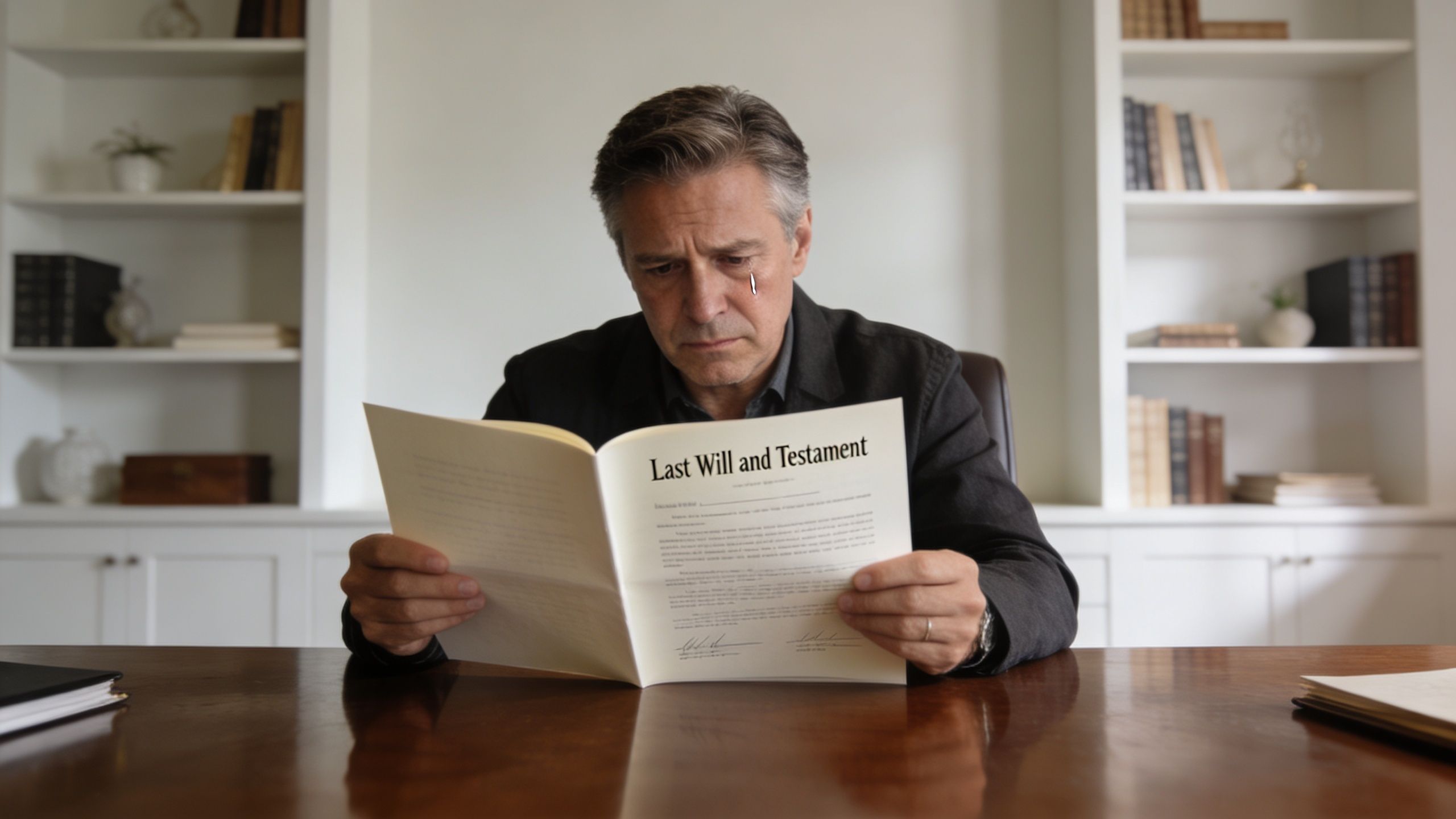
Maria learned about her father's will in the middle of an already painful week. She was grieving, helping sort old paperwork, and trying to stay calm for her own children. Then she saw the document. Her father's will named other beneficiaries, but her name wasn't there at all.
For many people, that kind of discovery feels like a second loss. It can seem like a final statement about love, belonging, or family history. But in Texas probate, an omission isn't always a deliberate choice. Sometimes it is. Sometimes it isn't. That difference matters.
When being left out may have a legal remedy
Texas law uses the term omitted heir in a specific way. In many cases, people are really talking about a pretermitted child, meaning a child born or adopted after the parent signed the will and not included in it. The law treats that situation differently from a parent clearly saying, in writing, that a child should receive nothing.
That distinction is important because families often confuse forgotten with disinherited. They are not the same. A disinherited person was intentionally excluded. An omitted heir may have been left out because the will was never updated.
Being omitted from a will doesn't automatically mean you have no rights. It may mean the probate court has to take a closer look.
Why both heirs and executors need to pause
If you think you were left out, don't assume the will is the final word. If you're the executor, don't assume the names on the page are the only people who matter. A missing heir issue can affect how property is divided, whether notices must be sent, and whether the court will let the estate close.
That is why this issue so often catches families off guard. Probate seems simple until one missing name changes everything.
Understanding Omitted Heirs in Texas Probate
An omitted heir in Texas probate is most often a child who was born or adopted after the will was signed and who wasn't mentioned or provided for in that will. Under Texas Estates Code § 255.051, that child may be entitled to an intestate share unless an exception applies. One Texas probate resource also notes that 15% to 20% of dependent administrations involve heir location issues, which helps explain why these cases require careful attention to family history and notice requirements, as discussed in this Texas probate citation guide.
Think of the will like an old family snapshot
A helpful analogy is this. A will can act like a family photo taken on one date. If a parent signs a will when the family includes two children, then later has or adopts another child, the “photo” is outdated. The law sometimes steps in because the will no longer reflects the family as it existed at death.
That doesn't mean the court assumes every omission was accidental. It means Texas law is willing to ask the question.
Omitted is different from intentionally disinherited
Readers often get confused here.
If the will clearly shows the parent meant to exclude a child, the analysis changes. Texas law may not treat that person as a protected omitted heir. The same is true in certain other situations recognized under § 255.051, including when substantially all of the estate was devised to the omitted child's other parent or when the child was provided for outside the will as a substitute.
A plain-English breakdown helps:
- Intentionally disinherited child: The parent used language showing a clear choice to leave the child nothing.
- Omitted child: The child came later, and the will never caught up.
- Child provided for outside the will: The parent may have arranged another substitute benefit that can matter under the statute.
Practical rule: Don't focus only on whether a name appears in the will. Focus on when the will was signed, when the child was born or adopted, and whether the document or related evidence shows a deliberate plan.
Why this happens so often in real families
People don't update wills as often as they should. A remarriage happens. A child is born. An adoption is finalized. A move to another county or state interrupts estate planning. The original will sits in a desk drawer while life keeps moving.
That problem isn't unique to Texas. Families in other states run into similar confusion when an old will no longer matches the actual family tree. If your family is dealing with probate in more than one state, a state-specific resource like your 2026 essential guide to Hawaii probate can help illustrate how local probate rules can differ even when the emotional problem feels the same.
A quick note about spouses
Readers sometimes use the phrase “omitted heir” loosely to include a surviving spouse who wasn't addressed properly in estate documents. Spouses do have rights in Texas probate, but the legal framework is different from the pretermitted child rules in § 255.051. A surviving spouse's rights often depend on marital property rules, homestead rights, exempt property, and intestacy rules in Titles 2 and 3 of the Texas Estates Code.
So if you're a spouse who feels left out, don't assume the child-specific omitted heir rule is your path. You may still have important rights. They just arise from different parts of Texas law.
Your Rights and Remedies as an Omitted Heir
If you qualify as a pretermitted child under Texas Estates Code § 255.051, your rights depend on what the will did for other children.
The broad rule is this. If the will provided for other children, the omitted child may receive an equal share with those children. If the will did not provide for any children, the omitted child may receive an intestate share. A helpful summary of that rule appears in this discussion of pretermitted children in Texas.
What an intestate share means in plain English
“Intestate” is just the legal word for dying without a valid will controlling the distribution of property. An intestate share means the court looks to the default inheritance rules in Texas Estates Code Chapter 201.
That can feel abstract, so here is a simple example drawn from the way Texas probate courts calculate shares. If intestacy rules call for children to share separate real property with a surviving spouse, the court follows that formula. In some situations, that can mean the children split that property interest with the surviving spouse according to the statute.
The key point is that the omitted child's rights are not based on emotion or fairness alone. They are based on a legal formula.
Child rights and spouse rights are not the same
The comparison below helps families keep these separate.
| Factor | Pretermitted Child (Born/Adopted After Will) | Unintentionally Omitted Surviving Spouse |
|---|---|---|
| Main legal issue | Whether Texas Estates Code § 255.051 gives the child a share despite being left out of the will | Whether the surviving spouse has rights under Texas marital property, homestead, exempt property, and intestacy rules |
| Trigger | Child was born or adopted after the will was executed and not provided for | Marriage and property status at death |
| Possible result | Equal share with other children, or intestate share if no children were provided for | Rights may arise from community property, separate property rules, and other probate protections |
| Focus of evidence | Date of will, date of birth or adoption, will language, possible statutory exceptions | Character of property, marriage history, probate filings, and other statutory protections |
| Typical court question | Was the omission unintentional under § 255.051? | What property rights does the spouse hold under Texas law? |
How an omitted heir usually asserts a claim
Different estates call for different procedures, but these are common paths:
Raise the issue early in the probate case.
If an estate is already open, the potential omitted heir usually needs to come forward before assets are fully distributed.Ask the court to determine the correct share.
This may involve a request tied to the existing probate case or a more formal dispute over how the will should be applied.Use an heirship proceeding when necessary.
In some cases, especially where family relationships are disputed or a will doesn't resolve the issue, the court may need a proceeding under Texas Estates Code Chapter 202 to determine heirs.Challenge the existing probate position if needed.
If the executor or other beneficiaries deny the claim, litigation may follow. Families often refer to this broadly as a will contest, although the exact filing depends on the dispute. A good starting point for understanding that process is contesting a will in Texas.
A dual action plan for the forgotten heir
If you think you're the omitted heir, start with documents, not arguments.
- Get the will and probate filings: Ask for the signed will, the probate application, and any notices already filed with the court.
- Confirm the timeline: Compare the date the will was executed with your birth or adoption date.
- Collect relationship records: Birth certificates, adoption orders, family correspondence, and prior estate documents can all matter.
- Look for exceptions: Was the estate largely left to your other parent? Were you provided for outside the will as a substitute?
- Act before distribution: Waiting can make the case much harder, especially after the executor has distributed assets.
A calm, document-based approach usually works better than a family confrontation. Probate courts decide these questions from evidence and statutes.
What readers often misunderstand
Many people assume an omitted child automatically gets “half the estate” or “the same as everyone else” in every case. That's not how the law works. The answer depends on the will's structure, the existence of other children, the presence of a spouse, and whether the property is probate property governed by the will or something else entirely.
That last issue becomes especially important later in this article, because not everything a person owned will pass through probate.
A Real-World Scenario Navigating an Omitted Heir Claim
Anna's father signed his will years ago, when he had two sons from his first marriage. The will named those sons and divided his estate between them. Later, he remarried and had Anna. He never updated the will.
After her father's death, Anna didn't know the will existed until probate started. When she finally read it, she wasn't mentioned at all. Her first reaction was simple and painful. She thought her father had chosen to leave her out.
What changed once the dates were reviewed
An attorney looked at the timeline first. That changed everything.
Anna's birth came after the date the will was signed. The will included gifts to existing children, but nothing addressed future children. There was also no clear language showing that her father meant to disinherit a later-born child.
That put Anna in the category Texas law treats seriously.
How the probate process unfolded
Anna's attorney filed the necessary claim in the probate case and asked the court to recognize her status as a pretermitted child. The executor had to pause distribution while the issue was sorted out. The court reviewed the will, family records, and the structure of the estate.
Because the will had provided for the older sons, the legal question was whether Anna should receive an equal share with them from the portion governed by the statute. The case was not about punishing the brothers or rewriting every part of the estate plan. It was about correcting what the law treated as an unintentional omission.
In many omitted heir cases, the turning point is not a dramatic courtroom fight. It is a careful review of dates, family records, and the exact language of the will.
Why this example matters
Anna's story shows why families shouldn't jump to conclusions. An omitted heir claim is not always an accusation that someone acted in bad faith. Sometimes, the explanation is simpler. A parent signed a will during one chapter of life and never updated it for the next one.
It also shows why executors need to stay neutral. The executor's job is not to defend the will at all costs. The executor's job is to help the estate move through probate lawfully, even when that means recognizing someone the will failed to mention.
An Executor’s Guide to Handling Potential Omitted Heirs
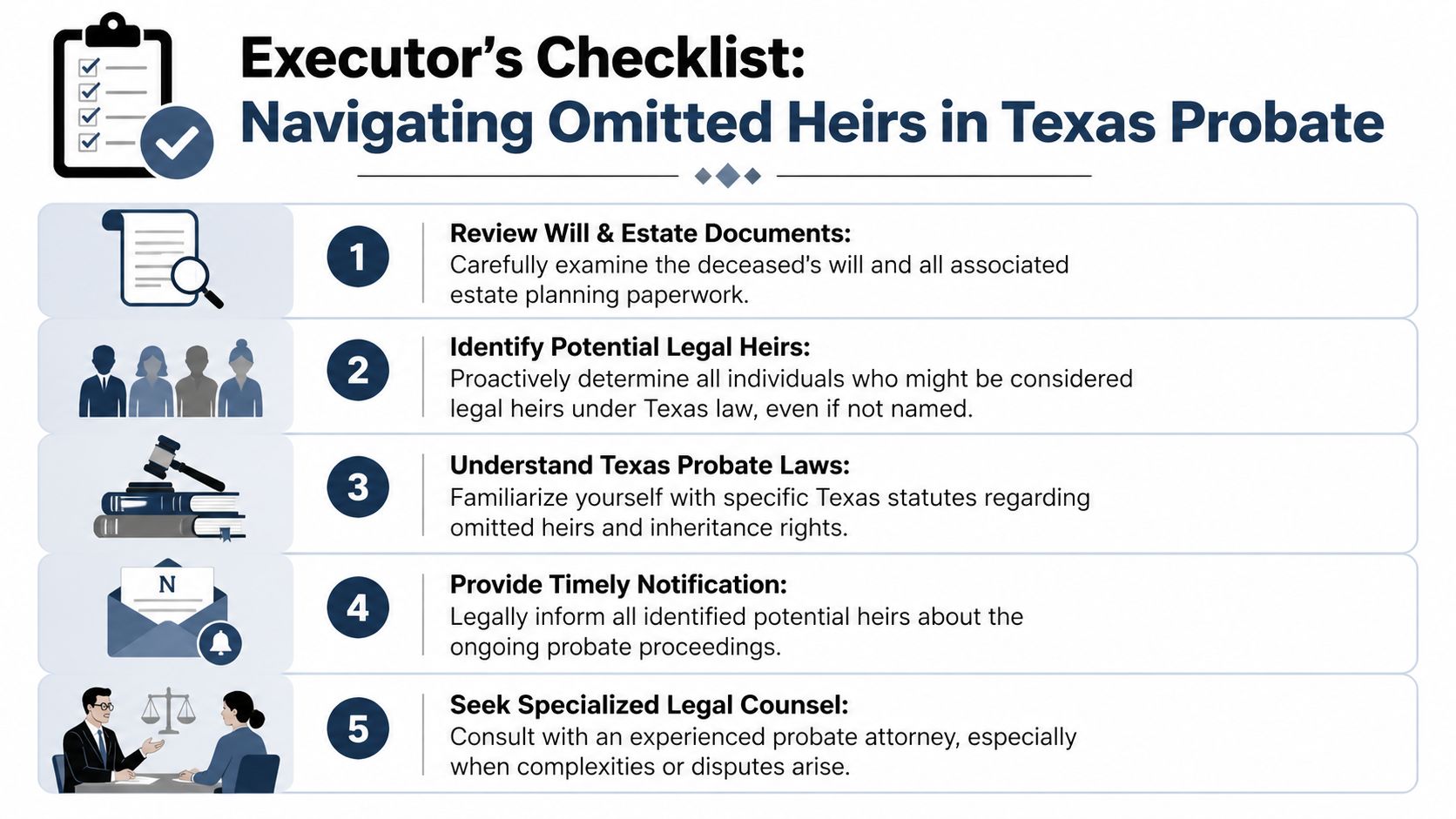
Executors often believe their job is to follow the will exactly as written. That is only part of the job. In Texas probate, the executor or personal representative also has a duty to help ensure the estate is administered correctly. If there may be omitted or unknown heirs, the court expects real diligence.
Texas probate courts cannot close an estate until all potential omitted or unknown heirs are identified and notified, and the process can involve genealogical research, public notices, and an attorney ad litem under Texas Estates Code Chapter 202. A Texas probate article explains that these issues can stall probate for months or even years, which is why executors must take heir identification seriously from the start, as discussed in this review of probate complications in Texas.
What due diligence looks like in practice
“Due diligence” sounds technical, but it means doing the work a careful person would do to identify possible heirs before distributing property.
That can include:
- Reading every estate document carefully: Compare the will, codicils, divorce records, adoption papers, beneficiary paperwork, and prior affidavits.
- Building a family tree: List spouses, children, adopted children, children from prior relationships, and deceased relatives who may affect distribution.
- Contacting known family members: Estranged relationships still matter. Silence from relatives doesn't erase inheritance rights.
- Checking records and leads: Public records, funeral information, old address books, emails, and court filings can all help locate heirs.
- Preserving proof of your efforts: Keep copies of letters, returned mail, notes of calls, and any search results.
The executor's parallel checklist
If you're the executor and suspect an omitted heir issue, this sequence helps:
Pause distributions.
Don't rush to transfer property because beneficiaries are asking for speed.Tell your probate attorney immediately.
A delay caused by caution is usually safer than a mistake caused by assumptions.Review Titles 2 and 3 issues.
Chapter 202 matters for heirship. Chapter 201 matters for intestacy. Section 255.051 matters if a pretermitted child is involved.Prepare for notice requirements.
Known heirs must be notified, and unknown heirs may require court-approved alternative notice procedures.Cooperate with court-appointed professionals.
If the court appoints an attorney ad litem, that lawyer represents unknown or missing heirs, not the executor.
Why courts take this so seriously
The probate court's goal is not speed for its own sake. The court wants lawful distribution. If an executor distributes assets before identifying a rightful heir, that mistake can create personal risk and force expensive corrective action.
Some executors are surprised to learn that even a well-meaning shortcut can backfire. “Everyone in the family agreed” is not always enough if the right people were never found or notified.
Executors don't need to solve every family mystery alone. They do need to show the court they searched carefully and acted responsibly.
Common trouble spots for personal representatives
Certain facts should put an executor on alert right away:
- Later marriages or blended families
- Children from earlier relationships
- References to adoptions, even informal family language
- Old wills with no updates
- Long periods of estrangement
- Property in Texas handled by out-of-state family members
These are not signs that a dispute is inevitable. They are signs that the estate needs a thorough review before the probate process moves forward.
Many families experience peak executor stress. You're grieving, fielding calls, managing paperwork, and trying not to make a mistake. That pressure is exactly why omitted heir issues should be addressed methodically rather than emotionally.
The Hidden Complication Omitted Heirs and Non-Probate Assets
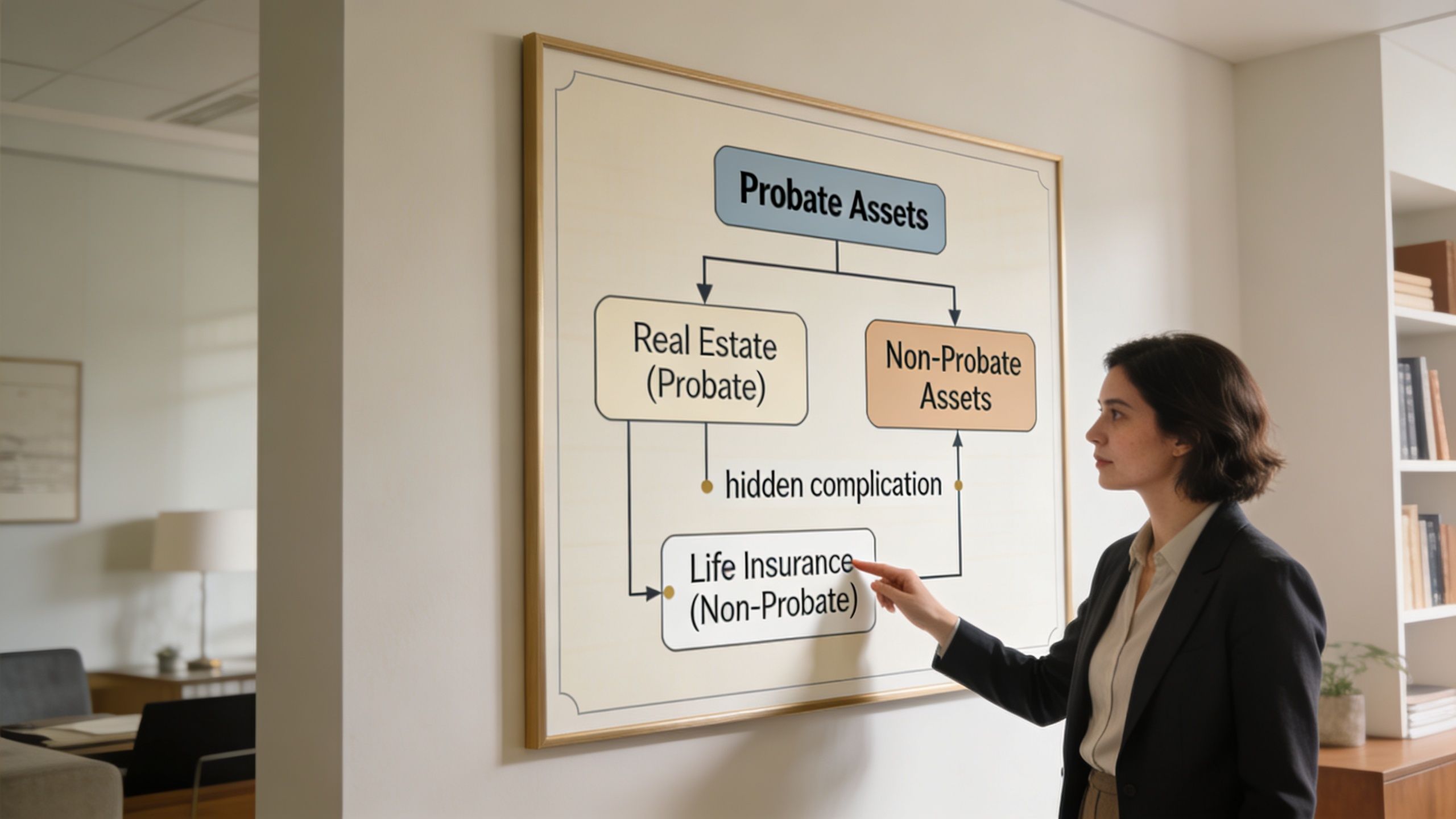
Many families assume that if a child qualifies as an omitted heir, that child can claim a share of everything the parent owned. That's usually not correct.
Some assets pass through the probate estate. Others pass outside probate by contract or ownership structure. That difference can be one of the hardest parts of omitted heir probate texas cases.
What usually bypasses the will
A pretermitted child may have rights in the probate estate, but assets such as POD accounts, life insurance, IRAs, and other beneficiary-designated property often transfer directly to the named beneficiary. A Texas source addressing this issue states that these assets can exclude an omitted heir because they pass by contract, not by will, and it notes a 25% increase in disputes over omitted heirs discovering nonprobate exclusions in Texas filing trends, as described in this explanation of forced heirship and nonprobate conflicts.
That means a child could successfully assert rights in the probate estate and still receive nothing from a life insurance policy or retirement account if someone else was the named beneficiary.
Why families find this so frustrating
From a human standpoint, the distinction can feel unfair. The child says, “I was forgotten.” The other side says, “But those accounts weren't controlled by the will.” Both statements may be true.
This is why any serious estate review should include a full inventory of both probate and non-probate assets. If you need a plain-English overview of that distinction, this guide to probate and non-probate assets is a useful companion resource.
A short video can also help make that line easier to see:
A practical example
Suppose a father leaves behind a house titled in his sole name, a checking account with no beneficiary, a life insurance policy naming an older child, and an IRA naming a former spouse or another beneficiary. A later-born child may have a claim involving the house and checking account if those are part of the probate estate. But the life insurance and IRA may transfer outside probate unless another rule changes the result.
That is why updating a will alone isn't always enough. Beneficiary designations need attention too.
Key Insights and When to Call an Attorney
A missing name in a will can send two people into the same courthouse with very different fears. The child who was left out may be asking, "Do I have any rights at all?" The executor may be asking, "If I distribute this estate the wrong way, will I be blamed?" Both concerns are valid.
At this stage, clarity matters more than speed. An omitted-heir question is often less about proving bad intent and more about figuring out whether Texas law treats the omission as accidental, what property is affected, and what the court needs before anyone takes the next step.
What matters most
- An omitted heir claim is not the same as a general complaint about fairness. Texas law may protect a child who was born or adopted after the will was signed, even if the will never mentions that child.
- The executor cannot treat an unanswered family question as a minor detail. If a possible omitted heir exists, the estate needs to slow down long enough to confirm the facts and give proper notice.
- The answer often turns on timing and family history. Dates of birth, adoption records, prior children, marriage history, and the will's language can all affect the result.
- Court procedure matters almost as much as the family facts. Missing a filing deadline or distributing property too early can make a hard situation harder.
- The omitted heir and the executor both need a plan. One side is trying to preserve a claim. The other is trying to protect the estate and avoid personal liability.
A practical checklist for the omitted heir
If you believe you were left out by mistake, focus on preserving the claim before assets are distributed:
- Gather the will, any codicils, and the probate case information.
- Collect records that show your relationship to the deceased, such as a birth certificate, adoption paperwork, or court orders.
- Write down key dates, especially when the will was signed and when you were born or adopted.
- Ask whether the estate has already been partially distributed.
- Get legal advice quickly if you are unsure about the deadline. This Texas will contest deadline overview is a helpful starting point.
A practical checklist for the executor
If you are administering the estate, treat a possible omitted heir issue like a title problem on a house sale. Until it is cleared up, rushing ahead can create larger problems later.
- Review the will carefully for any language that addresses later-born or later-adopted children.
- Confirm the family tree with documents, not assumptions.
- Pause distributions that could be affected by the claim.
- Make sure notice requirements and court filings are handled correctly.
- Ask for legal guidance if family members disagree about parentage, adoption, prior marriages, or the effect of the will.
When to call an attorney right away
Call a probate attorney promptly if any of these apply:
- You were born or adopted after the will was signed and you are not named.
- You are the executor and you discovered a child, adoption, or family relationship the will does not account for.
- The estate includes real property, a blended family, or disputed family history.
- Someone has objected in court or is threatening to sue.
- You are worried about deadlines, distribution, or personal liability.
Early legal advice often lowers the temperature in the room. For the omitted heir, it can preserve rights before property changes hands. For the executor, it can prevent an avoidable mistake and show the court that the estate is being handled with care.
Navigating Your Next Steps with Confidence
An omitted heir issue can feel like a family wound reopening during probate. It brings grief, surprise, and often a sense that the ground has shifted underneath everyone involved. But there is a path forward.
Texas probate law gives courts a way to address children who were unintentionally left out of an outdated will. It also gives executors a roadmap for handling notice, heirship, and disputed family questions with care. The process may not be simple, but it is manageable when approached step by step.
If you're the person who was left out, start gathering documents and get advice before the estate is distributed. If you're the executor, slow down and make sure the court has what it needs before you move property. In both situations, the goal is the same. Protect the estate, respect the law, and avoid preventable conflict.
No family should have to sort through these questions alone while grieving.
If you’re facing probate in Texas, our team can help guide you through every step, from filing to final distribution. Schedule your free consultation today with Law Office of Bryan Fagan, PLLC.