Changing a deed on a house in Texas isn’t just about shuffling paperwork. It’s a formal legal process that involves preparing a new deed, signing it in front of a notary, and filing it with the county clerk’s office. This legal document is the final word on who owns a piece of property, and the need to change it often arises during major life events like a marriage, divorce, or the settling of a loved one’s estate. For Texas families, understanding this process is crucial for protecting what is often their most significant asset.
Understanding When to Change a Property Deed in Texas

The need to change a property deed often surfaces during some of the most emotional and significant times in a family’s life. This isn’t just a bureaucratic step; it’s a legal action that secures ownership and protects your family’s home. The first step is always understanding why and when you need to make this change, especially when grieving a loss or navigating a family transition.
For most Texas families we work with, the conversation about changing a deed starts in one of a few common situations:
- Marriage or Divorce: Adding a spouse to the title after getting married or, just as commonly, removing an ex-spouse following a divorce decree.
- Gifting Property: Transferring ownership to a child or another family member as a gift, often to help them get a start in life.
- Estate Planning: Strategically setting up the property to pass to your heirs, often with the goal of avoiding the formal Texas Probate Process.
- Inheritance: An executor or administrator of an estate officially transfers the home to a beneficiary after a loved one has passed away and the estate has been settled according to Texas law.
Key Deed Types in Texas
In Texas, not all deeds are created equal. Different types of deeds serve different purposes, and each one offers a unique level of protection for the new owner (the “grantee”). Understanding these differences is vital.
A General Warranty Deed, for example, is the gold standard. It provides the highest level of protection by guaranteeing the title is clear all the way back to its origins. On the other end of the spectrum is a Quitclaim Deed, which simply transfers whatever interest the current owner has—if any—without making a single promise about the title’s history.
Key Insight: Choosing the right deed is absolutely critical. We have seen firsthand how using the wrong type can create a mess down the road, leading to title disputes, surprise liabilities, or major headaches during the probate of an estate.
One of the most popular tools for estate planning today is the Transfer on Death Deed (TODD). As authorized by the Texas Estates Code, this instrument lets you name a beneficiary who will automatically inherit your property the moment you pass away, completely bypassing the often lengthy and public probate court system.
You can learn more about how a Transfer on Death Deed works in Texas and see if it’s a good fit for your estate plan. Getting a handle on these options gives you the power to make the best decision for your family’s future and ensures your final wishes are carried out exactly as you intend.
Choosing The Right Texas Deed For Your Situation
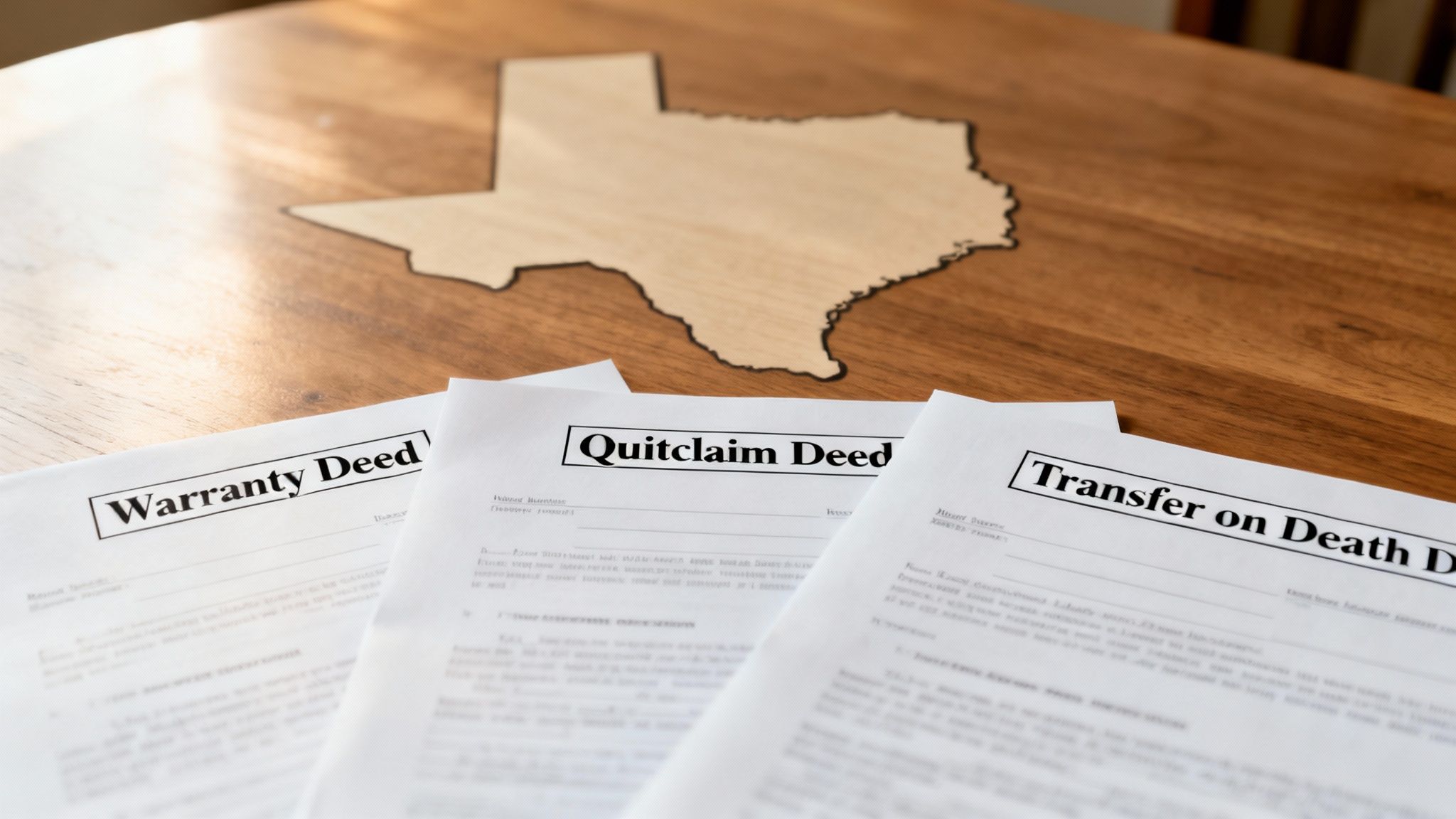
When you decide to change a house deed, you’re standing at a critical fork in the road. This isn’t just paperwork; it’s a choice with lasting legal and financial consequences. Not all deeds are created equal, and picking the right one is absolutely essential for protecting your family and making sure the property transfer holds up in court.
In plain English, the person giving the property is the grantor, and the person receiving it is the grantee. The deed you choose sets the stage for the promises the grantor makes about the property’s title history. While exploring different legal document templates can be helpful, understanding the core purpose of each Texas deed is the first real step.
Deeds With Strong Guarantees
If you’re dealing with a traditional home sale between strangers, the General Warranty Deed is almost always the way to go. It offers the buyer the highest level of protection possible.
With this deed, the grantor guarantees the title is clean and free of any claims or liens—not just during the time they owned it, but all the way back through the property’s entire history. It’s the gold standard for a reason.
A slight step down is the Special Warranty Deed. You’ll often see this used by executors settling an estate or in commercial real estate deals. Here, the grantor only promises that they haven’t done anything to cloud the title while they owned it. They aren’t making any promises about what happened before them, which is a smart move for someone like an executor who can’t know the property’s full backstory.
Deeds For Family And Estate Planning
When property is changing hands between family members, the goals are usually different, and so are the deeds.
A Quitclaim Deed is a common tool in divorces or when gifting property to a trusted relative. It’s a straightforward instrument that simply transfers whatever ownership interest the grantor has—if any—without making any warranties at all. It’s fast and simple, but it offers zero protection to the grantee.
A Realistic Scenario
Maria and her brother, David, inherit their father’s house through probate. To keep the home in the family under one owner, David decides to give his share to Maria. He uses a Quitclaim Deed to transfer his interest to her quickly and without complex warranties. Since they both inherited it from their father and trust the title is clear, it’s an efficient tool for their situation. This is a common step during the final distribution phase of an estate administration.
Finally, there’s the Transfer on Death Deed (TODD), which has become a go-to for modern estate planning in Texas. This special deed lets you name a beneficiary who will inherit your home automatically when you die, completely bypassing the probate process. It’s private, efficient, and keeps your property out of the courts.
To give you a clearer picture, we’ve put together a table comparing these common deeds.
Comparing Common Texas Property Deeds
Here’s a quick breakdown to help you see how these deeds stack up against each other.
| Deed Type | Common Use Case | Protection for Buyer/Recipient | Key Takeaway |
|---|---|---|---|
| General Warranty Deed | Traditional home sales | Highest level; covers the entire property history | The gold standard for protecting a buyer from title issues. |
| Special Warranty Deed | Estate sales, commercial deals | Limited; only covers the grantor’s period of ownership | Good for sellers (like executors) who can’t vouch for the entire title history. |
| Quitclaim Deed | Gifting property, divorce settlements | None; transfers interest “as-is” | Used between trusted parties where title issues are not a concern. |
| Transfer on Death Deed (TODD) | Estate planning | N/A (transfers after death) | An effective way to bypass probate for real estate, as outlined in the Texas Estates Code. |
Choosing the right deed is a foundational step in any property transfer. Each situation is unique, and taking the time to understand your options is the best way to protect your assets and your legacy. To dig even deeper, you can read our guide on the common Texas property deeds and their implications.
A Practical Guide to Filing Your New Deed
Once you’ve settled on the right deed for your family’s situation, it’s time to put that decision into action. This is where the legal process becomes real. It’s a series of careful, deliberate steps that, when done correctly, ensures the property transfer is legal, official, and secure. Let’s walk through this filing process together, breaking it down into manageable actions.
The following infographic illustrates the three core stages of filing a new property deed in Texas.
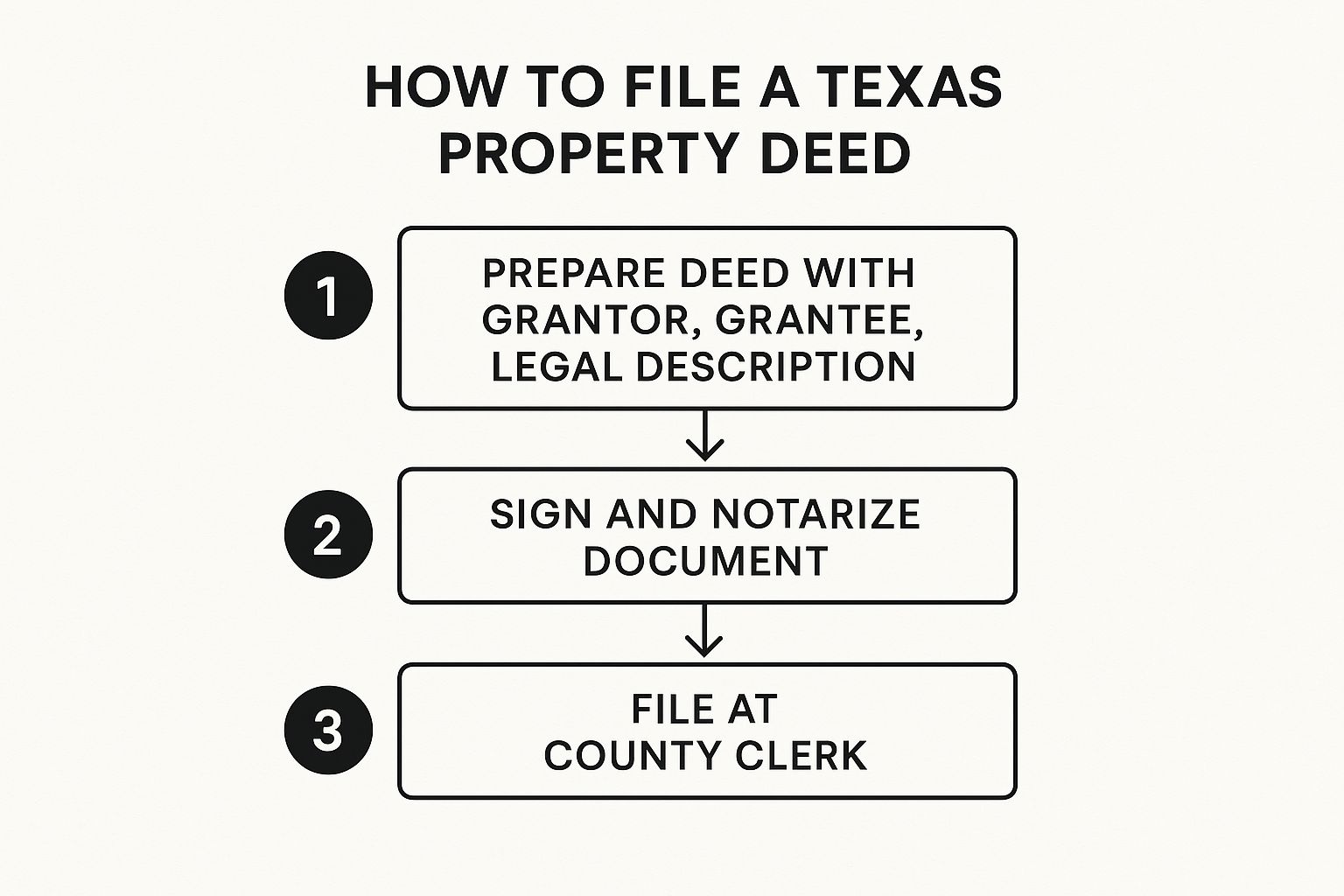
This visual simplifies the journey from drafting the document to making it a public record—which is the ultimate goal here.
Step 1: Accurately Drafting the New Deed
The first and most foundational part of the process is preparing the new deed itself. Think of this less like a simple form and more like a legal instrument that must contain specific, perfectly accurate information to be valid under the Texas Property Code (Title 2, Chapter 5). Even tiny errors can create big problems down the road, potentially “clouding” the title and making future sales or inheritance a nightmare.
Your new deed must include:
- The Grantor’s Full Name: This is the person or entity transferring the property. Their name must be spelled exactly as it appears on the current deed.
- The Grantee’s Full Name: This is the person or entity receiving the property. Again, precision is non-negotiable.
- The Legal Property Description: This is not the street address. It’s a formal description you’ll find on the existing deed, often referencing lot numbers, blocks, and subdivision names.
Key Insight: The legal description is one of the most common places for errors. We always advise clients to copy it word-for-word from the most recent deed on file with the county to avoid any discrepancies. This small act of diligence can save you from major title headaches.
Step 2: Signing and Notarizing the Deed
Once the deed is drafted and you’ve proofread it carefully, the grantor must sign it. This signature is what legally conveys their ownership interest. But in Texas, a signature alone isn’t enough to make the deed recordable.
The grantor’s signature must be acknowledged before a notary public. The notary’s job is to verify the identity of the person signing and witness their signature. This notarization step provides an essential layer of fraud prevention and is a mandatory requirement for a valid deed under Texas law.
Changing a deed on a house is a formal process, and this step is nearly universal. In fact, approximately 90% of American states require a deed to be notarized to confirm the authenticity of the signatures. You can explore more about real estate transaction standards and see how this step is critical nationwide.
Step 3: Filing the Deed with the County Clerk
The final and most crucial step is to file the signed and notarized deed with the County Clerk’s office in the county where the property is located. This action, known as “recording,” officially places the deed into the public record. It’s the moment the transfer becomes official in the eyes of the world.
Filing the deed serves several important purposes:
- It provides official notice to the public of the new ownership.
- It protects the grantee’s ownership rights against future claims.
- It establishes a clear chain of title for the property.
An unrecorded deed, even if it’s perfectly signed and notarized, is like a secret. It might be valid between the grantor and grantee, but it does nothing to protect the new owner from third-party claims. Recording the deed makes the transfer official in the eyes of the law, finalizing the process and securing the grantee’s new ownership interest. This simple act is the ultimate safeguard.
Common Mistakes That Can Invalidate a Deed Transfer
When you’re changing a deed on a house, precision isn’t just a good idea—it’s everything. A small, seemingly innocent error can mushroom into a massive legal and financial headache for your family years down the road. These mistakes often cloud a property’s title, spark ownership disputes, or even invalidate the transfer entirely.
At our firm, we’ve seen countless times how simple oversights spiral into complex problems, frequently surfacing during the already stressful Texas probate process.
The stakes are incredibly high, and errors in deed changes are more common than you might think. Research shows that roughly 3-5% of residential real estate transactions in the U.S. run into title defects or deed issues that cause delays and legal fights. You can see more about these real estate transaction trends on pwc.com. Understanding the common pitfalls is the absolute first step toward avoiding them.
Relying on Generic Online Templates
One of the most frequent—and dangerous—mistakes we see is people using generic, one-size-fits-all deed templates they found online. While these forms seem convenient, they often fail to comply with specific Texas legal standards or use language that doesn’t actually achieve your intended outcome.
For example, a generic template might not include the exact wording required by the Texas Estates Code (Title 2, Chapter 114) for a valid Transfer on Death Deed. Or it could use boilerplate language that inadvertently creates the wrong type of ownership. Using an improper form can render the deed legally useless, leaving the property stuck in the original owner’s name and headed straight for probate.
Inaccurate or Incomplete Information
A deed is a legal instrument where every single detail matters. The law demands absolute accuracy.
Here are the errors we see most often:
- Misspelled Names: The grantor’s name has to be spelled exactly as it appears on the current deed. Any variation, even a single letter, can create a break in the chain of title and cause problems for decades.
- Incorrect Legal Description: Using the street address instead of the official legal property description (which you can find on the prior deed) is a critical error. This alone can void the transfer.
- Missing Signatures or Notarization: A deed isn’t valid until the grantor signs it, and it absolutely cannot be recorded without a proper notary acknowledgment.
Key Insight: A deed that is signed but never notarized and filed with the county clerk is legally incomplete. It’s like writing a check but never handing it to the recipient—the transaction hasn’t officially happened, and the new owner’s rights are not protected.
Failing to Record the Deed Promptly
This is the final, non-negotiable step, and failing to do it is a massive mistake. Once a deed is signed and notarized, it must be recorded with the County Clerk’s office where the property is located.
An unrecorded deed, while maybe valid between the person who signed it and the person receiving it, provides zero public notice of the ownership change. This leaves the new owner completely vulnerable. A creditor could place a lien against the property under the original owner’s name because, according to public records, they still own it. Promptly recording the deed solidifies the transfer and protects the new owner’s rights against all other claims.
These mistakes can lead to expensive and emotionally draining probate litigation just to quiet the title or correct the error. A little diligence on the front end, guided by professional advice on matters like Wills & Trusts and Guardianship, can prevent these devastating outcomes.
Key Takeaway for Texas Families
Changing the deed to your house is a significant legal step, especially when your family is already navigating a major life event. It’s more than just paperwork; it’s an act that protects your family’s most valuable asset and honors your loved one’s wishes. To ensure the process is done correctly and with care, remember these core principles.
- Choose the Right Deed: The type of deed you use—whether a Warranty Deed, Quitclaim Deed, or Transfer on Death Deed—has long-term consequences. Each serves a different purpose and offers different levels of protection.
- Accuracy is Non-Negotiable: Every detail on the deed, from names to the legal property description, must be perfect. Small errors can cause major title problems in the future.
- Follow the 3-Step Process: A valid transfer requires you to (1) Draft the new deed accurately, (2) Sign it before a notary, and (3) File it with the county clerk. Skipping any step can invalidate the entire process.
- Seek Professional Guidance: The complexities of Texas property and probate law make professional guidance invaluable. An experienced attorney ensures compliance with the Texas Estates Code, helps you avoid tax pitfalls, and prevents simple mistakes that could jeopardize your family’s property.
Our firm is here to be a partner you can lean on as you navigate these important family and estate decisions. Whether you’re planning ahead with Wills & Trusts or are in the middle of the Texas Probate Process, we offer the clear, compassionate guidance you need. For a deeper look at specific strategies, check out our article on the five ways to give your house to your kids.
Frequently Asked Questions About Texas Deeds
When you start digging into the process of changing a house deed, a lot of practical, real-world questions pop up. It’s natural. Here are some straightforward answers to the concerns we hear most often from Texas families trying to navigate a deed transfer.
Can I Just Add Someone’s Name to My Current Deed?
This is probably the number one question people ask, and the short answer is a firm no. You can’t just write a new name on your existing deed or amend it. That’s not how it works in Texas.
To transfer any part of your property ownership, you must create a brand-new deed. This new document identifies the current owner (the “grantor”) and officially transfers the property to the new ownership lineup (the “grantees”). This group can include you and the person you’re adding, which is essential for maintaining a clean and clear chain of title.
What Does It Typically Cost to Change and File a Deed?
The good news is the costs are usually pretty manageable, but they do vary. You’re generally looking at two main expenses:
- Attorney Fees: This is your biggest variable. If you hire an attorney to draft the deed correctly, this will be your primary cost. Frankly, it’s money well spent, as a small mistake now can turn into a massive, expensive legal battle later.
- Filing Fees: Every county clerk in Texas charges a fee to officially record the deed. This fee usually runs between $25 to $50, though it depends on the county and how many pages are in the document.
Will Changing the Deed Affect My Property Taxes?
Yes, it absolutely can, and this is a big one to watch out for. Transferring ownership can be a red flag for the county appraisal district, potentially triggering a reassessment of your property’s value. A new, higher valuation means a bigger tax bill.
Even more important, if you have a homestead exemption, be extremely careful. Transferring the property to someone who isn’t your spouse or putting it into certain types of trusts could wipe out that valuable tax break. You have to understand the financial domino effect before you sign and file anything.
Key Insight: A deed transfer isn’t just a legal move; it’s a financial one. Always think through the long-term tax implications, especially around capital gains and your homestead exemption, before you pull the trigger.
What Happens If a Signed Deed Is Never Filed?
A signed and notarized deed that’s sitting in a desk drawer is a ticking time bomb. While it might be a valid contract between you and the person you gave it to, it offers zero protection from the rest of the world.
If the deed isn’t recorded with the county clerk, it’s invisible to the public. That means a creditor could still slap a lien on the property under the old owner’s name. Worse, the original owner could fraudulently sell the house to someone else. In a dispute, the first person to properly record their deed is almost always considered the legal owner. Recording the deed isn’t optional—it’s the final, crucial step to make your ownership official and secure.
For answers to a wider range of common questions related to property deeds and transfers, you might find their additional FAQs on property deeds helpful.
If you’re facing probate in Texas, our team can help guide you through every step — from filing to final distribution. Schedule your free consultation today.