Closing a loved one's estate is the final, crucial chapter in the probate process. We understand that this stage often comes after months of emotional and administrative work. Finalizing the estate correctly is what officially releases an executor from their duties and protects them from future liability. More importantly, it ensures the heirs receive their inheritance cleanly and legally, allowing your family to find closure.
This final phase brings a sense of finality not just emotionally, but also in the eyes of the law, and our team is here to guide you through it with clarity and compassion.
Understanding the Final Steps of Texas Probate
Losing a family member is a profound challenge. If you were named the executor of their estate, you were handed a stack of legal and financial duties right in the middle of grieving. It’s a heavy weight to carry, but for most Texas families, there's a clear and manageable path to bring the process to a peaceful close.
The last stage of probate is about tying everything together. As the executor, you will need to account for all the estate's activities, settle any final debts, distribute the remaining assets to the rightful heirs, and file the final paperwork with the court. This isn't just a suggestion—it's a critical legal step that officially ends your responsibilities and shields you from potential disputes.
In Texas, how you close an estate depends on the type of probate administration you’re using. The Texas Estates Code outlines two main paths:
- Independent Administration: This is the most common and preferred method in Texas. If the will allows for it or if all heirs agree, the executor can manage most of the estate’s business with very little court supervision. This makes closing the estate much simpler, faster, and less expensive.
- Dependent Administration: This path involves significant court oversight. The judge must approve almost every action, from paying a utility bill to selling property. It’s more complex and costly, usually reserved for estates where there’s conflict among heirs or other major complications.
Thankfully, most Texas wills are drafted to permit independent administration, a feature of our state's law designed to make settling an estate as efficient as possible. Understanding which type of administration applies to your loved one's estate is the first step toward a smooth closing. To learn more about the specific steps and timing, you can read our guide on the probate closing timeline in Texas.
The Executor's Roadmap to Finalizing the Estate
Once you’ve gathered all the assets and notified creditors, you’re on the home stretch. This final phase of your duties is about tying up loose ends with precision and accountability. It’s where you will settle every last financial obligation, provide the heirs with a crystal-clear report of your actions, and file the correct papers with the court to officially close the estate. Your entire journey is guided by your executor's responsibilities, and this final part is no exception.
Think of it as landing the plane after a long flight. You’ve navigated the turbulence, and now it's time to bring everything to a safe and legally sound conclusion. Getting this right ensures everyone receives what they are entitled to and, just as crucially, shields you from any future legal challenges.
Paying All Valid Debts and Taxes
Before a single heir receives their inheritance, the estate must be solvent—meaning all its debts must be paid. This is a non-negotiable step. As the executor, one of your primary duties is to identify and pay every legitimate debt and tax owed by the decedent and their estate.
This isn't just about large loans. The list of obligations can include:
- Final hospital or medical bills
- Lingering credit card balances
- Mortgage or auto loan payments
- Final utility bills
- The decedent’s final income tax return (Form 1040)
- The estate’s income tax return (Form 1041), if it earned any income after death
Overlooking this step can create significant trouble. If you distribute assets to beneficiaries before settling with creditors, you could find yourself personally liable for those unpaid bills. Meticulous record-keeping is your best defense against this costly mistake.
The path to closing the estate can look very different depending on the type of administration you're handling, as this flowchart shows.
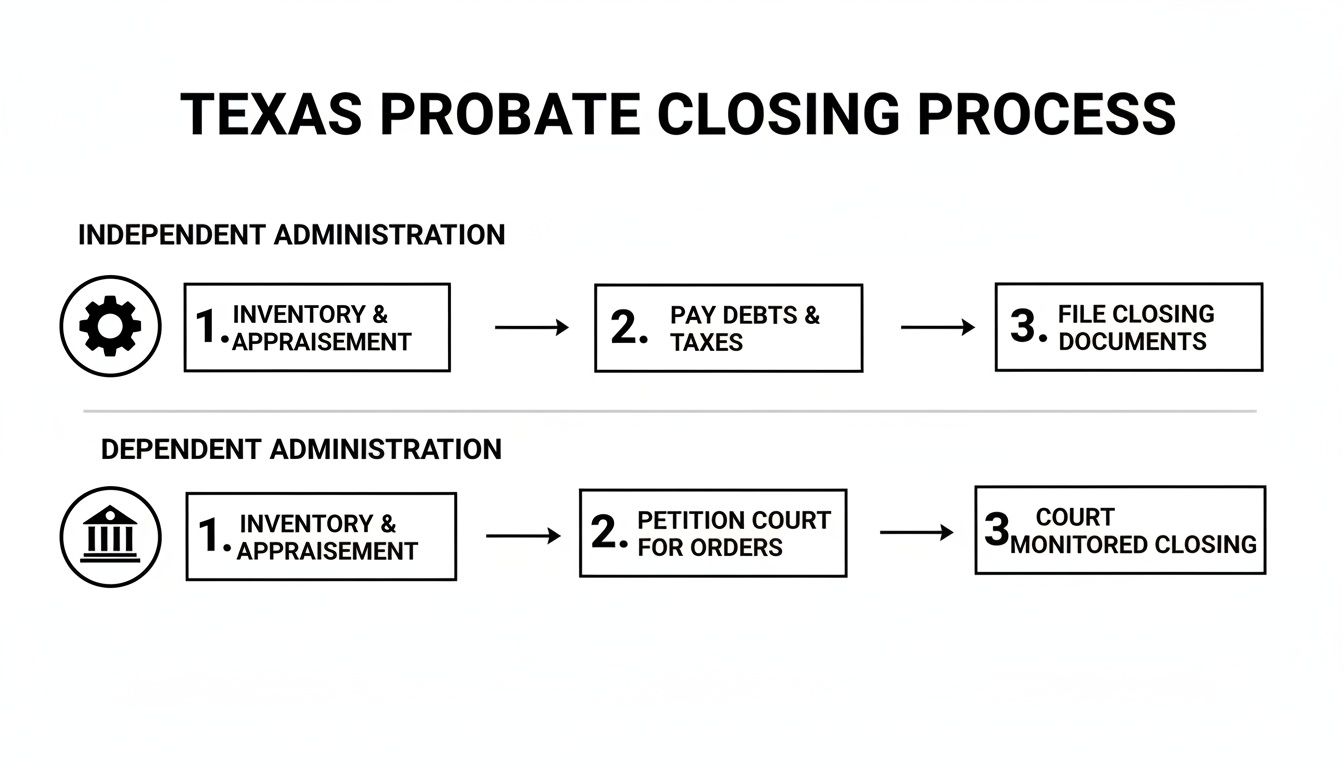
As you can see, an Independent Administration offers a much more streamlined route to closure, sidestepping the constant court supervision that defines a Dependent Administration.
Preparing the Final Accounting for Beneficiaries
When it comes to avoiding family disagreements and legal challenges, transparency is your most powerful tool. Before you distribute what’s left of the estate, you must prepare a Final Accounting. This document provides a complete financial story of your management of the estate.
A proper final accounting must clearly detail:
- All assets that were part of the initial inventory.
- Any new income the estate earned during administration (like stock dividends or rent).
- A full list of all debts and expenses paid from the estate, including dates and exact amounts.
- The remaining property that is ready to be distributed to the heirs.
Realistic Scenario: Let’s say you’re the executor for your father’s estate in Houston. His assets included a house, a 401(k), and a checking account. Your final accounting would show the home's appraised value, the exact 401(k) balance you collected, and the checking account total. Then, it would list every payment you made for his funeral, final utility bills, and credit card debt. The report would conclude by stating the exact amount of cash and the house title now ready for distribution to the heirs named in the will.
Filing to Formally Close the Estate
With all debts paid and a clear accounting in hand, it’s time for the final legal step. Texas Estates Code Chapter 405 provides the guidelines for closing an independent administration, and you generally have two options.
Notice of Closing Estate
This is a straightforward, optional filing. You file a document stating that you've paid all known debts and distributed all assets. It doesn't require a judge's approval but creates a formal public record that your job is complete.
Closing Report with Proof of Delivery
This is the more formal and protective option. You submit your final accounting to the court along with proof (like verified receipts) that every beneficiary has received their inheritance. This method offers a much stronger degree of finality and legal protection.
After you file this report, a 30-day waiting period begins, giving beneficiaries a window to object if they find an issue with the accounting. If no one objects, the court will typically approve the report and issue an order discharging you as executor. That order is your "golden ticket"—it officially releases you from all duties and liabilities, providing complete legal closure.
Final Accounting and Distributing Assets to Heirs
After navigating the maze of creditor claims and settling the estate’s debts, you’ve reached the part everyone has been waiting for: distributing the assets to the heirs. It might feel like the finish line, but this is a critical stage where precision is paramount. A misstep here can undo your hard work and create new legal entanglements.
This is where your duty as executor requires absolute transparency. Before any assets change hands, you must prepare a Final Accounting. Think of this not as a simple summary, but as the complete financial story of the estate from the day you took charge. It is your best tool for building trust with beneficiaries who are grieving and may feel anxious.

What Goes into a Final Accounting?
A proper final accounting leaves no room for doubt. It should be a detailed, line-by-line record of every transaction that occurred during the administration. The goal is to show the beneficiaries exactly where every penny went.
Let’s imagine you’re the executor for an estate in Dallas. The deceased left behind a home, an investment portfolio, and personal items like art and jewelry. Your final accounting would need to include:
- Assets on Hand: Start with the initial inventory. You’d list the appraised value of the home ($850,000), the value of the investment portfolio on the date of death, and a detailed list of valuable personal property.
- Income Earned: You’d document any income the estate earned, such as stock dividends received ($5,200), rent collected if the house was leased, or interest from a bank account.
- Debts & Expenses Paid: This is where you list every single payment, from the funeral bill and medical expenses to attorney’s fees, court costs, and property taxes on the house.
- Proposed Distributions: Finally, you lay out exactly how the remaining assets and cash will be divided among the heirs, following the instructions in the will.
This level of detail is your shield against future claims. It proves you acted with integrity and leaves no one guessing. For a deeper look at what the court expects, you can review the official probate accounting requirements in Texas.
Distributing the Assets and Getting Receipts
Once the final accounting is shared and—ideally—approved by the heirs, you can finally distribute the property. A clear grasp of understanding the roles of beneficiaries and dependents in estate planning is essential here. Remember, some assets like life insurance policies or retirement accounts pass outside of probate directly to a named beneficiary and are not your responsibility to distribute.
For the probate assets under your control, the process is straightforward, but you must document everything.
- Cash: Issue checks from the estate’s bank account.
- Personal Property: Arrange for heirs to pick up items or have them securely delivered.
- Real Estate: This is more involved. You’ll work with your attorney to prepare and file a new deed that officially transfers the title from the estate to the designated heir.
Here’s a tip we can't stress enough: for every single asset you distribute, you must get a signed Receipt and Release from the beneficiary. This document is your legal proof that the heir received their inheritance. It formally releases you from any further liability for that specific asset.
Without these receipts, you leave yourself open to future claims from an heir who might later say they "never got their share." Collecting signed releases is a non-negotiable final step that allows you to finish the job of closing an estate in Texas probate for good.
Avoiding Common Pitfalls and Delays in Closing an Estate
Even after months of hard work, the final steps of closing an estate are often where frustrating and costly mistakes happen. As an executor, you’re on the home stretch, but this is the time to be more diligent than ever. Simple oversights can unravel your progress, adding months to the timeline.
By anticipating challenges like court delays, family disputes, and surprise assets, you can steer the estate toward a peaceful and final conclusion, bringing closure to your family.
Court Backlogs and Your Choice of Administration
One of the biggest sources of delay is completely out of your hands: the court system. In major Texas counties like Harris County (Houston) or Dallas County, probate courts are incredibly busy. Getting a routine hearing on the judge’s calendar can take weeks, let alone a contested one.
This is where the type of administration becomes absolutely critical. Choosing an Independent Administration right from the start is the single most effective strategy for bypassing these delays. It puts you, the executor, in the driver's seat.
Below is a comparison highlighting how different the closing process can be.
Independent vs. Dependent Administration Closing Process
| Feature | Independent Administration | Dependent Administration |
|---|---|---|
| Court Oversight | Minimal. Most actions don't require court approval. | Heavy. Nearly every action requires a judge's signature. |
| Timeline | Significantly faster. You can act as soon as needed. | Slower. Your progress is tied to the court's schedule. |
| Cost | Less expensive due to fewer court filings and attorney hours. | More expensive due to constant court hearings and motions. |
| Closing Action | File a simple Affidavit of Completion. | File a formal Application to Close and wait for a final hearing. |
As you can see, the path for an Independent Executor is far more direct. The freedom from constant court check-ins not only saves time but also significantly reduces the legal fees that can eat away at an estate's assets.
The Danger of Not Formally Closing the Estate
After a long probate process, it’s tempting to distribute the last assets and walk away. This is a serious mistake that can leave you personally exposed to legal and financial headaches for years.
Without a formal court order discharging you of your duties, you legally remain the executor—indefinitely.
This means a surprise creditor could appear a year later and sue you for an unpaid estate debt. A disgruntled heir could bring accusations about how you handled funds. You remain the legal point of contact, carrying a burden you thought you had set down.
When New Assets Surface After the Fact
Picture this: you’ve closed your mother’s estate, the judge signed the discharge order, and everyone has moved on. Then, six months later, you discover an old savings bond. What now?
Fortunately, the Texas Estates Code allows an estate to be reopened if new property is discovered or a necessary task was overlooked. While it means going back to court, it’s a much simpler process than starting from scratch.
Of course, the best strategy is prevention. A diligent search for assets at the beginning is your best defense. Scour old mail, review tax returns, and talk to family financial advisors to ensure nothing was missed. In complex cases where a new asset is found for a minor or incapacitated heir, a Guardianship might even be necessary.
Clear Communication Is Your Best Defense
The vast majority of Probate Litigation stems from one source: poor communication. When beneficiaries are left in the dark, they tend to assume the worst—that you’re hiding assets, mismanaging funds, or playing favorites.
Proactive, transparent communication is the most powerful tool for preventing conflict.
- Send regular, informal updates via email.
- Share copies of important documents, like the estate's inventory.
- Be upfront about delays. If the court is backed up, let them know.
By bringing heirs into your decision-making process, you build trust and transform anxious spectators into informed stakeholders. This is key to closing the estate on peaceful terms. A well-drafted set of Wills & Trusts can also set these clear expectations from the start.
Life After Probate: What Happens When the Estate Is Closed?
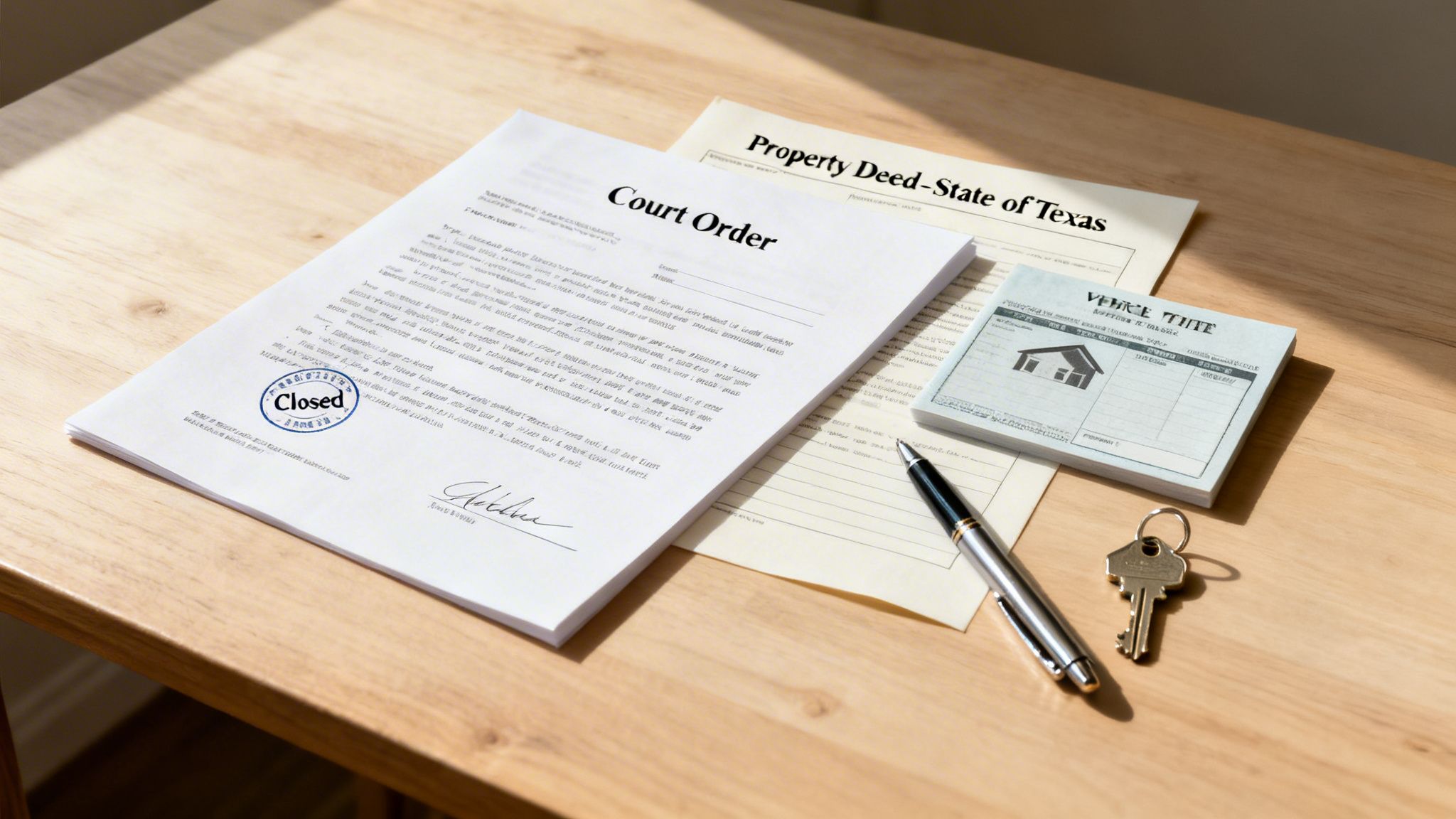
When the probate judge signs the order closing the estate, it’s a moment of immense relief. But that signature isn’t a magic wand that ties up every loose end.
Think of the court order as the legal green light to finish the job—not the job itself. You have a few more critical tasks to handle to truly finalize the closing of an estate in Texas probate and protect the beneficiaries.
Finalizing Asset Title Transfers
A court order is powerful, but banks, county clerks, the DMV, and title companies need to see official documentation that reflects new ownership. This "retitling" process is non-negotiable for several types of assets:
- Real Estate: A new deed must be drafted and filed with the county clerk.
- Vehicles: The title must be formally transferred through the Texas Department of Motor Vehicles.
- Bank and Investment Accounts: Beneficiaries need to take the court order and death certificate to the financial institution to put accounts in their own names.
Realistic Scenario: Imagine three siblings inherit their parents’ family home. The probate order names them as new co-owners. A year later, they decide to sell, but the title company stops the sale. Why? The property is still officially titled in their deceased parent's estate. The court order proves they have the right to the house, but it isn't a deed. An attorney must draft and file a Distribution Deed to formally move the title. Without it, they can't sell, refinance, or legally prove ownership.
Settling Final Tax Obligations
Your duties as executor extend to the very last tax filing. Even after the estate is closed, there's usually a final personal income tax return to file for the decedent. This is the deceased’s final Form 1040, covering the period from January 1st to their date of death.
It’s an easy step to forget, but it’s a legal requirement. If the decedent earned any income during their final months, a return is necessary. Any refund belongs to the estate, while any tax owed must be paid from estate funds before final distributions are complete. For a detailed look at responsibilities that continue after probate, check our guide on what happens after probate is closed in Texas.
By diligently tying up these loose ends, you provide the ultimate service to the family, allowing everyone to move forward with true peace of mind.
Key Takeaway for Closing a Texas Estate
Closing a Texas estate can feel like the last, most exhausting mile of a marathon. But getting it right is about protecting yourself from future liability and giving everyone involved the peace of mind they deserve. Formally closing the estate is your legal off-ramp, releasing you from the duties of being an executor.
If there's one piece of advice that can transform the closing process, it's this: opt for an Independent Administration whenever possible. It dramatically cuts down on court supervision, which means less time, less money, and less stress for your family.
Before you cross the finish line, ensure you've checked these non-negotiable boxes:
- Settle Every Last Bill: Pay all valid debts and final taxes before distributing assets to heirs.
- Show Your Work with a Final Accounting: A clear financial report builds trust and heads off questions from beneficiaries.
- Get a Signed Receipt for Every Distribution: Have each heir sign a receipt and release form. This is your proof that you fulfilled your duty.
- Transfer All Titles: Make sure assets like homes, cars, and investment accounts are officially retitled in the names of the new owners.
Taking these steps ensures a clean transfer and protects you from future claims. It’s how you finalize the estate with confidence and close this chapter for good.
Frequently Asked Questions About Closing a Texas Estate
Once you've administered an estate, you're on the home stretch. But this final stage comes with its own set of questions. Here are common ones we hear from executors, with practical answers.
How Long Does It Take to Close an Estate in Texas?
The honest answer is: it depends. For a straightforward, uncontested estate under an Independent Administration, you might wrap everything up in 6 to 12 months. However, complex assets, debts, or disputes among heirs can extend the timeline. In busy counties like Harris or Dallas, it's not unusual for an administration to take 18 months or longer. Dependent Administrations, with their required court oversight, almost always take more time.
What Happens If I Don't Formally Close the Estate?
Failing to formally close the estate is a common mistake that leaves you personally on the hook, legally and financially. Years from now, a forgotten creditor could emerge, or a beneficiary could bring a claim against you. Formally closing the estate with a Closing Report or Notice of Closing, as outlined in the Texas Estates Code, is what creates a legal shield. It officially ends your duties and protects you from future liability. Don't skip it.
Can an Estate Be Reopened After It Is Closed?
Yes, but it's rare. The Texas Estates Code allows for an estate to be reopened if new property is discovered, a critical step was overlooked, or if there's evidence of fraud. A diligent and transparent administration makes this highly unlikely. If you’ve done a thorough job, the odds of an estate being reopened are slim.
Do I Need a Lawyer to Close an Estate in Texas?
While the law doesn't force you to hire an attorney, trying to close an estate without one is risky. The final steps involve complex legal documents, strict court deadlines, and procedures that carry personal liability. An experienced probate attorney ensures every box is ticked, helps you move efficiently through the system, and provides critical counsel if a dispute arises. Think of it as insurance for your peace of mind.
If you’re facing probate in Texas, our team can help guide you through every step — from filing to final distribution. Schedule your free consultation today.