When a loved one creates a trust, they’re doing more than just signing a legal document. They’re creating a detailed instruction manual for their assets, specifically designed to keep their family out of the public, and often lengthy, court system. For a family grieving a loss, understanding this process is crucial. The work of following that manual is what we call trust administration.
Understanding Trust Administration in Texas
Think of the trust document as a blueprint meticulously drawn up by your loved one. The trustee—the person named to manage the trust—acts as the builder, tasked with bringing that blueprint to life exactly as planned. This isn’t an informal process; it’s a formal set of legal and financial responsibilities that ensure every detail is handled with precision and care, providing reassurance during a difficult time.

For families in Texas, getting a handle on why someone would set up a trust in the first place can provide powerful context for the administrative journey that follows. It’s all about honoring their wishes, protecting their legacy, and making things easier on those left behind.
The Purpose of Administration
At its heart, trust administration is about protecting and transferring assets without needing a judge to sign off on every step. Unlike the public nature of probate, this process is entirely confidential. It preserves a family’s privacy during what is already a deeply sensitive time.
The primary goals are straightforward but critical:
- Honoring the Grantor’s Intent: The trustee’s number one job is to follow the trust’s terms to the letter, making sure assets go to the right people in the right way.
- Avoiding Probate: A well-funded trust allows assets to pass directly to beneficiaries, skipping the time, expense, and public record of the Texas Probate Process.
- Managing Assets and Debts: The trustee is responsible for gathering all the trust assets, paying off final bills and taxes, and wisely managing any investments until it’s time for the final distribution.
The Legal Framework in Texas
Just because trust administration happens outside of court doesn’t mean it’s without rules. The entire process is governed by Texas law. Specifically, the Texas Trust Code, found within Title 9 of the Texas Property Code, lays out the duties, powers, and limitations of a trustee. This legal framework provides the rules of the road, protecting both the trustee from liability and the beneficiaries from mismanagement.
If you’re new to this world, the terminology can feel overwhelming. You might find this comprehensive glossary of estate planning terms useful as you get your bearings. Navigating these rules correctly is the key to a smooth administration and minimizing the risk of painful disputes down the line.
The Trustee’s Role and Fiduciary Duties in Texas
When someone steps into the role of a trustee, they’re not just taking on a title. They’re accepting a profound legal and personal responsibility. A trustee is the person or institution chosen to manage a trust’s assets for the good of the beneficiaries. Think of them as the trusted steward of your loved one’s legacy, tasked with carrying out their final wishes with integrity and care.

This isn’t a role Texas law takes lightly. A trustee operates under what’s known as a fiduciary duty, which is the highest standard of care recognized in the legal world. In plain English, this means they must act solely in the best interests of the trust’s beneficiaries, always putting their own needs and interests aside.
Understanding Core Fiduciary Duties
The Texas Trust Code lays out several key duties that every trustee must follow. These aren’t just suggestions; they are legally binding requirements designed to protect both the beneficiaries and the integrity of the trust itself. Grasping these duties is the first step to a smooth and successful trust administration.
- Duty of Loyalty: This is the bedrock of a trustee’s job. The trustee must act exclusively for the benefit of the beneficiaries. This means no self-dealing, no conflicts of interest, and no actions that put their personal gain above the people the trust was created to support.
- Duty of Prudence: A trustee is required to manage the trust’s assets with the same care and skill a prudent person would use for their own property. This means making sensible investment choices, protecting assets from loss, and avoiding unnecessarily risky financial moves.
- Duty of Impartiality: When a trust has more than one beneficiary, the trustee can’t play favorites. They are legally required to treat all beneficiaries fairly and equitably, carefully balancing their competing interests according to the specific terms laid out in the trust document.
Practical Responsibilities of a Trustee
Beyond these high-level principles, a trustee has a very real, hands-on job to do. There’s a list of concrete tasks that must be completed to ensure the trust is managed transparently and efficiently from beginning to end.
A trustee is expected to:
- Inventory and Secure Trust Assets: First, they must create a detailed list of every piece of property held by the trust and then take legal control of it.
- Keep Meticulous Records: They need to document every single transaction—all income received and all expenses paid out. Clean books are non-negotiable.
- Communicate with Beneficiaries: Trustees have a duty to keep beneficiaries reasonably informed about the trust and how it’s being administered.
- Pay Debts and Taxes: This involves settling the deceased’s final bills and filing all necessary tax returns for both the individual and the trust.
- Distribute Assets: Once all debts and taxes are handled, the trustee’s final job is to distribute the remaining assets to the beneficiaries exactly as the trust directs.
Failing to handle these duties properly can have serious personal consequences for the trustee, who can be held liable for any losses. For families worried about this, we have experience addressing situations where you might need to learn more about when a trustee mismanages estate property in Texas.
The Growing Importance of Trustee Services
The work of a trustee is a cornerstone of the global Personal Trust Services market, an industry that has seen steady growth as more families realize the value of private asset management. In fact, the related Estate Administration Services market is projected to grow to $15.77 billion by 2025, a clear sign of the increasing need for professional guidance in these matters.
A trustee’s duties often extend beyond simple accounting, especially when it comes to liquidating major assets like real estate. For example, this resource offers a helpful guide on selling a house held in a trust after death, which details the specific responsibilities involved. Ultimately, the role demands a unique blend of financial skill, legal compliance, and compassionate communication, making it one of the most challenging—and rewarding—responsibilities one can undertake.
Your Step-by-Step Guide to the Trust Administration Process
When you’re grieving, the last thing you need is a complicated legal roadmap. The trust administration process, while detailed, isn’t something to be intimidated by. It can be broken down into clear, manageable stages. Think of this as your practical guide, walking you through each responsibility from the very beginning to the final handshake.
This journey is about honoring your loved one’s wishes with care and precision—a task that requires both compassion and a steady hand. Let’s explore the key milestones you’ll encounter.
Step 1: Locating Documents and Accepting the Role
First things first, you need to find the original, signed trust agreement. This document is the playbook for the entire process, containing every instruction you need to follow. It’s often stored in a safe deposit box, a home safe, or with the attorney who drafted it.
Once you have the trust document, you must formally accept your role as trustee. This isn’t just a verbal agreement; it often involves signing an “Acceptance of Trusteeship” or a similar affidavit. This is a crucial legal step that confirms you are ready to take on the fiduciary duties required under Texas law.
Step 2: Notifying Beneficiaries and Heirs
Transparency is the key to a smooth administration. The Texas Trust Code requires trustees to provide notice to the beneficiaries of the trust. This formal notification informs them of the trust’s existence and officially introduces you as the trustee.
This step isn’t just a courtesy; it’s a legal requirement designed to keep everyone in the loop and head off misunderstandings or disputes down the road. Clear and early communication builds trust and sets a positive tone for everything that follows.
Step 3: Marshalling Assets and Creating an Inventory
The next major task is to “marshal” the trust’s assets. It’s a legal term that simply means gathering and taking control of everything the trust owns. This is a meticulous, detail-oriented process that involves:
- Identifying all trust property: This can include bank accounts, real estate, investment portfolios, vehicles, and personal belongings.
- Re-titling assets: You’ll need to change the ownership of accounts and property deeds from the deceased’s name into the name of the trust, with you listed as the trustee.
- Creating a detailed inventory: You must create a comprehensive list of all assets along with their date-of-death values. This inventory is absolutely essential for tax purposes and for providing accountings to the beneficiaries.
Step 4: Handling Debts and Taxes
Before any assets can be distributed to beneficiaries, you have to settle the final affairs of the person who passed away. This is a critical responsibility that protects the trust—and you—from future claims.
Your duties in this stage include:
- Obtaining a Tax ID Number: The trust becomes its own taxable entity after the creator’s death, so you must apply for a federal Employer Identification Number (EIN) from the IRS.
- Paying Final Bills: This covers everything from medical bills and credit card debts to utility bills and any other outstanding obligations.
- Filing Tax Returns: You will be responsible for filing the deceased’s final personal income tax return and any necessary estate or trust income tax returns (Form 1041).
Step 5: Managing and Distributing Trust Assets
With all debts and taxes settled, you enter the final phase. Your role now shifts to managing the remaining assets prudently until it’s time for distribution. You are still the steward of the trust, and your job is to protect the value of the property.
Finally, you will distribute the assets to the beneficiaries exactly as instructed in the trust document. This might be a simple, outright distribution of funds and property. Or, it could involve holding assets in a continuing trust for a beneficiary’s benefit. Whatever the terms, your duty is to follow them precisely, providing a final accounting to the beneficiaries to close out the administration.
Navigating these steps requires diligence and a real understanding of Texas law. Having an experienced attorney from a firm that handles Wills & Trusts can provide invaluable support, ensuring every detail is managed correctly and compassionately.
Comparing Trust Administration and Probate in Texas
One of the biggest reasons families go to the trouble of setting up a trust is to avoid probate. But what does that really mean when a family is grieving? It boils down to one core difference: trust administration is a private matter, while probate is a public, court-supervised process.
Think of it like this: probate is settling an estate in a public courtroom, where a judge has to sign off on every major step. Trust administration, on the other hand, is like a quiet family meeting guided by a clear set of instructions—the trust document itself. This single distinction has huge implications for a family’s privacy, expenses, and timeline.
Privacy and Control
Perhaps the most important difference is privacy. Probate is a public court proceeding. This means the will, a list of all assets and debts, and the details of who gets what all become part of the public record. Anyone can walk into the courthouse and look up these sensitive family details.
Trust administration, however, is completely private. The trust document is never filed with a court, and the entire process of managing and distributing the assets happens behind closed doors. This confidentiality keeps your family’s financial affairs and your loved one’s final wishes exactly where they should be—within the family.
The infographic below simplifies this private workflow into three key functions of the trustee.
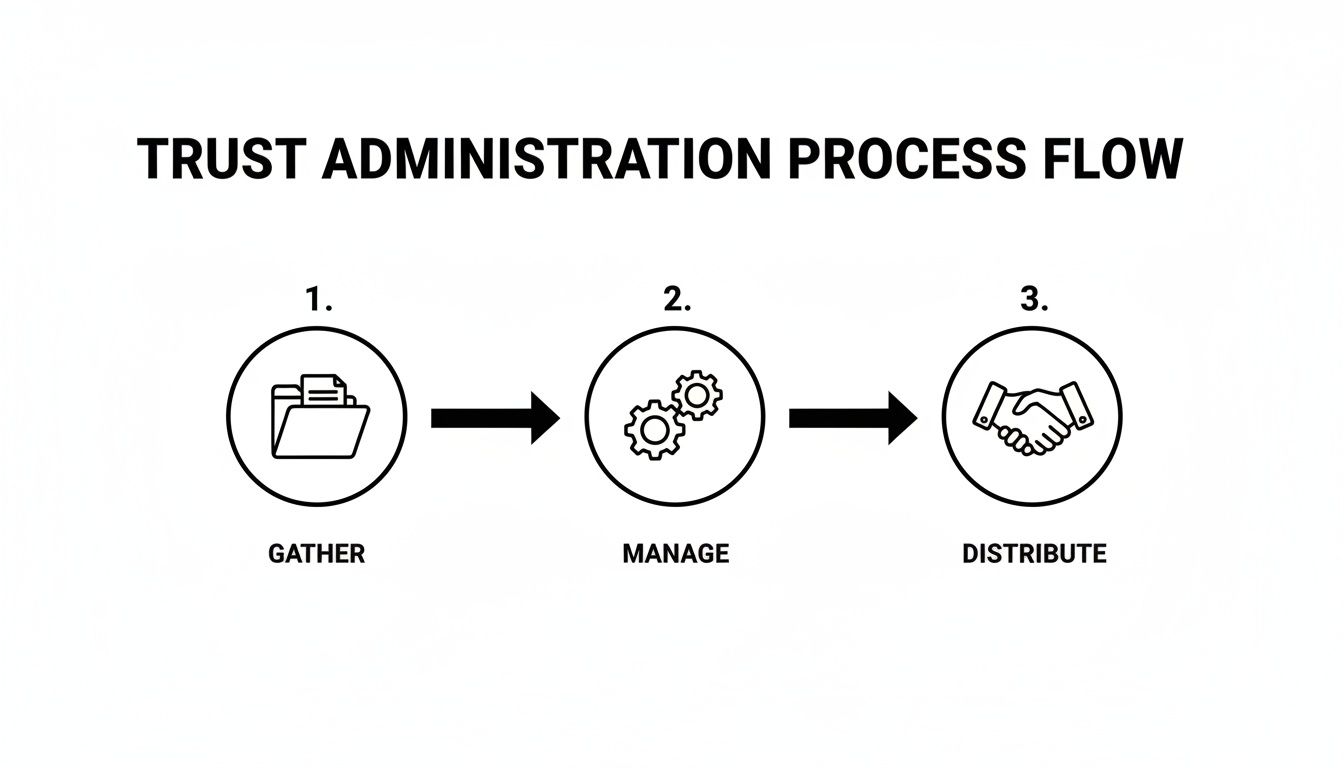
As you can see, the trustee is empowered to gather, manage, and distribute assets directly, without needing a judge’s permission for each step.
Cost and Timeline
The probate process in Texas, even a relatively smooth one, comes with court filing fees, mandatory attorney’s fees, and other administrative costs that pile up quickly. The timeline is also at the mercy of the court’s busy schedule, often dragging on for many months or even years.
Trust administration is usually far more efficient and less expensive. With no court proceedings, you instantly eliminate filing fees and the risk of long legal delays. While a trustee may still need help from an attorney or an accountant, the overall process is typically much faster, getting assets into the hands of beneficiaries sooner.
Key Differences: Trust Administration vs. Probate in Texas
| Aspect | Trust Administration | Probate |
|---|---|---|
| Privacy | Completely private. The trust document and asset details are not public record. | Public record. The will, asset inventory, and distribution details are filed with the court and accessible to anyone. |
| Court Involvement | Minimal to none. The successor trustee manages the process without court supervision. | Mandatory. A judge oversees the entire process, from validating the will to approving the final distribution. |
| Timeline | Typically faster. Can often be completed in a few months, depending on asset complexity. | Generally slower. Often takes 6 to 12 months or longer, subject to court schedules and potential delays. |
| Cost | Often less expensive. Avoids court filing fees and reduces the need for extensive legal proceedings. | More expensive. Involves court costs, attorney’s fees, executor fees, and other administrative expenses. |
| Control | High. The trustee follows the clear instructions laid out in the trust document. | Low. The process is dictated by state law and the court’s rules, leaving little room for flexibility. |
This comparison highlights why so many people choose trusts to shield their families from the burdens of the probate system.
A Realistic Scenario
Imagine two neighboring families in Texas, each with a similar estate worth around $750,000. The Smith family used a will, while the Jones family created a revocable living trust.
When the Smith parents pass away, their children have to hire an attorney to file the will with the probate court. Their family’s assets and debts are now public, and they have to wait for a judge’s approval at nearly every turn.
The Jones children, however, simply start following the instructions in their parents’ trust document. As the new trustees, they can privately pay final bills and distribute the assets just as their parents wanted, often finishing the entire process in a fraction of the time and for much less money. For a deeper look, check out our detailed guide comparing trusts versus probate court.
As more families seek to manage their wealth privately, the efficiency of trusts has become undeniable. In the United States, the Trusts & Estates industry has grown massively, with revenues projected to hit $290.1 billion in 2025. This growth is fueled by families who want the control and privacy that trust administration provides.
Navigating Common Challenges in Trust Administration
While trust administration is designed to be a private and efficient alternative to probate, the path isn’t always smooth. Let’s be honest: even the most carefully planned trusts can hit roadblocks, especially when family emotions are running high. Anticipating these potential issues is the first step toward a calmer, less stressful process for everyone involved.
By understanding what can go wrong, you can take proactive steps to prevent conflicts before they start. This helps ensure your loved one’s final wishes are honored just as they intended—peacefully.

Poor Communication with Beneficiaries
One of the most common friction points? A lack of clear, consistent communication. When beneficiaries are left in the dark, they tend to fill in the blanks themselves, often with anxiety or suspicion. This can spiral into misunderstandings that were entirely avoidable. As a trustee, you have a legal duty to keep beneficiaries reasonably informed.
A simple, proactive communication plan can work wonders here. Think about implementing things like:
- An initial letter introducing yourself and outlining the next steps.
- Quarterly updates on the progress of settling debts and managing assets.
- Providing copies of key documents and accountings as required by the trust.
This kind of transparency builds goodwill and reassures family members that everything is being handled fairly and professionally.
Misinterpreting the Trust’s Instructions
Trust documents are dense legal instruments, and let’s face it, the language can sometimes be ambiguous. A trustee might accidentally misread an instruction about how an asset should be divided or when a distribution should be made. This can lead to significant errors and even legal action from beneficiaries who feel the trust’s terms were ignored.
Improperly Handling Assets and Debts
A trustee’s financial responsibilities are immense. Common missteps include failing to properly inventory and value assets, mixing trust funds with personal funds (a huge no-no), or making risky investment decisions that cause the trust to lose money. These actions are a direct breach of the fiduciary duties laid out in the Texas Trust Code.
The growing complexity of this role is a major reason the global Trust and Corporate Service Market is projected to hit $14.33 billion in 2025. Trustees are increasingly expected to handle sophisticated tasks. You can read more about the growth of the trust services market to see just how much these responsibilities are expanding.
Trying to face these challenges alone can be overwhelming. An experienced attorney can provide the clarity and guidance you need to manage these duties correctly, protecting both you and the trust from liability. Seeking legal counsel isn’t a sign of weakness; it’s the mark of a responsible and prudent trustee.
A Final Word on Your Role as Trustee
Stepping into the role of a trustee is one of the most meaningful ways to honor a loved one’s memory. While the path is paved with legal duties and detailed tasks, it’s a journey you don’t have to walk alone. At its heart, trust administration is designed to fulfill final wishes with dignity and privacy, keeping your family’s affairs out of the public eye of the Texas probate courts.
A successful administration really boils down to a few core principles. Know your duties, follow the trust’s instructions to the letter, and keep the lines of communication with beneficiaries wide open. These aren’t just legal checkboxes; they’re the actions that build trust and prevent the kind of friction that can fracture families during an already painful time.
Final Thoughts
Remember, being a trustee is an act of service. The law doesn’t expect you to be a financial wizard or a legal scholar overnight. It does, however, expect you to be careful, responsible, and smart enough to ask for help when you’re in over your head.
Coming at this with a clear mind and the right team behind you changes everything. Each task, no matter how small, is a step toward carrying out your loved one’s final plan and securing the future for the people they cherished most.
For more information on related topics, feel free to explore our other guides:
- Learn about the court-supervised alternative in our guide to the Texas Probate Process.
- Understand the foundational documents with our overview of Wills & Trusts.
- Discover what happens when disputes arise in Probate Litigation.
- Explore your options when a loved one needs a legal guardian in our guide to Guardianship.
Key Insight
Trust administration is a powerful tool for protecting a legacy. Its success hinges on the trustee’s diligence, transparency, and unwavering commitment to the trust creator’s intent. You are the guardian of their final wishes—a role that demands both heart and caution.
If you’re facing probate in Texas, our team can help guide you through every step — from filing to final distribution. Schedule your free consultation today.
Your Top Questions About Texas Trust Administration
Stepping into the role of a trustee is a huge responsibility, and it’s happening at a time when you’re also dealing with the emotional weight of a loss. It’s only natural to have questions. Below, we’ve put together plain-English answers to some of the most common things Texas families ask when they find themselves navigating a trust.
How Long Does Trust Administration Usually Take?
There’s no single answer here, as the timeline really depends on what’s inside the trust. For a straightforward trust holding easily managed assets—think bank accounts and the family home—the process might wrap up in as little as six to nine months.
But things can get more complicated, and that stretches the timeline. Factors that often add time include:
- Complex assets: If the trust holds a business, multiple real estate properties, or sophisticated investment portfolios, it just takes more time to properly value and manage everything.
- Tax issues: For larger estates that trigger the need to file a federal estate tax return (Form 706), you can expect the process to take well over a year.
- Beneficiary disputes: Unfortunately, disagreements among beneficiaries can bring the entire administration to a grinding halt until the issues are resolved.
The goal is always to be meticulous and accurate, not just fast. Rushing the process can cause mistakes that create much bigger headaches down the road.
Are Trustees Paid for Their Work in Texas?
Yes, they are. Under the Texas Trust Code (Section 114.061), trustees are entitled to “reasonable compensation” from the trust itself for their services. This isn’t about profiting from a loved one’s passing; it’s a recognition of the significant time, effort, and personal liability that comes with the job.
So, what’s considered “reasonable”? It depends on things like the size and complexity of the trust, the specific skills needed to manage it, and the sheer amount of work involved. Sometimes the trust document will spell out the compensation. If not, the trustee and beneficiaries can agree on a fair fee, or if they can’t agree, a court can step in to decide.
Can a Family Member Contest a Trust?
While trusts are specifically designed to stay out of court, they aren’t completely immune to legal challenges. A beneficiary or a legal heir can file a lawsuit to contest the validity of a trust in Texas, but they can’t do it just because they’re unhappy with the terms. They need to have valid legal grounds.
Common reasons for a trust contest include:
- Lack of Capacity: The argument is that the person who created the trust (the grantor) wasn’t of sound mind when they signed the document.
- Undue Influence: This alleges that someone coerced, manipulated, or pressured the grantor into creating or changing the trust against their true wishes.
- Improper Execution: This claim focuses on technicalities, arguing the trust document wasn’t signed or witnessed correctly according to Texas law.
Contesting a trust is a serious legal fight that falls under the umbrella of Probate Litigation. It’s a complicated process that demands substantial evidence to have any chance of success. Whether you are challenging a trust or defending one, having an experienced attorney is absolutely essential.
Getting the answers to these questions right is crucial for a smooth administration. Professional legal guidance ensures you’re meeting all your duties, protecting the trust from potential conflicts, and giving everyone involved some much-needed peace of mind.
If you’re facing probate in Texas, our team can help guide you through every step — from filing to final distribution. Schedule your free consultation today.