Deciding to apply for guardianship is a profound act of love, usually a last resort when someone you care for can no longer make safe decisions for themselves. It’s a formal legal process where a Texas court appoints a responsible person—the guardian—to manage the personal and financial affairs of another, who is then known as the ward. This is a serious step, taken only when a loved one is legally determined to be incapacitated and other, less restrictive options just aren’t enough anymore.
We understand that this journey can be emotionally taxing. Our goal is to provide a clear, step-by-step guide to help you understand the process, giving you the confidence to protect the person you love.
When Is Guardianship the Right Path to Take?
Making the choice to seek guardianship is never easy. It’s a path families often walk when a loved one’s ability to manage their own life has significantly declined. This isn’t just about getting older or having a physical disability; it’s about meeting a specific legal standard laid out in the Texas Estates Code.
In plain English, a person is considered incapacitated if a physical or mental condition leaves them substantially unable to provide their own food, clothing, or shelter, care for their physical health, or manage their finances. This is the core reason a court will step in and grant a guardianship.
Common Scenarios Requiring Guardianship
Real-life situations often make it clearer when this legal step becomes unavoidable. Families typically start exploring how to apply for guardianship in circumstances like these:
- An Aging Parent with Dementia: Your mother, who has advanced Alzheimer’s, starts forgetting to pay bills, leading to utility shutoffs. She can no longer make sound medical decisions or protect herself from the constant threat of financial scams.
- A Young Adult with Severe Disabilities: Your son, who has a severe developmental disability, is about to turn 18. He’ll legally be an adult, but he needs you to continue making healthcare and financial decisions for him.
- A Loved One After a Traumatic Injury: A spouse suffers a traumatic brain injury in a car accident and is now in a coma. They can’t communicate, and critical decisions about their medical care and finances have to be made now.
These examples show that guardianship is meant to be a protective shield, not a punishment. It’s a court-supervised process designed to safeguard an individual’s well-being when they are at their most vulnerable. The need is more common than you might think; in the United States, an estimated 1.3 million adults are under guardianship, with guardians managing around $50 billion in assets.
Understanding the Two Primary Types
Guardianship in Texas isn’t a one-size-fits-all solution. The court tailors the guardian’s authority to the specific needs of the individual, always aiming to preserve as much of their independence as possible. For families just starting this journey, it’s crucial to understand the two main categories.
Key Takeaway: A court can appoint a guardian for the “person,” the “estate,” or both. The goal is always to impose the fewest restrictions possible on the ward’s independence while ensuring their safety and well-being, as required by the Texas Estates Code.
To help you see the difference, here’s a quick breakdown of the most common types of guardianship in Texas.
Types of Texas Guardianship at a Glance
| Type of Guardianship | What It Covers | Common Scenario |
|---|---|---|
| Guardianship of the Person | Personal, medical, and welfare decisions. Deciding where the ward lives, consenting to medical treatments, and ensuring daily needs are met. | An elderly parent with dementia who can no longer make safe healthcare choices or manage their daily activities. |
| Guardianship of the Estate | Financial matters only. Managing property, income, and assets. Duties include paying bills, handling investments, and filing taxes. | An individual with a severe physical disability who is mentally sharp but unable to physically sign documents or manage complex finances. |
| Guardianship of Person & Estate | A combination of both, granting full authority over personal and financial affairs. | A person in a coma after an accident, unable to make any decisions for themselves, personal or financial. |
This table should give you a starting point for thinking about what your loved one might need. Let’s dig a little deeper into the two main types.
1. Guardianship of the Person
This type gives the guardian the authority to make personal, medical, and welfare decisions. It’s all about the day-to-day well-being of the ward. This includes choosing where they live (like at home with support or in a care facility), consenting to medical treatments, and making sure their basic needs for safety and health are met.
2. Guardianship of the Estate
This is focused solely on the money. The guardian is responsible for managing the ward’s property, income, and assets. Their job is to pay bills, manage investments, file taxes, and protect the ward’s assets from being wasted or exploited.
For instance, an elderly parent with dementia might need both—a guardian of the person to coordinate medical care and a guardian of the estate to manage their retirement accounts. On the other hand, someone with a physical disability might manage their own daily life perfectly well but need a guardian of the estate to handle complex financial transactions. Learning more about what it means to be a ward of the state can also provide helpful context on how the court’s involvement protects vulnerable Texans.
Navigating the Texas Guardianship Application
Knowing a guardianship is necessary is one thing; actually starting the court process is another. This is where the emotional weight of the situation meets the legal paperwork. It can feel invasive and overwhelming, as you’re essentially documenting a loved one’s vulnerabilities for a judge to see.
Our goal here is to demystify this process. Let’s break it down into manageable pieces so you can move forward with confidence.
The path to establishing guardianship isn’t a single leap but a series of deliberate steps. You don’t just show up at the courthouse. It starts with a careful assessment, followed by a review of less restrictive options, before finally committing to the legal process.
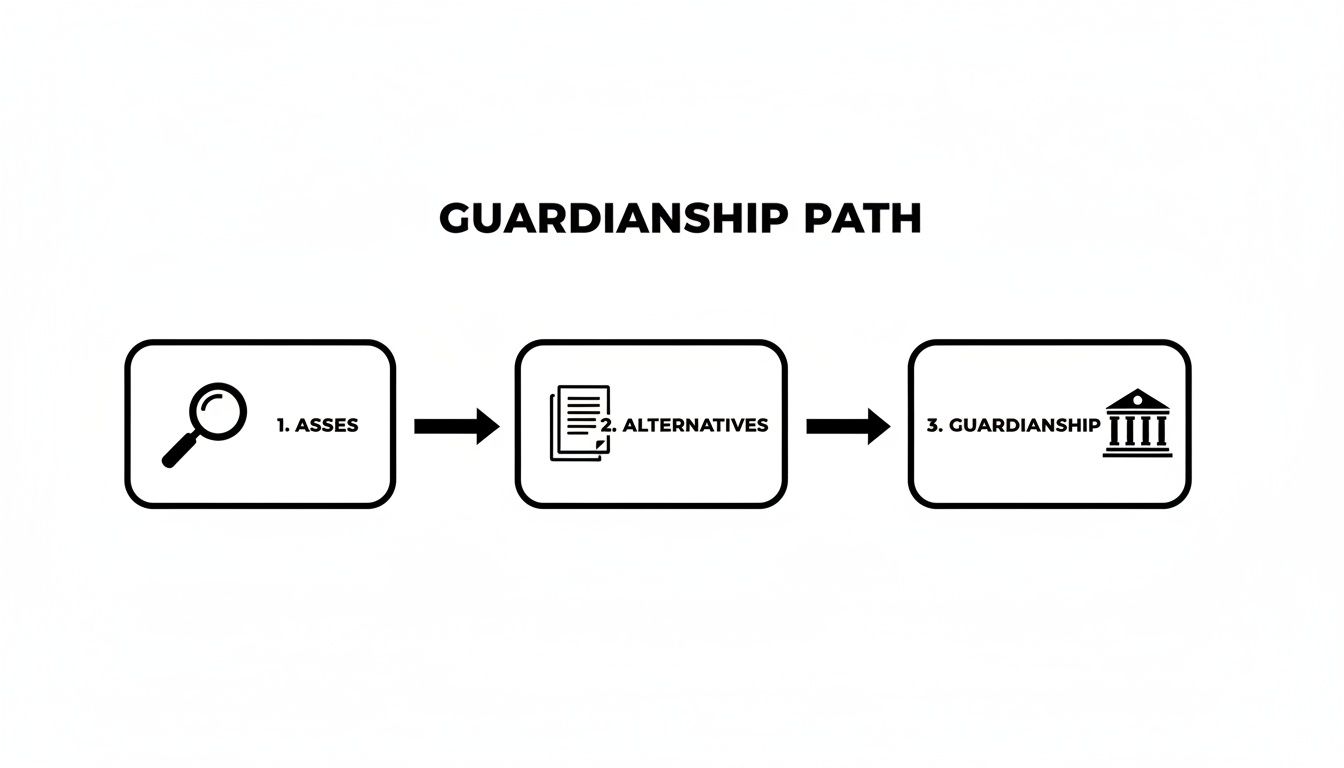
This flowchart highlights that guardianship is meant to be a last resort, pursued only after you’ve determined it’s truly the only way to protect your loved one.
Assembling the Necessary Information
Before you even think about filling out a form, you need to gather detailed information. This is often the most difficult part of the process for families. It’s an act of love, but documenting why someone you care about can no longer manage their own life is painful.
Here’s the essential information you’ll need to collect:
- Personal Details: The proposed ward’s full legal name, current address, and date of birth.
- Family Information: The names and addresses of close relatives, like a spouse, parents, and any adult children. The court requires this to send out legal notices.
- Financial Overview: A general summary of the person’s assets, income, and property. This is especially critical if you’re seeking a Guardianship of the Estate.
- Reasons for Guardianship: A detailed and compassionate explanation of why the individual is incapacitated and what specific daily tasks they can no longer handle on their own.
Think of this step as building the foundation of your case. You’re painting a clear, honest picture for the court.
The Cornerstone Document: Certificate of Medical Examination
Let me be clear: without this one document, your guardianship application will not succeed. The Certificate of Medical Examination (CME) is the single most important piece of evidence in any guardianship case in Texas.
This isn’t just a generic doctor’s note. It’s a specific legal form that must be filled out by a physician who has physically examined the proposed ward within the last 120 days.
Under Texas Estates Code §1101.103, the CME requires the doctor to describe the nature, degree, and severity of the person’s incapacity. In plain English, the doctor is answering the court’s main question: Is this person legally incapacitated? A vague or incomplete CME is one of the most common reasons guardianship cases get delayed or even dismissed.
Key Takeaway: The Certificate of Medical Examination is the medical evidence that bridges the gap between a family’s concern and the legal standard for incapacity. If this form isn’t filled out correctly and convincingly, nothing else matters.
Completing the Application and Filing With the Court
Once you have the CME in hand along with all the personal information, you’re ready to fill out the formal Application for Appointment of Permanent Guardian. This is the legal petition that officially kicks off the court process.
The application identifies you as the person asking for the guardianship, names your loved one as the “proposed ward,” and clearly states the reasons why the guardianship is necessary.
After the application is signed, you file it with the county clerk in the county where the proposed ward lives. This opens the case and gets it on the probate court’s docket. You’ll also have to pay a filing fee, which varies from county to county.
Notifying Family Through Service of Citation
The law is very clear that everyone with a stake in this decision has a right to be heard. Once your application is filed, the county clerk will issue a formal notice called a citation.
This isn’t just a letter in the mail. The citation is a legal document that must be officially delivered—or “served”—to the proposed ward and their closest relatives. This crucial step is called service of citation.
Service ensures that family members know about the upcoming hearing and have a chance to show up in court. They can either support your application or contest it. This transparency is a fundamental part of due process, protecting everyone’s rights and helping the judge make a fully informed, life-altering decision.
The paperwork and formal steps can be intimidating. Each one, however, serves a critical purpose: to protect the proposed ward and ensure the final decision is just. It’s a tough road to walk alone, which is why having an attorney who truly understands the nuances of the Texas Probate Process can make all the difference.
Inside the Courtroom: What to Expect After Filing
Filing the guardianship application is a huge step, but it’s really just the beginning of the legal journey. What comes next is a court-supervised process designed to protect your loved one by making sure the judge gets a full, unbiased picture of the situation. It can feel intimidating, but knowing what’s coming can take a lot of the anxiety out of the process.

Once your application is on file, the court’s main job is to independently verify that a guardianship is truly necessary. A judge will never just take your word for it, no matter how good your intentions are. This is where a very important person comes into play.
The Role of the Attorney Ad Litem
Shortly after you file, the court will appoint an attorney ad litem. This is an independent lawyer whose only client is the proposed ward. Their sole duty is to represent your loved one’s best interests. Think of them as the court’s investigator, tasked with giving your family member a voice.
The attorney ad litem has a critical, hands-on role. Here’s what they typically do:
- Meet the Proposed Ward: They’ll visit your loved one in person, wherever they are, to explain what a guardianship means and get a sense of their mental state and personal wishes.
- Review the Medical Evidence: They will review the Certificate of Medical Examination and often request more medical records to fully grasp the scope of the incapacity.
- Interview Everyone Involved: This isn’t limited to just you. They’ll likely talk to other family members, doctors, and caregivers to get a 360-degree view.
- Make a Recommendation to the Judge: After this investigation, the attorney ad litem writes a formal report for the court. In it, they’ll recommend whether the guardianship should be granted and whether you are the right person for the job.
Key Takeaway: The attorney ad litem is not your lawyer or the court’s lawyer; they are the dedicated advocate for the proposed ward. Their independent recommendation carries significant weight with the judge.
Preparing for the Court Hearing
Everything leads up to a formal court hearing. This is where the judge listens to the evidence and makes the final call. While it’s a serious legal event, it’s not meant to be a hostile interrogation. The judge’s goal is to confirm two key things: that your loved one is legally incapacitated, and that you are qualified and suitable to serve as their guardian.
You must attend this hearing, and so will your attorney. The attorney ad litem will also be there to present their findings. The proposed ward has a right to be there, too, though this is often waived if attending would be medically harmful or pointless given their condition.
A Realistic Scenario: The Hearing for an Elderly Parent
Let’s walk through a common example. Imagine you’ve applied for guardianship of your father, who has advanced Alzheimer’s. You’re feeling nervous, but your attorney has prepared you for what to expect. At the hearing, the judge will want to hear from you directly.
They might ask some straightforward questions like:
- “Can you describe your father’s inability to manage his daily life?”
- “What recent events led you to believe a guardianship is necessary?”
- “How do you plan to manage his finances and healthcare decisions?”
- “Have you ever been convicted of a crime?”
The judge will then review the doctor’s letter and listen to the attorney ad litem’s report. If the ad litem confirms your father can’t make his own decisions and that you have a solid plan to care for him, the judge will almost certainly grant the guardianship. These formal guardianship probate court decisions are made with incredible care, based on all the evidence presented.
After that, the judge will sign an Order Appointing Guardian. Your last steps are to take an oath and post a bond (which is like an insurance policy for the estate), if required. Only then will the court issue Letters of Guardianship—the official document that gives you the legal authority to act on your loved one’s behalf.
Are There Alternatives to Guardianship?
Because guardianship involves removing someone’s fundamental legal rights, Texas courts don’t take it lightly. In fact, they are legally required to consider less restrictive alternatives first. This isn’t just a suggestion—it’s a mandate under the Texas Estates Code designed to preserve as much of a person’s autonomy as possible. Before a judge will consider granting a guardianship, they must be convinced that no other option can adequately protect the individual.
Understanding these alternatives is a critical part of the process. It shows the court you’ve thoughtfully and compassionately considered every path, reinforcing that guardianship is a choice made only when absolutely necessary. For many families, exploring these documents first can provide a solution that avoids the cost, time, and emotional toll of a court proceeding altogether.

Powerful Planning Tools for Finances and Healthcare
The most common and effective alternatives to guardianship are legal documents created before a person becomes incapacitated. These tools let an individual appoint someone they trust to make decisions for them if they can no longer do so themselves.
- Durable Power of Attorney: This document lets a person (the “principal”) appoint a trusted agent to manage their financial life. It can be effective immediately or “spring” into effect once a doctor certifies incapacity. The agent can then pay bills, manage bank accounts, and handle property transactions.
- Medical Power of Attorney: This gives a chosen agent the authority to make healthcare decisions if the principal can’t communicate their own wishes. This includes consenting to treatments, choosing doctors, and making life-support decisions, but only if the principal is incapacitated.
- Living Will (Directive to Physicians): This is a specific document that outlines someone’s wishes for end-of-life medical care, like whether they want life-sustaining treatments used or withheld.
These documents are proactive, giving your loved one a voice in who manages their affairs long before a crisis hits. For a deeper dive into how these tools function, you can learn more about the crucial differences between guardianship and power of attorney in our detailed guide.
Supported Decision-Making Agreements
A newer and much less restrictive option gaining traction in Texas is the supported decision-making agreement. This is a powerful tool for individuals with disabilities who can still make decisions but just need some help understanding their options and communicating their choices.
With this formal agreement, the person chooses trusted advisors—family, friends, or professionals—to help them process information and make their own life decisions. Crucially, this agreement does not take away any of the person’s legal rights. It simply provides a framework of support to enhance their independence.
Key Takeaway: The core difference is empowerment versus substitution. Powers of attorney and supported decision-making empower a trusted person to assist, while guardianship substitutes one person’s judgment for another’s.
A Real-World Example in Action
Think about the Sanchez family. Their father, Mr. Sanchez, was in the early stages of dementia. While he was still mentally clear, his adult children sat down with him and an attorney. Together, they helped him execute a Durable Power of Attorney, naming his eldest daughter as his financial agent, and a Medical Power of Attorney, naming his son.
This simple arrangement worked perfectly for years. His daughter helped him pay bills and manage his retirement account, while his son attended doctor’s appointments to help with medical choices. By planning ahead, they completely avoided the need for a court-ordered guardianship, saving thousands of dollars and, more importantly, preserving their father’s dignity. This proactive approach kept the family in control and out of the courthouse.
Understanding the Costs and Timeline Involved
When families start exploring guardianship, the practical questions always surface first: “How much is this going to cost?” and “How long is this going to take?” These aren’t just details; they’re often the most pressing concerns.
Having a clear view of the financial and time commitments from the outset helps you prepare for the road ahead. This isn’t just an emotional journey—it’s a financial one, too. When you file a guardianship application in a Texas probate court, certain costs are simply unavoidable.
Breaking Down the Primary Expenses
While every guardianship case is unique, most families will encounter a few standard costs. Knowing what these are ahead of time can prevent a lot of stress.
You should plan for these expenses:
- Court Filing Fees: Every Texas county charges a fee just to get the case started. It’s usually a few hundred dollars.
- Your Attorney’s Fees: Navigating this process without an experienced attorney is not advisable. These fees cover their expertise in drafting legal documents, representing you in court, and guiding you through every step.
- Attorney Ad Litem Fees: The court will appoint an independent attorney whose only job is to represent the best interests of the proposed ward. As the applicant, you are typically responsible for paying this attorney’s fees for their investigation and court appearance.
- Surety Bond: If you’re appointed Guardian of the Estate, the court will almost always require you to buy a surety bond. It’s like an insurance policy that protects the ward’s assets from any mismanagement. The cost is an annual premium based on the total value of the estate’s assets.
The need for guardianship is a growing concern, not just here in Texas but around the world. In the U.S. alone, at least 1.5 million adults are under some form of guardianship. With an aging population and rising diagnoses of intellectual and developmental disabilities, that number is expected to climb. To see how this issue is being handled globally, you can learn more about international guardianship practices.
Setting Realistic Timeline Expectations
The timeline for a guardianship case can vary significantly, and it often comes down to one thing: whether or not it’s contested. Family agreement—or the lack of it—is the single biggest factor that dictates how long this takes and how much it ultimately costs.
Key Takeaway: An uncontested guardianship, where all immediate family members are on the same page, can often be concluded in as little as one to three months. But if it’s contested, the case can drag on for many months, or even over a year, sending legal costs skyrocketing.
Here’s a real-world example. A straightforward, uncontested case for a young adult with a lifelong disability who is turning 18 might move through the court system smoothly and quickly.
On the other hand, imagine a case where adult siblings are fighting over who should be guardian for their aging parent. That disagreement can lead to major delays, extra court hearings, and much higher legal bills for everyone involved. A good attorney can help manage these disputes, often guiding families toward a resolution that keeps the focus where it belongs: on protecting the loved one.
So, Where Do You Go From Here?
Taking on the responsibility of guardianship is a profound decision, one born out of a desire to protect someone you care about. It’s a legal process, defined by the Texas Estates Code, but at its heart, it’s a deeply human act intended for the well-being of a person who can no longer care for themselves.
As you prepare to move forward, keep a few key things in mind. Your entire case will hinge on clear, compelling medical evidence that proves your loved one is incapacitated. Remember, too, that the court-appointed attorney ad litem isn’t just a formality—they are a crucial, independent voice for your loved one, making sure their rights are protected every step of the way.
And don’t forget, Texas law demands that you explore every less restrictive option first. Before a court will even consider granting a guardianship, you must show why something like a power of attorney won’t work.
Final Thoughts on a Difficult Process
The path to guardianship can feel overwhelming, packed with legal hurdles and emotional weight. But the system is designed to protect, not to punish. This is especially true when it comes to securing guardianship of a child.
In fact, national statistics show that 10% of children exiting foster care in 2023 were placed into a guardianship, underscoring its vital role in providing permanent, stable homes. You can dig deeper into the numbers in the latest foster care statistics. The process for a child follows a similar track to that of an adult, but with a sharp focus on proving parental unfitness and always prioritizing the child’s best interests.
Key Takeaway: Guardianship is a serious legal step, but its true purpose is compassion. Trying to navigate this alone is a recipe for frustration. Getting professional guidance isn’t a luxury—it’s the best way to avoid costly mistakes, prevent delays, and reduce the immense stress on your family.
From understanding the Texas Probate Process to establishing a Guardianship, our team is here to bring clarity to a complicated situation. Whether you are creating Wills & Trusts or find yourself facing Probate Litigation, we can help you find the right path forward.
If you’re facing probate in Texas, our team can help guide you through every step — from filing to final distribution. Schedule your free consultation today.
Your Top Questions About Texas Guardianship, Answered
When families are exploring guardianship, a lot of the same questions tend to pop up. The process can feel overwhelming, and getting straight answers is the first step toward feeling in control. Let’s walk through some of the most common concerns we hear from clients.
Can Two People Serve as Co-Guardians in Texas?
Yes, they can. Texas law absolutely allows for the appointment of co-guardians, and it’s a setup we see often. Think of parents of a child with special needs who want to share the responsibility, or adult siblings stepping up together to care for an elderly parent.
But it’s not a decision to take lightly. This arrangement demands a true partnership, as you’ll need to cooperate on every single decision. Most actions must be taken jointly, which can get complicated fast if you disagree. The court’s main concern is always the well-being of the ward, so a judge will only approve a co-guardianship if it’s convinced the arrangement is stable and beneficial.
What If I Need Guardianship in an Emergency?
Sometimes, a crisis hits and you don’t have time to wait. A loved one might be in immediate danger, or their finances could be at serious risk. In those critical moments, the standard process is just too slow.
Fortunately, Texas law has a solution: a Temporary Guardianship. If you can present clear evidence of an immediate and substantial threat, you can petition the court for emergency authority. A judge can grant this power very quickly—often in just a few days. This temporary order acts as a shield, protecting the person while the full application for a permanent guardianship makes its way through the proper channels.
Key Takeaway: A temporary guardianship is a critical safety net. It empowers you to step in and prevent immediate harm, creating stability during a crisis while the more detailed permanent guardianship case proceeds.
What Are My Duties After Being Appointed Guardian?
Once the court appoints you as a guardian, you take on the role of a fiduciary. That’s a legal term with a lot of weight behind it. It means you have a profound, legally-binding duty to act solely in the ward’s best interests, with unwavering loyalty and care.
Your specific responsibilities will hinge on what type of guardianship the court grants. These duties are not a one-and-done deal; they are ongoing and closely supervised by the court.
Here’s how it generally breaks down:
- Guardian of the Person: You’re in charge of the big life decisions. This includes everything from medical care and treatment options to living arrangements and overall personal well-being.
- Guardian of the Estate: Your focus is entirely on the finances. You’ll be managing the ward’s money, paying their bills, protecting their property, and making sure their assets are handled responsibly.
Under the Texas Estates Code, you’re required to file an annual report with the court detailing the ward’s condition and well-being. If you’re also a Guardian of the Estate, you’ll have an even bigger task: filing a detailed financial accounting every year to show exactly how you’ve managed their money.
If you’re facing probate in Texas, our team can help guide you through every step — from filing to final distribution. Schedule your free consultation today.