When a loved one passes away, one of the first and most pressing questions families ask is, "How long is probate going to take?" It’s a completely fair question, especially when you are grieving and facing an unfamiliar legal process. In Texas, a straightforward probate case—one with a clear, valid will and no family disputes—can often be completed in six months to a year.
But that's just an average. Every family's situation is different, and every estate has its own unique path. This guide will walk you through what to expect, step-by-step, providing the clarity and reassurance you need during this difficult time.
The Texas Probate Timeline: What Families Can Expect
Losing someone is overwhelming enough without adding a confusing legal process on top of it. In plain English, probate is simply the court-supervised procedure for validating a will, gathering a deceased person’s assets, paying their debts, and making sure the remaining property gets to the right people. Understanding the potential timeline from the start can bring some much-needed peace of mind.
The duration of probate in Texas isn't set in stone; it’s shaped by a few key factors. The complexity of the assets, the clarity of the will (or lack thereof), and the dynamics between family members all play a huge role.
Key Factors Influencing Probate Duration
Several things can either speed up the probate process or bring it to a halt:
- Presence of a Valid Will: An estate with a well-drafted will almost always moves faster than one without, which is known as an “intestate” estate. A clear will provides a direct roadmap for the court.
- Type of Administration: Texas law offers a few different paths for probate, and some are much quicker than others. We'll explore these Texas Probate Process alternatives in more detail.
- Complexity of Assets: An estate with a single bank account and a house will settle much faster than one involving a family business, multiple real estate holdings, or complicated investments.
- Family Disputes: Unfortunately, disagreements among heirs can easily escalate into Probate Litigation. A will contest or other dispute can stretch the timeline out for years and drain the estate's resources.
Nationally, the average probate process takes a surprisingly long 20 months. A recent study revealed that only 2% of people had any idea it could last that long, which shows just how little this process is understood. Thankfully, many Texas families can get through it much more efficiently, especially with the right legal guidance. You can learn more about these national probate statistics and what they mean for families.
To give you a better feel for what to expect, let’s look at the typical timelines for the most common probate paths here in Texas.
Estimated Probate Timelines in Texas
This table provides a quick summary of the typical timeframes for common probate procedures in Texas. It's designed to help families set realistic expectations as they begin navigating the process of settling a loved one's estate.
| Probate Procedure | Typical Timeline | Best For |
|---|---|---|
| Independent Administration | 6 – 12 months | Estates with a valid will and minimal court supervision needed. |
| Dependent Administration | 1 – 2+ years | Estates with no will, complex debts, or potential for conflict. |
| Muniment of Title | 2 – 3 months | Simple estates with no debts, where the primary goal is transferring property. |
| Small Estate Affidavit | 1 – 2 months | Very small estates (under $75,000, excluding homestead) with no will. |
Keep in mind these are estimates. The actual time it takes will always depend on the unique circumstances of the estate, the efficiency of the court, and how well the heirs cooperate.
Mapping the Probate Journey: From Filing to Final Distribution
Going through the Texas probate process can feel like you're setting out on a long road trip without a map. You know the destination is settling your loved one's estate, but the route, the timeline, and all the stops along the way are a mystery. Let's lay out that map.
By breaking down the journey into clear, manageable steps—each with a realistic timeframe—we can turn an intimidating legal process into a predictable series of tasks. This step-by-step guide will show you exactly what to expect, from the day you first file the application to the moment the assets are finally in the hands of the heirs.
This image gives you a bird's-eye view of how long probate might take, from the quickest cases to the most tangled ones.
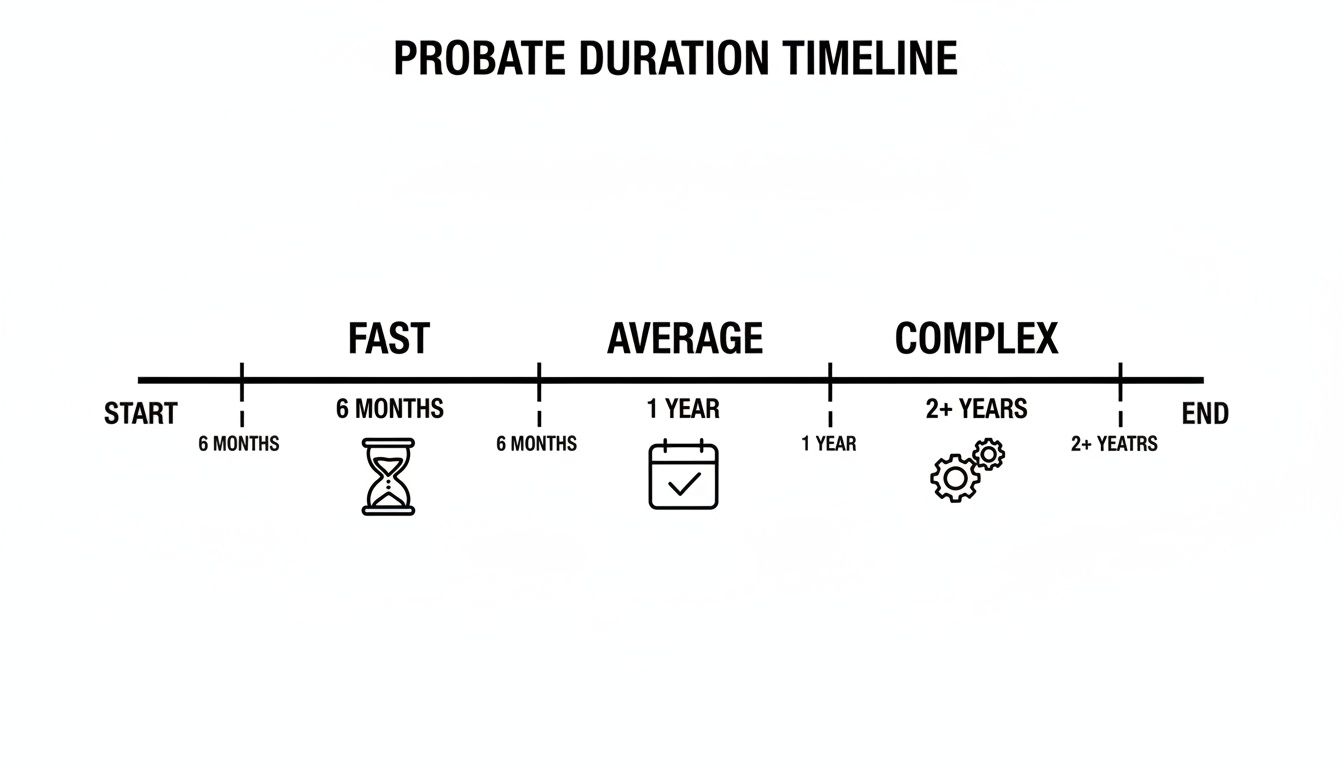
As you can see, a straightforward estate might wrap up in six months. An average one is closer to a year, and complex situations can easily stretch to 2+ years.
Step 1: Filing the Will and Application
The probate journey officially kicks off when the will and an "Application for Probate" are filed with the correct county court—usually in the county where the person passed away.
This initial filing starts a mandatory waiting period. Under Texas Estates Code § 256.003, the court has to wait at least 10 days after the application is filed before holding a hearing. This gives time for official notices to be posted, letting the public know a will is being submitted for probate.
- Estimated Time: 1 to 2 months from filing to the hearing date.
Step 2: The Court Hearing and Executor Appointment
After the 10-day waiting period is up, the court schedules a hearing. This is where a judge will legally recognize the will as valid and officially appoint the person named in the will as the executor. This is a crucial step that gives the executor authority to act for the estate.
Step 3: Receiving Letters Testamentary
Once the judge signs off, the court clerk issues a document called Letters Testamentary. Think of this as the executor's official ID badge; it proves they have the legal power to manage the estate’s assets, like accessing bank accounts or communicating with financial institutions.
- Estimated Time: 2 to 4 weeks after the court hearing.
Step 4: The Creditor Notice Period
Next, the executor has a legal duty to formally notify any potential creditors about the death. This is typically done by publishing a notice in a local newspaper.
The Texas Estates Code gives creditors a specific amount of time to come forward and make a claim against the estate for any money they are owed. This is a mandatory waiting phase that you cannot skip. It's designed to make sure all legitimate debts are dealt with before any assets are distributed to heirs.
Step 5: Creating the Estate Inventory
Within 90 days of being appointed, the executor must compile and file an "Inventory, Appraisement, and List of Claims" with the court. This is a detailed report listing every single asset in the estate and its value on the date of death.
This is often one of the most time-consuming parts of the process. The executor has to locate, identify, and value everything from bank accounts and real estate to furniture and collectibles. For many, a big part of this job involves handling property, and understanding probate property sales and executor responsibilities is key to keeping things moving.
- Estimated Time: 2 to 3 months.
Step 6: Settling Debts and Taxes
After the inventory is filed and the creditor claim period ends, the executor can start paying the estate's bills. Using the estate's funds, they'll settle all valid debts and file any final taxes. This must be done before any money or property is handed over to the heirs.
Step 7: Distributing Assets and Closing the Estate
Finally, the finish line. With all debts and taxes paid, the executor can distribute the remaining assets to the beneficiaries exactly as the will instructs. The timeline for this final step can vary, as we cover in our guide on how long an executor has to distribute assets in Texas.
Once every asset is distributed, the executor may need to file final paperwork with the court to officially close the estate, bringing the probate journey to an end.
- Estimated Time: 1 to 3 months after all debts are paid.
Independent vs. Dependent Administration and Your Timeline
When people ask how long probate takes in Texas, the answer often comes down to one critical factor: the level of court supervision required. The probate process generally follows one of two paths—independent administration or dependent administration. Understanding this difference is key because it can mean settling an estate in months versus being stuck in court for years.
Think of an independent executor as a trusted pilot with a pre-approved flight plan. They can manage the estate—paying debts, selling property, and distributing assets—without having to constantly radio the control tower (the court) for permission. This autonomy is why independent administration is the most common and efficient method in Texas.
On the flip side, a dependent administrator is like a pilot who needs clearance from the tower for every move. This constant back-and-forth with the court is what creates frustrating delays and drives up the cost of probate.

The Efficiency of Independent Administration
The vast majority of Texas probates are handled as independent administrations. A person can specifically request it in their will, a right granted under Texas Estates Code § 401.001.
If the will contains that language, the court will almost always grant it. Even if the will is silent on the matter, all the beneficiaries can agree to an independent administration, asking the judge to let the executor work without constant check-ins.
Here’s why this saves so much time:
- No Court Approval for Routine Tasks: The executor can pay bills, list a house for sale, and distribute assets without filing motions and waiting on a judge's signature.
- Fewer Hearings: Dependent administrations are known for clogging court dockets with hearings for every action, each adding weeks or months to the timeline.
- Lower Attorney Fees: Less time in court means fewer billable hours for the estate's lawyer, preserving more of the estate's value for the beneficiaries.
Because of this streamlined process, a typical independent administration can often be completed within six to twelve months.
When Dependent Administration Becomes Necessary
While it’s slower, dependent administration serves a critical purpose. It’s the court’s safety net for situations with a higher risk of conflict or mismanagement.
This more restrictive path is usually required when someone dies without a will (intestate) and the heirs can’t agree on who should be in charge. It’s also used when beneficiaries are fighting or if there’s a concern that an executor might not act in the estate’s best interest.
Every single action, from paying the deceased's final electricity bill to selling their home, requires a formal application, a court hearing, and a signed order from the judge. This level of scrutiny is thorough but slow. A dependent administration can easily stretch out for one to two years, or sometimes much longer, simply because of the required supervision.
Faster Alternatives to Traditional Texas Probate
For many Texas families, the thought of a year-long probate process is overwhelming. The good news is that a full, formal probate isn’t always the only option.
Texas law provides several faster and simpler paths for estates that meet certain criteria. These streamlined procedures are designed to bypass the more drawn-out steps of traditional administration, getting property into the hands of heirs much sooner. An experienced probate attorney can help you determine if one of these is right for your family.
Muniment of Title: A Direct Path to Transferring Property
One of the most efficient alternatives is known as a Muniment of Title. Think of it as the express lane at the probate courthouse. Instead of a full administration, this process asks the court to officially recognize the will as valid evidence—or a "muniment"—of the beneficiaries' ownership.
This route is perfect for estates where the main asset is real estate and there are no debts (other than a mortgage). The entire process can often be completed in just two to three months.
Here’s a realistic scenario:
- The Situation: A mother passes away, leaving a will that gives her home to her two adult children. She has no debts besides her mortgage.
- The Solution: The children can file for a Muniment of Title. A judge reviews the will, declares it valid, and issues an order that officially transfers the house's title to them. This approach skips the need for an executor, creditor notices, and a formal inventory. You can learn more about how a Muniment of Title in Texas works.
Small Estate Affidavits: For Modest Estates Without a Will
What happens if there’s no will and the estate is fairly small? Texas law has a shortcut for that, too: the Small Estate Affidavit (SEA). This is a sworn statement filed with the court to transfer the property of someone who died without a will.
This option is only available if the estate's value is $75,000 or less, not counting the homestead. Under Texas Estates Code Chapter 205, the SEA allows heirs to collect assets like bank accounts and vehicles without the time and expense of a full court-supervised administration, providing much-needed relief to families with limited resources. The process often concludes within one to two months.
Affidavits of Heirship: Identifying Heirs Without Court Action
An Affidavit of Heirship is another useful tool, especially when the main asset is real estate and there was no will. This legal document doesn't go through probate court. Instead, it identifies the deceased’s rightful heirs according to Texas's intestacy laws.
The affidavit must be signed by two disinterested witnesses—people who knew the deceased but won’t inherit anything. Once signed, it’s filed in the county property records. It creates a clean chain of title that title companies will often accept, and it can be completed in just a few weeks.
Common Roadblocks That Delay Probate and How to Avoid Them
Even with a perfectly drafted will, the probate process can hit unexpected speed bumps. Knowing where these potential delays hide is the key to steering clear of them and keeping the process on track. This foresight can help you settle your loved one's estate as smoothly as possible.

Family Disputes and Will Contests
Unfortunately, grief can sometimes bring out the worst in family dynamics. A disgruntled heir who feels they were treated unfairly can file a lawsuit to contest the will's validity. This action, known as a will contest, immediately freezes the probate process.
A will contest can allege that:
- The deceased was not of sound mind when they signed the will.
- Someone exerted undue influence over the deceased.
- The will was a product of fraud or forgery.
These disputes can drag on for years, requiring depositions, hearings, and potentially a trial. No assets can be distributed until the court resolves the conflict. Understanding the complex factors affecting probate timelines becomes crucial in these situations.
Locating Heirs and Beneficiaries
An executor has a legal duty to notify all beneficiaries named in a will. But what happens when an heir has moved away and lost touch? Finding these individuals can turn into a time-consuming mission. Until every required person is located and properly notified, the probate process simply cannot move forward.
Complex or Hard-to-Value Assets
The type of assets in an estate plays a huge role in the probate timeline. An estate with a few bank accounts is straightforward. However, certain assets require specialized attention and can cause significant delays.
Assets that frequently complicate probate include:
- A family-owned business: Valuing a business requires a formal valuation, which can take months.
- Real estate holdings: Multiple properties, especially commercial or agricultural land, need formal appraisals.
- Unique collectibles: Things like fine art, antique cars, or rare coin collections must be professionally appraised for the estate inventory.
Administrative Errors and Paperwork Mistakes
The probate process is paperwork-intensive. A simple mistake—a misspelled name, an incorrect date, or a missed deadline—can result in the court rejecting the filing. When that happens, the executor has to correct the error and refile, which can add weeks or months to the timeline. Working with an experienced probate attorney is the best way to ensure all paperwork is handled correctly the first time.
Putting It All Together: Your Path Forward
There's no single answer to "how long is probate," but understanding the road ahead—the key milestones, the different paths, and the common roadblocks—is the first step toward regaining control during an emotional time. It allows you to set realistic expectations and make smart decisions for your family.
The Best Way to Shorten Probate? Plan Ahead.
The smoothest probate cases often start years before a loved one's passing. A well-drafted will from a Wills & Trusts attorney does more than just name heirs; it can prevent family feuds and unlock faster processes like independent administration. This single act of preparation is the most powerful tool for protecting a legacy from needless delays.
But even if you're facing this process unexpectedly, you don't have to go it alone. An experienced attorney can clarify your options, whether that means a full administration, a faster alternative like a Muniment of Title, or even a Guardianship to protect a vulnerable loved one. Professional guidance brings clarity and compassion when you need it most.
Key Insight
The probate timeline isn't a mystery. It’s a direct result of tangible factors: how clear the will is, how complex the assets are, and how well the family works together. Once you grasp these moving parts, you can better predict the timeline and take steps to keep things moving forward with confidence.
Frequently Asked Questions About Texas Probate Timelines
When you're dealing with the loss of a loved one, it’s natural to have a lot of questions. Here are clear, plain-English answers to the most common concerns we hear from Texas families.
Can I Sell My Parent’s House Before Probate Is Finished in Texas?
In almost every case, the answer is no. Before a house can be sold, the court must officially appoint the executor. This official approval comes in a document called Letters Testamentary. Think of it as the executor's legal proof of authority—it’s the only thing a title company will accept to show you have the right to sign a deed on behalf of the estate. Trying to sell real estate without these letters will cause serious legal and title problems.
What Happens If We Cannot Find the Original Will?
Losing an original will complicates things, but it doesn't automatically mean you’re out of luck. Under the Texas Estates Code, it’s sometimes possible to probate a copy of the will. However, you will have to convince the judge that the copy is legitimate and overcome the legal assumption that your loved one destroyed the original because they intended to revoke it. If you can’t produce a valid will or a provable copy, the estate will be handled according to Texas intestacy laws, where the state decides who inherits.
Does Having a Will Let Us Avoid Probate Entirely in Texas?
This is a common misconception. In Texas, a will is the primary tool used in the probate process—it doesn't skip it. A will is your loved one’s instruction manual for the court. It confirms their wishes, names an executor, and often requests an independent administration, which makes probate faster and cheaper.
The only way to keep assets out of the probate system is by using specific estate planning tools like a living trust. Our Wills & Trusts attorneys can explain how these instruments hold assets so they can pass directly to beneficiaries without court involvement.
If you’re facing probate in Texas, our team can help guide you through every step — from filing to final distribution. Schedule your free consultation today.