When a loved one passes away, the last thing you want to deal with is a mountain of confusing legal paperwork. The term "probate" often sounds intimidating, but understanding what it really means is the first step toward making the process manageable. We know this is a difficult time, and our goal is to provide clear, step-by-step guidance to help you navigate your responsibilities with confidence.
So, what does it mean to probate a will in Texas?
In simple terms, it’s the court-supervised process of validating your loved one's will. Think of it as the official green light from a judge that confirms the will is authentic and legally binding. This court oversight ensures that the deceased's final wishes are carried out exactly as they intended, debts are properly settled, and their property is transferred to the right people.
The Official "Changing of Hands"
When someone dies, their assets—whether it’s a house, a car, or a savings account—are still legally titled in their name. You can't just walk into a bank with a will and expect them to hand over the funds. That's where probate comes in.
The process gives the executor—the person named in the will to manage the estate—the legal authority to step into the deceased's shoes. The court empowers them to gather the assets, pay off any final bills, and ultimately distribute what’s left to the beneficiaries (the people named to inherit property). It's the official, legally recognized "changing of hands."
This infographic gives a high-level look at the journey.
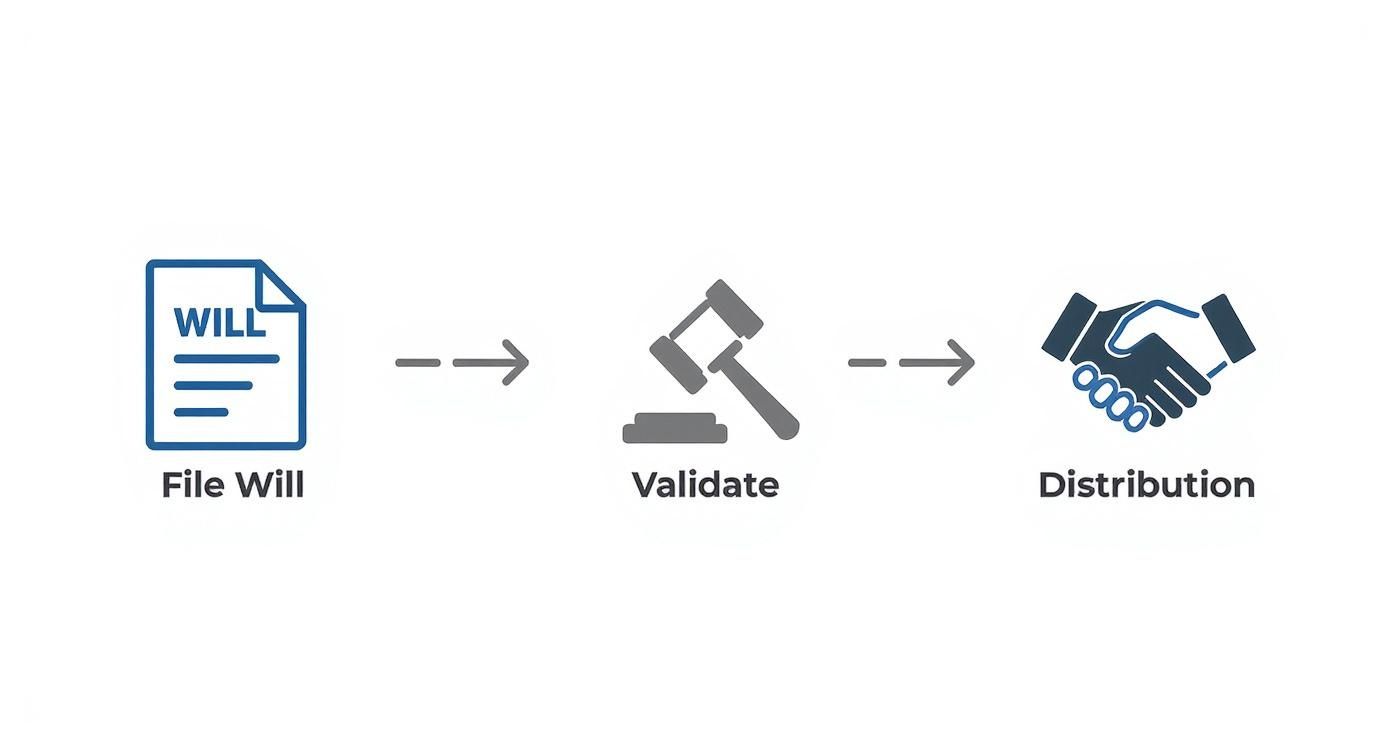
As you can see, the path moves from filing the initial application to getting the court’s stamp of approval and, finally, to settling the estate.
The Court's Role and Key Deadlines
The probate court isn't there to make things difficult. Its primary job is to act as an impartial referee, making sure everything is handled according to the Texas Estates Code. The court validates the will, officially appoints the executor, and grants them the legal documents (called Letters Testamentary) needed to do their job.
It’s crucial to know that Texas has a firm deadline: you generally have four years from the date of death to file a will for probate. Waiting too long can create massive headaches and may even prevent the will from being recognized. You can learn more about the specific statutes from these Texas probate laws on texasprobateattorney.com.
Fortunately, about 80% of Texas probate cases qualify for a streamlined process called independent administration. This allows the executor to manage most of the estate’s business with very little court supervision, which saves time, money, and stress. It's one of the reasons the Texas Probate Process is often more straightforward than in other states.
Key Takeaway: Probate is not a tax. It is a legal process designed to provide a clear and final settlement of a person's affairs. It offers legal closure for the family and protects everyone involved—the executor, the beneficiaries, and any creditors.
While every estate has its own unique twists and turns, the fundamental journey follows a well-worn path. Here's a quick look at the major milestones you can expect.
Key Stages of the Texas Probate Journey
This table breaks down the main phases of the probate process, giving you a clearer picture of what lies ahead. It helps to see the journey as a series of manageable steps rather than one overwhelming task.
| Stage | Primary Goal | Typical Timeframe |
|---|---|---|
| Initial Filing & Posting | Submit the will and application to the probate court and notify the public. | 2-3 weeks |
| Court Hearing & Validation | Attend a brief court hearing where a judge validates the will and appoints the executor. | 3-5 weeks after filing |
| Inventory & Notice to Creditors | The executor identifies all estate assets and notifies any potential creditors. | Within 90 days of appointment |
| Debt Settlement & Asset Management | Pay off final bills, taxes, and other obligations using estate funds. | Ongoing, varies widely |
| Final Distribution & Closing | Distribute the remaining assets to the beneficiaries as instructed in the will. | 6 months to 1+ year |
Understanding these stages helps demystify the process, empowering you to move forward with confidence and clarity during a difficult time.
Starting the Probate Process: The First Filings and Notices
Taking that first official step can feel like the hardest part, but once you know what to do, it's a straightforward process grounded in Texas law. To get the ball rolling, the executor (or their attorney) files an Application to Probate Will and for Issuance of Letters Testamentary with the county court. This is the formal request that kicks everything off.

You'll file this application in the county where your loved one resided. Along with the application itself, you absolutely must submit the original will—not a copy—and a certified copy of the death certificate. These are the core documents the court needs to see before it will even consider moving forward. For a detailed rundown of everything you'll need, check out our guide on the key documents needed to file a petition for probate in Texas.
The Waiting Period and Public Posting
Once you file the application, don't expect things to happen overnight. There’s a mandatory waiting period built right into the system. Under the Texas Estates Code, Section 256.051, the court clerk is required to post a public notice, known as a citation, at the courthouse.
This isn't just bureaucratic red tape. The notice serves a critical purpose: it informs the public that a will has been submitted for probate. It stays posted for at least 10 days, which gives anyone with a potential interest—like a creditor or a forgotten heir—a chance to step up and contest the will if they believe they have grounds to do so. This is a legal safeguard designed to keep the process transparent and prevent Probate Litigation down the road.
A Real-World Scenario: Filing the Application
Let's walk through a realistic example. Imagine Maria was named the executor in her mother's will. Grieving but determined to handle her duties correctly, her first move is to meet with a probate attorney. Together, they gather the essential paperwork: her mother’s original will and a few certified copies of her death certificate.
They file the Application to Probate Will in the county court where her mother lived. At the clerk's office, the attorney pays the filing fee, which usually runs between $300 and $400, though it can vary by county.
The clerk accepts the documents, and the attorney explains to Maria that the citation will now be posted. The attorney makes a note to follow up in about two weeks to confirm the posting period has passed. This simple check-in prevents procedural hiccups that might otherwise delay the next step: the court hearing.
Key Takeaway: The initial filing and mandatory notice period are not just administrative hoops. They are fundamental legal requirements under the Texas Estates Code that protect the integrity of the process. Getting these first steps right lays the foundation for a much smoother, less stressful experience.
Why This First Step Is So Critical
Filing the correct application with all the required documents is the legal starting line for the entire probate journey. It officially brings the estate under the court's supervision and gets the clock ticking for everything that comes next.
The public notice requirement ensures the process is open and fair from the very beginning. It's a formal announcement that gives the legal system a chance to handle any potential disputes early on, well before the executor is granted the power to start managing the estate's assets. Think of it as pouring a solid, legally sound foundation for the rest of the estate settlement. Nailing this phase is your first major milestone as an executor.
Your Day in Court: The Probate Hearing
After the initial paperwork is filed and the mandatory waiting period has passed, the next milestone is the probate hearing. The thought of going to court can be intimidating, but in most Texas probate cases, it's a brief and straightforward formality. This isn't a dramatic courtroom trial; it’s a short, administrative meeting with a judge designed to keep the process moving.
The main purpose of the hearing is for a judge to officially validate the will and confirm the appointment of the executor. This is the moment the will legally comes to life. Your attorney will handle nearly all of the talking, so your role is simply to be present, be sworn in, and honestly answer a few basic questions.
Proving Up the Will
A key part of the hearing is what lawyers call "proving up the will." This is simply the formal process of providing testimony to the court to show the will is legitimate. Under the Texas Estates Code, the applicant (usually the person named as executor) must provide evidence that the will is valid and that all legal requirements have been met.
The judge will place you under oath, and your lawyer will walk you through a series of simple, direct questions. You can expect to be asked about things like:
- Your relationship to the deceased: "How did you know the person who passed away?"
- The will itself: "Do you believe the document being presented is their actual last will and testament?"
- The deceased's passing: "Can you confirm their name, date of death, and where they lived?"
- Your qualification to serve: "Are you qualified to act as the executor?"
Your answers provide the final piece of evidence the judge needs to sign the order that admits the will to probate.
What Happens During the Hearing
Let’s go back to Maria’s story. On the day of the hearing, she meets her lawyer at the courthouse. They run through the questions one last time, which helps calm her nerves. When her case is called, they walk up to the judge's bench.
The judge greets them, and Maria takes an oath to tell the truth. Her attorney then starts with the questions: "Is it true that your mother, Jane Doe, passed away on October 15th in Harris County, Texas?" and "Do you believe this document to be her last will?" Maria just has to answer "Yes" to each one. The judge might ask a clarifying question, but the lawyer's questions are usually sufficient.
The entire process takes less than 15 minutes. At the end, the judge signs an order officially recognizing the will as valid and appointing Maria as the independent executor of her mother’s estate.
Key Takeaway: The probate hearing is less of an interrogation and more of a confirmation. The court’s goal is to ensure the process is legally sound, not to create stress for a grieving family. With proper preparation from your attorney, it is a smooth and quick step.
Your Official Appointment as Executor
After the hearing, there are two final steps before you can begin managing the estate. First, you must sign the Oath of Executor. This is a sworn statement, filed with the court, where you promise to faithfully carry out your duties according to the will and Texas law.
Once you’ve signed the oath, the court clerk will issue your Letters Testamentary. This is the single most important document you will receive. It's the official, court-stamped certificate proving you have the legal authority to act on behalf of the estate. With these letters in hand, you can finally access bank accounts, talk to financial institutions, and handle all other estate business.
Maria leaves the courthouse feeling a huge sense of relief. The hearing was far less daunting than she'd imagined. More importantly, she now has the Letters Testamentary and a clear path forward to honor her mother’s final wishes—which is all she wanted from the start.
Your Duties as an Executor: Managing the Estate
Once the court issues "Letters Testamentary," your role officially shifts from applicant to manager. This document gives you the legal authority to act on behalf of the estate, but it also comes with a serious legal obligation—a fiduciary duty—to act solely in the best interests of the estate and its beneficiaries.

This responsibility is outlined in the Texas Estates Code, Title 2, and demands that you be diligent, transparent, and completely loyal to the terms of the will. Let’s walk through the essential tasks you’ll need to tackle to fulfill these duties responsibly.
Securing the Estate and Notifying Creditors
Your very first job is to take control of the estate's assets and officially notify anyone who might be owed money. These first steps are time-sensitive and critical for protecting the estate from future claims.
You have one month from receiving your Letters Testamentary to publish a general Notice to Creditors in a local newspaper. This is a formal announcement required by Texas Estates Code § 308.051. It puts any unknown creditors on notice that the estate is open and gives them a deadline to present their claims.
For any known secured creditors—like a mortgage lender or auto loan company—you must send a direct, formal notice via certified mail. This creates a paper trail proving they were properly informed.
Independent Administration: The Texas Advantage
One of the most helpful aspects of Texas probate is independent administration, which is granted in the vast majority of cases. If the will provides for it, or if all beneficiaries agree, the court allows you to manage the estate with minimal judicial supervision.
This means you can handle most duties without needing the judge's permission for every action. You'll be able to:
- Sell property to pay estate debts.
- Settle valid creditor claims.
- Distribute assets to beneficiaries.
- Handle other estate business far more efficiently.
Independent administration saves significant time and money, making the Texas probate process less burdensome than in many other states. It empowers you to act decisively, but remember—you are still fully accountable for your fiduciary duties.
Key Takeaway: As an executor, you are not acting for yourself. You are a steward entrusted with safeguarding assets and honoring the decedent's wishes. Every decision must be made with the beneficiaries' best interests at heart.
Creating the Estate Inventory
One of your most detailed and important tasks is preparing an Inventory, Appraisement, and List of Claims. This document, governed by Title 2 of the Texas Estates Code, is a comprehensive snapshot of everything the decedent owned at the time of death.
You typically have 90 days from your appointment to file this with the court. It must list all assets in detail, along with their fair market value at the date of death.
A Real-World Example
Let's say you're the executor for your uncle's estate. The inventory would need to include items such as:
- Real Estate: His house, with a formal appraisal to determine its market value.
- Bank Accounts: All checking, savings, and money market accounts, listing the exact balance on his date of death.
- Vehicles: His truck, with its value confirmed by a reliable source like Kelley Blue Book.
- Personal Property: Significant items like jewelry, antiques, or art, which may also require appraisal.
- Stocks and Investments: A detailed list of all brokerage and retirement accounts.
This process demands meticulous record-keeping. You'll often find yourself digging through financial statements and mail to ensure nothing is missed. Using a system for secure cloud storage for legal documents can provide peace of mind.
The inventory serves several key purposes: it helps determine if the estate is solvent (has more assets than debts), creates a baseline for distributing assets, and provides transparency to the court and beneficiaries. For more guidance, explore our detailed look at the executor’s roadmap and responsibilities under Texas law.
Handling Debts, Taxes, and Final Distribution
Once you’ve inventoried all estate assets, your role as executor shifts to financial manager. This stage involves settling the deceased's final affairs: paying debts, filing necessary tax returns, and preparing for the final, most important step—distributing what remains to the beneficiaries.
This part of the job demands a sharp eye for detail and a commitment to fairness.

Correctly managing these financial responsibilities is the core of your fiduciary duty. You are tying up all legal and financial loose ends, which protects both the estate and you from any future claims.
The Priority of Payments in Texas
A crucial point for executors is that you cannot pay bills in any order you choose. Texas law specifies the priority for who gets paid first. This system, outlined in the Texas Estates Code, Title 2, provides a clear roadmap.
The legal order of priority is:
- Funeral expenses and costs of the last illness, up to $15,000.
- A Family Allowance for the surviving spouse and minor children.
- The expenses of administration, including court filing fees and attorney's fees.
- Secured claims, such as a mortgage on the home.
- Past-due child support payments.
- State taxes, like property taxes.
- The costs of confinement if the person was ever imprisoned.
- All other claims, which is where unsecured debts like credit card bills are paid.
Following this structure is a legal requirement, not a suggestion.
Managing Taxes and Final Expenses
Beyond paying creditors, you are also responsible for filing necessary tax returns for the decedent and the estate. This typically includes a final personal income tax return (Form 1040) for the year of death.
If the estate generated income after death—such as from rental property or stock dividends—you may also need to file an estate income tax return (Form 1041). While Texas has no state inheritance tax, very large estates might owe federal estate taxes. Navigating tax obligations is complex, and working with both an attorney and a CPA is highly recommended.
The costs of the probate process itself also come from the estate. A straightforward case may cost $3,000 to $7,000 in attorney and court fees. However, if disputes arise, costs can exceed $10,000. You can find a more detailed breakdown of Texas probate costs at wthompsonlaw.com.
Key Takeaway: Never distribute assets to beneficiaries until all debts, administrative expenses, and taxes have been paid or set aside. If you distribute funds too early and the estate cannot cover its obligations, you could be held personally liable for the shortfall.
The Final Distribution of Assets
Once every legitimate claim is paid and the finances are settled, you can finally distribute the remaining assets to the beneficiaries as instructed in the will. This is the moment you fulfill your loved one's final wishes.
To protect yourself and create a clear record, have each beneficiary sign a receipt acknowledging what they received. This simple step can prevent future disputes.
After all distributions are complete and you have receipts from everyone, you can take the final steps to formally close the estate. At that point, your duties as executor are finished. The successful completion of this process often brings a profound sense of closure for the entire family.
Answering Your Texas Probate Questions
When you're tasked with probating a will, the legal landscape can feel confusing. It's natural to have questions, especially when you're trying to honor a loved one's wishes. Let's tackle some of the most common concerns we hear from Texas families.
What Happens if I Miss the Four-Year Deadline?
This is a critical point. Texas has a firm rule: a will must be filed for probate within four years of the person's death. This is a hard deadline set by the Texas Estates Code.
If you miss that window, the will generally cannot be probated. There is a rare exception if you can prove you were not "in default" for the delay (meaning you had a legitimate, non-negligent reason), but this is a difficult legal argument to win.
If the deadline passes, the estate is typically handled as if no will existed. Assets are then divided according to Texas intestacy laws, which define a strict hierarchy of heirs. This outcome may be very different from what your loved one intended.
Do I Have to Hire a Lawyer to Probate a Will in Texas?
Yes, in almost all situations, you are required to hire an attorney. This isn't just a strong recommendation; it's a legal requirement in most Texas counties.
The reason is that as an executor, you are not just representing yourself. You are acting as a fiduciary for the estate's beneficiaries and creditors. In the eyes of the law, this means you are representing others' interests in court, a role that can only be performed by a licensed attorney. A probate attorney is your guide and your shield, ensuring all legal requirements are met and protecting you from personal liability.
What Assets Don't Go Through Probate in Texas?
Not everything your loved one owned is part of the "probate estate." Certain assets pass directly to a named person, bypassing the will and the court process entirely. These are called "non-probate assets."
Common examples include:
- Life insurance policies with a designated beneficiary.
- Retirement funds like 401(k)s and IRAs that name a beneficiary.
- Bank accounts set up as "Payable-on-Death" (POD).
- Property owned as "joint tenants with right of survivorship."
Identifying which assets are non-probate is a crucial first step. It helps you understand the true scope of the probate estate and determines the right legal path forward. Proper estate planning with Wills & Trusts can also help families minimize the assets that need to go through this process. Additionally, in certain situations, a Guardianship may be necessary for dependents, which is a related but separate legal matter.
It's a common misconception that every will must go through a long, expensive probate. Texas law offers simpler, faster, and cheaper alternatives for smaller estates, such as a Small Estate Affidavit or a Muniment of Title. Our guide on how you can avoid probate in Texas dives deeper into these options.
If you’re facing probate in Texas, our team can help guide you through every step — from filing to final distribution. Schedule your free consultation today.