Realizing a parent might not be able to make their own decisions anymore is a deeply emotional and challenging moment. If you're considering guardianship in Texas, the first thing to understand is that it's a significant legal step. In plain English, you must prove to a court that your parent is legally "incapacitated"—meaning they can no longer manage their own affairs—and that this intervention is necessary to protect their well-being.
When Guardianship Becomes a Necessary Step

The decision to seek guardianship is never made lightly. It usually comes after a period of growing concern, punctuated by incidents that make it clear a parent can no longer care for themselves safely. This isn't about control; it's about protection.
A Guardianship is a legal tool established under the Texas Estates Code. Its purpose is to appoint a responsible person (the guardian) to make decisions for another person (the ward) who has been found legally incapacitated by a court.
Incapacity isn't just about occasional forgetfulness or a single bad decision. In Texas, it means that due to a physical or mental condition, a person is substantially unable to provide their own food, clothing, or shelter, care for their physical health, or manage their financial affairs. This is a high legal standard, and the court will demand clear and convincing evidence.
Common Situations Leading to Guardianship
Families often find themselves on this path after a major life event throws a parent's vulnerability into sharp focus. Real-world scenarios we see frequently include:
- Advancing Dementia or Alzheimer's: A parent starts wandering, forgets to pay bills for months, or neglects personal hygiene, putting their safety and financial stability at risk.
- A Sudden Medical Crisis: A severe stroke or traumatic brain injury leaves a parent unable to communicate their wishes or understand complex medical choices.
- Financial Exploitation: A parent with cognitive decline becomes a target for scams or is unduly influenced by a "new friend," losing significant amounts of money.
- Refusal of Necessary Care: Due to their condition, a parent might refuse essential medical treatment or in-home assistance, creating a dangerous living situation that can't be ignored.
When you're facing one of these situations, it's easy to feel overwhelmed and isolated. But these scenarios are becoming more common as our population ages. Recognizing these challenges is the first step toward finding a solution.
Signs It Might Be Time to Consider Guardianship
These indicators can help you assess whether your parent's difficulties have crossed the threshold from normal aging into a situation requiring legal protection.
| Area of Concern | Observable Signs and Examples |
|---|---|
| Personal Care | Neglecting hygiene, wearing inappropriate clothing, inability to prepare meals, forgetting medication. |
| Financial Management | Unpaid bills piling up, unusual or large withdrawals, falling for scams, giving away money irrationally. |
| Physical Health & Safety | Frequent falls, unexplained bruises, wandering and getting lost, unsafe driving, refusing necessary medical care. |
| Cognitive Decline | Severe memory loss affecting daily life, confusion about time or place, inability to make logical decisions. |
Spotting these signs doesn't automatically mean guardianship is the only answer, but it does mean it's time to explore your options seriously. The goal is to ensure your parent's safety and well-being are protected. While navigating the Texas Probate Process can be complex, guardianship serves a vital role within it.
Exploring Less Restrictive Alternatives First
Before a Texas court will even consider appointing a guardian, it has one critical question: have you exhausted every other option? This isn't just a suggestion; it's a fundamental principle of Texas law designed to protect a person's independence for as long as possible. Your first job, then, is to investigate what legal documents your parent might already have in place.
You'd be surprised how often families find that a parent planned for this exact situation years ago. Digging through their important papers for documents like a power of attorney isn't just a good idea—it's the required first step.
The Power of Proactive Planning
If your parent had the foresight to create certain legal tools while they still had full mental capacity, you might already hold the keys to helping them. These documents are private agreements, pre-authorizing a trusted person to make decisions without ever needing a judge’s permission.
There are two powerhouse documents you absolutely need to look for:
- Durable Power of Attorney: This document lets your parent (the "principal") name an "agent" to handle their financial life. We're talking about everything from paying the electric bill and managing bank accounts to handling real estate deals. The "durable" part is key—it means the document stays valid even if your parent becomes incapacitated.
- Medical Power of Attorney: Just like its financial twin, this document appoints an agent to make healthcare decisions if your parent can't. This authority is what you'll need to speak with doctors, consent to treatments, or make critical care choices.
Getting a clear handle on the difference between guardianship and power of attorney is crucial. A valid POA can often accomplish the same goals as a guardianship but with far less emotional and financial cost.
A Realistic Scenario: Maria's Story
Let's look at a common situation. Maria’s mother was diagnosed with early-onset dementia. Years before, her mom had worked with an attorney and signed both a Durable and a Medical Power of Attorney, naming Maria as her agent.
As her mother's condition worsened to the point she could no longer manage her own affairs, Maria was already empowered to step in. She seamlessly accessed her mom’s bank account to pay for in-home care, filed her taxes, and consulted with neurologists about a treatment plan. Because those documents existed, Maria’s family completely avoided a painful, public, and expensive court battle over guardianship.
Supported Decision-Making Agreements
Another option Texas law recognizes is the Supported Decision-Making Agreement. Think of this as a more collaborative, less formal tool. It allows a person with a disability to choose trusted advisors—like their children or close friends—to help them process information and make their own choices.
This approach works best for parents who can still make the final call but need a little help understanding the options in front of them. It lets them keep all of their legal rights while leaning on people they trust for guidance. This is a far cry from a guardianship, which removes those rights entirely. It's always worth exploring options that maintain as much independence as possible, like understanding the benefits and considerations of home health care.
If these alternatives either don't exist or simply aren't enough to keep your parent safe from harm, then and only then does pursuing a guardianship become the right—and necessary—next step.
Navigating the Texas Guardianship Filing Process: A Step-by-Step Guide
Once you've determined that guardianship is the only viable path, it's time to start the formal court process. This part can feel intimidating, but if you understand the roadmap, you can move forward with confidence, knowing each step is designed to protect your parent.
The journey officially begins when you file an Application for Appointment of Permanent Guardian with the probate court in the county where your parent lives. This is the document that gets the legal wheels turning.
Step 1: File the Application and Required Evidence
Think of the application as the story you're telling the court. It's a detailed legal document explaining who you are, who your parent is (the law calls them the "proposed ward"), and exactly why a guardianship is needed. You'll have to provide specific information about your parent's condition, their family, and their finances to give the judge a clear, honest picture of the situation.
But words alone aren't enough. The single most critical piece of evidence you'll file is the Physician's Certificate of Medical Examination (CME).
- What it is: A standardized form filled out by your parent's doctor, usually within 120 days of filing the application.
- Its Purpose: The CME gives the court a professional medical opinion on your parent's physical and mental state. It must detail the nature and degree of their incapacity and explain why, from a medical standpoint, they can't manage their own affairs.
- Why it's Crucial: Under the Texas Estates Code, a judge simply cannot grant a guardianship without this powerful medical evidence. It translates your personal concerns into the clinical language the court needs to make a legally sound decision.
Before you even file, the court will expect you to have considered less restrictive options. This infographic shows the alternatives that avoid the courthouse altogether.
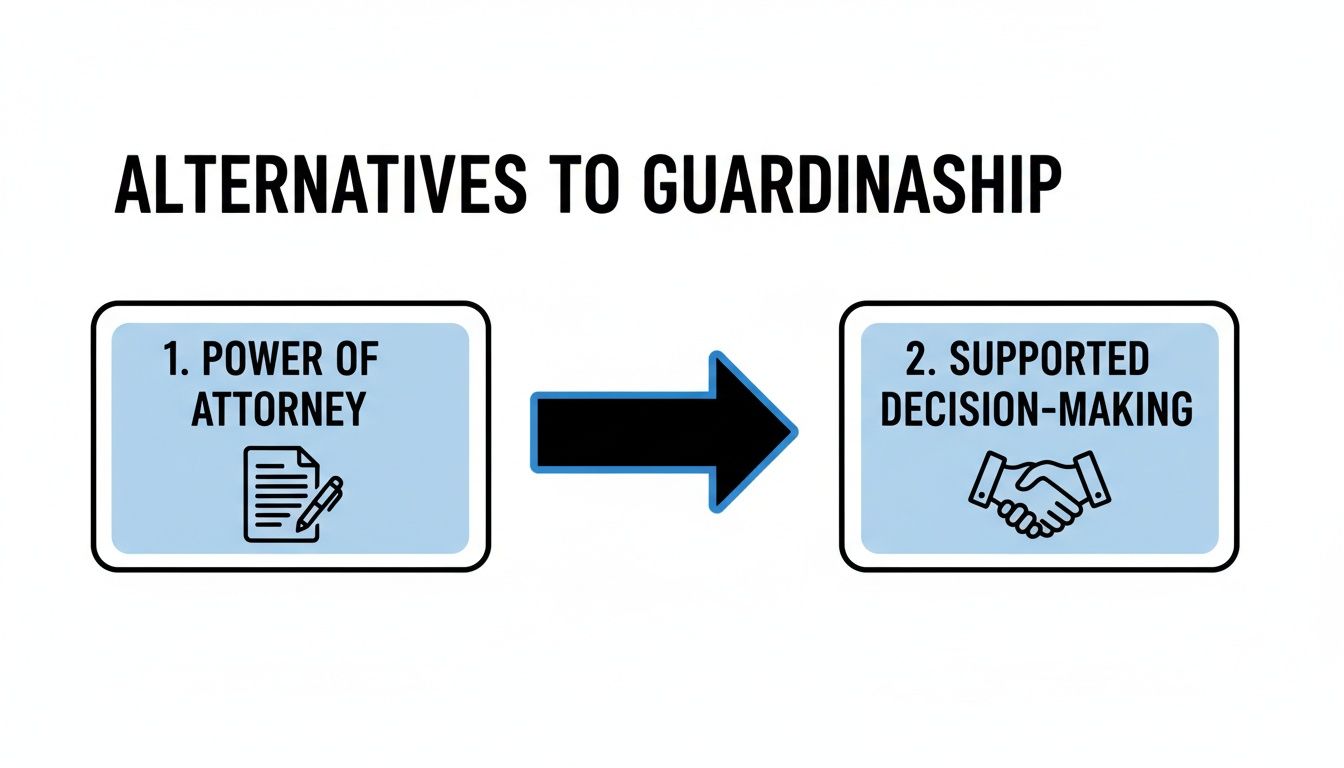
As you can see, a Power of Attorney is a private agreement, while Supported Decision-Making lets your parent keep their autonomy with help. Both are important tools to explore first.
Step 2: Understand What Happens After You File
Once your application is on file and officially posted at the courthouse, a series of important events kick off. The court's main goal here is to make sure your parent's rights are protected every step of the way.
First, the court will appoint an attorney ad litem. This is an independent lawyer whose only job is to represent your parent's best interests. They will meet with your parent, explain what guardianship means in simple terms, and fight for their wishes in court. This ensures your parent has a voice, even if they can no longer express themselves clearly.
Next, a court investigator will likely be appointed. This neutral third party visits your parent to see their living conditions and circumstances firsthand. The investigator then submits a confidential report to the judge with their findings. This gives the court an unbiased, real-world view of the situation that goes beyond the paperwork.
These steps are methodical for a reason. They allow the court to gather information from multiple perspectives before scheduling the final hearing. Our firm can help you navigate the details of legal guardianship in Texas and prepare for every stage.
How to Prepare for Your Guardianship Court Hearing
The court hearing is where everything comes together. All the paperwork, the doctor's letters, and the family discussions lead to this moment where a judge will make the final call. It's completely normal to feel a bit intimidated, but solid preparation can make all the difference. Your goal is to walk in confidently and show the court you're ready for this responsibility.
This isn't a dramatic courtroom trial like you see on TV. It's a formal review where the judge has two core questions to answer:
- Is your parent legally incapacitated based on the evidence and Texas law?
- Are you the right person for the job of guardian?
Your role is to give the judge clear, honest information to confidently answer "yes" to both.
What the Judge Needs to Know
The judge will want to hear directly from you. This is your chance to explain, in your own words, why this guardianship is necessary and what your plan is. Expect questions—they are designed to gauge your understanding and commitment.
Be ready to talk about these key areas:
- Your Plan of Care: How, specifically, will you manage your parent's daily life? Think about housing, meals, medical care, and social engagement.
- Your Grasp of a Guardian’s Duties: The judge needs to know you understand this is a legal role with serious responsibilities, like filing annual reports with the court.
- Financial Management: If you're asking to be guardian of the estate, how will you protect your parent's assets? How will you make sure every dollar is used only for their benefit?
- The Family Situation: Are your siblings on board? If there's disagreement, the judge will want to know why.
Good organization is your best friend here. Walking in with a clear head and your documents in order speaks volumes. As you get closer to the date, it's a good idea to review some expert tips for preparing for your court hearing to feel even more prepared.
A Realistic Scenario: David’s Preparation
Think about David, whose father has advanced Alzheimer's. In the weeks before the hearing, David did more than just talk to his attorney. He put together a simple, three-ring binder with everything in its place:
- A current list of his father’s doctors, medications, and appointment schedules.
- Copies of recent unpaid utility bills, showing his dad couldn't handle his finances anymore.
- A brief summary of his dad's daily routine and specific needs, like assistance with meals.
- A simple monthly budget outlining how he would use his father’s Social Security and pension to cover expenses.
When the judge asked David about his plan, he didn’t stumble. He calmly flipped to the right section in his binder and laid it all out. That level of readiness showed he was competent and truly dedicated to his father's well-being, which made the judge's decision straightforward.
Handling a Contested Guardianship Hearing
Of course, not every case is simple. Sometimes a sibling objects, or even your parent might resist the guardianship, perhaps due to their condition or outside influence. When that happens, the hearing becomes much more like a traditional trial.
A contested hearing involves witnesses, cross-examinations, and conflicting evidence. This is no longer a DIY situation. Having an experienced probate attorney becomes absolutely essential to navigate the complexities and advocate effectively for your parent’s safety. If you find yourself in this situation, it’s critical to understand the road ahead by reading our guide on how to contest a guardianship in Texas probate court.
Ultimately, preparation is a sign of respect—for the court, for the process, and most importantly, for your parent. By presenting a clear, organized, and heartfelt case, you are showing the judge that you are ready to step up and handle this profound duty with the care it deserves.
Understanding Your Responsibilities as a Guardian

The judge's order is in hand, and you’ve been appointed guardian. It’s a huge milestone, but this is where the real work begins. You’ve just stepped into a formal, court-supervised role known as a fiduciary.
That’s a legal term, but its meaning is simple: you now have a profound duty to act solely in your parent’s best interest. Everything you do from this point forward will be measured against that standard.
These responsibilities aren't just arbitrary rules; they are essential safeguards built into the Texas Guardianship process to protect your parent (now legally the "ward") and ensure you remain accountable to the court.
Qualifying and Getting Your Letters
Before you can make a single decision, you have to officially "qualify" as guardian. This isn't just paperwork—it's the process that grants you legal authority.
It involves two key actions:
- Taking an Oath: You will formally swear before the court that you will faithfully perform all your duties.
- Posting a Bond: In nearly every case where you’re managing money, the court requires you to purchase a bond. Think of it as an insurance policy that protects your parent’s assets from any mismanagement on your part.
Once you’ve taken the oath and secured the bond, the court issues your Letters of Guardianship. This is the golden ticket—the official document you will show to banks, doctors, and care facilities to prove you have the legal authority to act for your parent.
Responsibilities as Guardian of the Person
If the court named you Guardian of the Person, your world revolves around your parent’s physical and emotional well-being. The Texas Estates Code boils it down to one core duty: providing care, supervision, and protection.
This means you’ll be making critical decisions about:
- Living Arrangements: Where will they live? At home with support, with you, or in a long-term care facility?
- Medical Care: You’ll consent to treatments, choose doctors, and oversee their entire healthcare plan.
- Daily Life: You're responsible for ensuring they have proper food, clothing, and chances to stay socially engaged.
You are now the primary advocate for your parent’s quality of life. Every choice must be centered on their comfort, health, and dignity.
Responsibilities as Guardian of the Estate
Being named Guardian of the Estate means you are in charge of your parent’s financial world. This role demands meticulous records and total transparency with the court.
Your duties will include:
- Gathering and managing all of your parent's assets—Social Security checks, pensions, bank accounts, you name it.
- Paying all their bills and handling their day-to-day expenses.
- Making smart, prudent investment decisions to protect and preserve their assets.
Managing someone else’s finances comes with strict rules. The law requires you to act with the same care a prudent person would use in managing their own property, and every single transaction must be documented and justifiable.
Ongoing Court Reporting: This Isn't a One-Time Thing
Your relationship with the court doesn’t end after the hearing. To ensure your parent is protected, Texas law requires you to file regular reports. These aren't optional.
The two most important reports are:
- Annual Report on the Condition and Well-being of the Ward: This report updates the court on your parent's health, living situation, and overall condition.
- Annual Accounting: This is a detailed financial statement showing every dollar that came into and went out of your parent's estate over the last 12 months.
Filing these reports is a legal requirement that reinforces your accountability to the court. While it may seem like a lot to handle, understanding these duties from the start is the key to successfully honoring the trust placed in you.
Key Takeaways for Families Seeking Guardianship
Stepping into the role of a guardian is one of the most profound acts of love you can undertake for a parent who can no longer care for themselves. It's a serious legal path, but when you boil it down, the core principles are straightforward and driven by compassion.
- Last Resort, Not First Choice: Texas courts view guardianship as a powerful tool to be used only when absolutely necessary. The law, guided by the Texas Estates Code, Section 1001.001, requires you to explore less restrictive alternatives first, like a Durable Power of Attorney or Medical Power of Attorney.
- It's All About "Best Interest": The entire process revolves around one simple idea: the best interest of the ward. This is the legal standard a judge will use for every decision. Your case must be built on clear medical evidence of your parent's incapacity.
- It’s a Formal, Supervised Role: When you become a guardian, you’re accepting real legal duties. You are accountable to the court and must manage your parent’s care and finances responsibly, which includes filing annual reports.
- Compassion is Key: The legal steps may feel complicated, but their purpose is simple and powerful: to give your loved one the safety, care, and dignity they deserve when they need it most.
Understanding these core ideas can turn an intimidating legal process into a manageable mission. For families wrestling with these difficult decisions, getting advice on related matters like Wills & Trusts or potential Probate Litigation is often the next logical step.
Common Questions We Hear About Guardianship
Even with a clear plan, families always have lingering questions about the realities of seeking guardianship. Let's tackle some of the most common concerns we hear from Texas families.
What Does It Cost to Get Guardianship in Texas?
The cost of guardianship can swing wildly depending on how complicated your case is. At a minimum, you'll be looking at court filing fees, the fee for the court-appointed attorney ad litem (who represents your parent), and of course, your own attorney's fees.
An uncontested case, where everyone agrees on the path forward, is going to be your most affordable scenario. But if the guardianship is contested—meaning someone objects—the costs can jump dramatically. You're suddenly dealing with extra legal work, the possibility of expert witnesses, and a much longer, more involved court process.
Can Siblings Be Co-Guardians?
Yes, Texas law allows for co-guardians. For siblings who have always worked well together and communicate openly, sharing the heavy load of responsibility can be a fantastic solution.
But you have to be brutally honest with yourselves. If you and your siblings have a history of butting heads on important decisions, forcing a co-guardianship can create gridlock. That kind of conflict is the last thing your parent needs. A judge’s number one priority is a stable, functional arrangement for the incapacitated person, and they won't hesitate to appoint just one person if it seems like a smoother path.
What if My Parent Fights the Guardianship?
This is where things get serious. If your parent objects to the guardianship, the case becomes "contested," and the entire dynamic shifts. Under the Texas Estates Code, your parent has an absolute right to their own attorney and can even demand a jury trial to decide the matter.
A contested case is not just legally complex; it's emotionally draining. You'll be facing opposing lawyers and a much higher standard of proof to show the court why guardianship is necessary. In this situation, having an experienced Guardianship attorney isn't just a good idea—it’s absolutely critical to protecting your parent's best interests.
If you’re facing probate in Texas, our team can help guide you through every step — from filing to final distribution. Schedule your free consultation today.